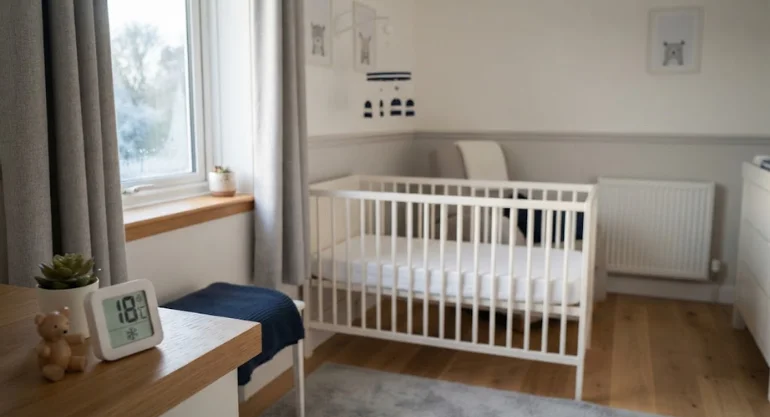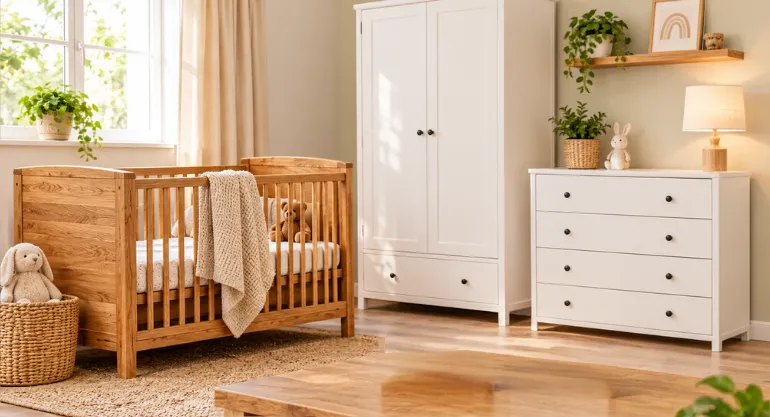
Choosing nursery furniture is about more than finding pieces that look good together. From the cot your baby will sleep in to the wardrobe that holds their growing collection of clothes, the materials used can make a difference to how long your furniture lasts, how it looks over time and how well it fits your family’s needs.
One question many parents come across when shopping for nursery furniture is whether to choose solid wood or MDF. Both materials are widely used in furniture manufacturing, but they have different properties, benefits and limitations.
So, when comparing solid wood vs MDF nursery furniture, which one should you choose? Is solid wood always better, or can engineered wood be a sensible alternative? Read this detailed guide by Babymore for full disclosure.
Let’s look at how these materials compare and what you should consider before investing in your baby’s nursery.
Solid wood furniture is made from natural timber rather than manufactured wood fibres or compressed particles. Depending on the design and manufacturer, different types of timber can be used, including pine, beech, birch and oak.
Each type of wood has its own characteristics. For example, pine is a popular choice for nursery furniture because it is relatively lightweight, affordable and easy to work with. Beech and oak are hardwoods that generally offer greater resistance to everyday wear and tear.
Solid wood is often chosen for its natural appearance, strength and long-term durability. It can also be sanded, repaired or refinished in certain circumstances, which may help extend the life of the furniture.
For parents looking for furniture that can be used for several years, particularly a cot bed that converts as their child grows, solid wood can be an appealing option.
MDF stands for Medium Density Fibreboard. It is a type of engineered wood made by breaking down wood fibres, combining them with resin and wax, and pressing the mixture under heat and pressure to create dense, flat boards.
Unlike natural timber, MDF does not have a visible wood grain. This makes it particularly useful for furniture with smooth surfaces, painted finishes and modern designs.
You will often find MDF used in:
MDF is generally more affordable than many solid wood alternatives and offers a consistent finish. It is also less likely to warp or split due to natural variations in the grain.
However, MDF has its limitations. It can be more vulnerable to moisture damage, and damaged edges can be difficult to repair neatly. Its strength also depends on the board’s density, thickness and overall construction.
It is worth remembering that engineered wood is a broad category. MDF, plywood and particleboard are different materials, so they should not all be treated as interchangeable.
Understanding how the two materials compare can make it easier to decide which is suitable for your nursery.
| Feature | Solid wood | MDF |
|---|---|---|
| Material | Natural timber | Engineered wood fibres |
| Appearance | Natural grain and texture | Smooth, consistent surface |
| Durability | Generally strong, depending on timber | Depends on board density and construction |
| Moisture resistance | Varies by wood and finish | Can swell if exposed to moisture |
| Repairs | Can often be sanded or refinished | Damaged areas can be harder to repair |
| Cost | Usually more expensive | Generally more budget-friendly |
| Design | Natural and traditional finishes | Particularly suitable for painted designs |
Neither material automatically makes a piece of furniture safe or unsafe. Construction quality, materials, coatings, fittings and compliance with relevant safety standards all matter.
Nursery furniture gets plenty of everyday use. Drawers are opened repeatedly, wardrobe doors are handled throughout the day, and cot beds need to withstand years of movement and activity.
This is where material quality becomes particularly important.
Solid wood, especially hardwoods such as beech and oak, is generally a durable choice. It can withstand regular use and may be easier to repair if minor surface damage occurs.
Pine is another common choice, although it is a softer wood. It can be more susceptible to dents and scratches, so the type of timber matters when comparing different furniture ranges.
A well-made solid wood cot bed can be a worthwhile long-term investment, particularly if it has adjustable mattress positions and practical conversion features.
MDF can also perform well in everyday nursery environments when manufactured properly and protected with a suitable finish.
Its smooth surface makes it ideal for painted wardrobes, drawers and other storage furniture. However, prolonged exposure to water or damp conditions can cause the material to swell, particularly around unsealed edges.
For this reason, MDF furniture should be kept dry and cleaned according to the manufacturer’s instructions. Our guides to cleaning nursery furniture and cleaning wooden nursery furniture explain how.
Solid hardwood generally has the advantage when it comes to long-term durability and repairability. However, a well-constructed MDF unit may still provide years of reliable use. The quality of the furniture matters just as much as the material itself.
If you’re planning a nursery from scratch, Babymore’s nursery furniture collection is a useful place to explore different furniture styles and options.
This is understandably one of the biggest concerns parents have when choosing nursery furniture.
MDF is not automatically unsafe for use in a baby’s room. However, it is important to consider how the board is manufactured, what resins and finishes are used, and whether the finished furniture complies with the relevant safety requirements.
Some MDF products may contain formaldehyde-based resins. Formaldehyde emissions can vary depending on the materials and manufacturing process, so it is sensible to look for reliable information about emissions and product compliance. Our guide to eco-friendly nursery essentials covers greener choices.
When buying nursery furniture, consider the following:
For cots and cot beds, structural safety is particularly important. In the UK, BS EN 716 covers safety requirements for domestic cots and folding cots. For more, see our cot bed safety guidelines.
Babymore also provides information about its testing and compliance on its Safety Assurance page, including standards covering cots, cot beds, changing units, finishes and children’s mattresses.
Remember that a material alone does not determine whether furniture is safe. The complete product must be assessed, including its design, construction and finish. Our nursery safety guide covers the rest of the room.
If you prefer natural timber, it helps to understand the differences between the most commonly used types of wood.
Pine is a softwood and one of the most popular materials used in cot and cot bed construction. It is relatively affordable, lightweight and renewable. However, it can pick up dents and scratches more easily than hardwood.
Beech is a hardwood known for its strength and smooth grain. It is a good option for furniture that needs to withstand regular use, including cot frames and other nursery essentials.
Birch is another hardwood with a fine, even grain. It offers a clean appearance and good strength, making it suitable for different types of furniture.
Oak is a strong, durable hardwood with a distinctive grain. It is often used in premium furniture because of its natural appearance and resistance to everyday wear.
There is no single answer to which wood is best for nursery furniture. Pine can be a practical choice for parents working within a budget, while beech and oak may be more suitable for those prioritising long-term durability.
The overall design and quality of construction should always be considered alongside the type of timber.
The right choice often comes down to your budget and how long you expect to use the furniture.
Solid wood furniture generally costs more because of the natural timber and manufacturing processes involved. However, its durability and repairability can make it a worthwhile investment over time.
MDF furniture is usually more affordable, making it easier to furnish an entire nursery without stretching your budget. It can also offer a consistent finish across matching wardrobes, drawers and storage units. Our guide to nursery furniture sets vs individual pieces can help you decide.
When comparing prices, consider more than the initial cost.
Ask yourself:
A more affordable piece is not necessarily poor quality, just as an expensive piece is not automatically better. Look at the specifications and construction rather than relying on the price tag alone.
Whether you choose solid wood, MDF or a combination of materials, there are a few things worth checking before making a purchase.
For cots and cot beds, check compliance with BS EN 716. Changing units, children’s beds and other nursery products have their own relevant standards. You can find more details in Babymore’s product safety and testing information.
Check the joints, screws, fittings and overall stability. Furniture should not wobble or have loose components.
Paints, coatings and surface treatments should be appropriate for children’s furniture and meet relevant chemical safety requirements.
Adjustable mattress positions, protective teething rails, removable changing tops and useful storage can make everyday life easier.
Consider whether the furniture can adapt as your baby grows. A convertible cot bed, for example, may offer better long-term value than a cot that needs replacing after a short period.
If you’re comparing different designs, Babymore’s cot and cot bed collection offers a starting point for exploring different styles and features.
You can also read the Cot Bed Buying Checklist for more practical advice before making a purchase.
There is no universal winner in the solid wood vs MDF nursery furniture debate. Both materials have their place, and the best option depends on your priorities.
Choose solid wood if:
Consider MDF if:
You can also combine the two. For example, you might invest in a sturdy wooden cot bed while choosing MDF wardrobes and storage units to keep the overall nursery budget manageable.
Ultimately, the best material for nursery furniture is one that meets the necessary safety requirements, suits your budget and provides the practicality your family needs.
Choosing nursery furniture does not have to be complicated. While solid wood offers natural character and long-term durability, MDF provides an affordable and versatile alternative for modern nurseries.
Rather than focusing on the material alone, consider how the furniture is constructed, whether it meets the relevant safety standards and how well it will serve your family over time.
A thoughtfully chosen combination of materials can help you create a practical, comfortable nursery without compromising on quality or safety.