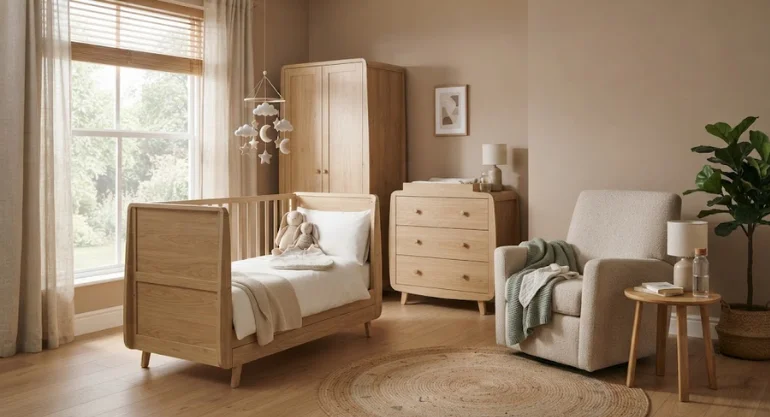
Setting up a nursery is one of the most exciting parts of preparing for a baby, but it can also be one of the most expensive if you’re not careful. Cots, wardrobes, changing units, nursing chairs, the costs add up quickly, and it’s easy to feel pressure to get everything “just right” the first time. The problem is, babies grow fast. What works for a newborn is often outgrown within a year or two, which is exactly why so many parents are now turning to convertible nursery furniture instead of buying separate pieces for every stage.
This guide walks through what convertible nursery furniture actually means, what to look for when buying it, and how to build a nursery that genuinely lasts, rather than one you’ll be replacing piece by piece before your child even starts school.
Convertible nursery furniture refers to pieces designed to adapt as your child grows, rather than being used for a single, short stage of babyhood. The most common example is a cot bed, a cot that converts into a toddler bed, and sometimes later into a small single bed, all from the same base frame.
The idea has grown in popularity across the UK for a straightforward reason: it stretches the usable life of a piece of furniture from a few months to several years, sometimes right up to age seven or eight depending on the model. Instead of buying a cot, then a toddler bed, then a single bed in quick succession, you buy one adaptable piece and adjust it as needed. You might want to explore the various options available at Babymore. From a diverse collection of cots to proper nursery furniture, nursing chair and travel systems, Babymore has got you covered.
This isn’t just about saving money, though that’s a significant part of it. It’s also about reducing waste, cutting down on the disruption of constantly changing your child’s sleep environment, and making better use of space in what is often the smallest bedroom in the house.
A few years ago, most nurseries were kitted out with furniture based purely on age brackets: a cot for the first year or two, then a toddler bed, then eventually a “big kid” bedroom set. Today’s nursery furniture buying guide looks quite different, because the furniture itself has changed.
Manufacturers have responded to a genuine shift in how parents shop. Rising costs, smaller living spaces, and a growing awareness of sustainability have all pushed the market towards furniture that’s built to last through multiple stages rather than a single one. If you’re buying nursery furniture in 2026, it’s worth approaching the decision less like “what does a newborn need” and more like “what will this room need over the next five to seven years.”
Not all cot bed furniture converts equally well. Some models offer a simple conversion, removing one side to create a toddler bed, while others go further, extending in length or adjusting height to accommodate a growing child properly.
When comparing cot beds, check for:
A cot bed that ticks these boxes tends to serve a child comfortably from birth right through to around age six or seven, which is a considerable stretch of usable life from one purchase.
Baby room furniture needs to change constantly in the early years. A newborn’s wardrobe is full of tiny babygrows and requires easy access for quick outfit changes at 3am. A toddler’s wardrobe holds bulkier clothes, shoes, and toys that need to be reachable by small hands as they start dressing themselves.
Look for wardrobes and drawer units with adjustable shelving or removable rails, so the internal layout can change as your child’s storage needs evolve. Chest of drawers with rounded, child safe edges are also worth prioritising once your toddler starts climbing and exploring independently.
Changing tables are a strange category of nursery furniture in that they have an extremely short shelf life if bought as a standalone piece, most children are out of nappies and off the changing table by two or three years old at the latest. A changing unit that converts into a regular chest of drawers or a low bookshelf once it’s no longer needed for changing avoids that awkward “what do I do with this now” moment.
It’s easy to overlook seating in the excitement of choosing a cot, but a good nursing chair earns its place in the room for years, not months. Feeding sessions in the early months, bedtime stories once your toddler moves into their own bed, and quiet moments together as your child grows all happen in that same chair.
When choosing seating, look for:
Long lasting nursery furniture depends heavily on the materials used, not just the design. Solid wood frames with a durable lacquer or wax finish tend to outperform cheaper composite materials over several years of daily wear. Check whether drawers run on proper metal glides rather than plastic runners, and whether hinges and handles are replaceable if they wear out, rather than requiring the whole unit to be discarded.
It’s also worth checking for certifications. Furniture that meets British and European safety standards (look for BS EN 716 for cots and cot beds specifically) gives you a baseline assurance around structural safety, spacing between bars, and finish safety that’s worth confirming before you buy.
Thinking about nursery investment properly means looking beyond the price tag on the day of purchase. A cheaper cot that needs replacing after eighteen months, followed by a separate toddler bed a year later, often ends up costing more overall than one well made cot bed that serves both purposes and more.
There’s also a resale angle worth considering. Well maintained convertible nursery furniture, particularly from established brands, tends to hold its value reasonably well on the secondhand market, since other parents are increasingly looking for the same longevity you were. If you’re buying for a first child but plan to have more, a durable set of furniture that survives multiple children is arguably one of the better financial decisions you can make in early parenting.
Choosing the right individual pieces matters, but so does how they work together as a room. Babymore’s nursery furniture range is built around this idea of coordinated, long term use, with wardrobes, drawers, and cot beds designed to sit together as matching sets rather than mismatched pieces bought separately over time.
If a convertible cot bed is the centrepiece of your plan, it’s worth browsing Babymore’s cot beds collection specifically, since the range spans a variety of conversion styles and finishes that can be matched to the rest of the room.
And as mentioned above, seating is easy to underestimate until you’re in the thick of nightly feeds. A well built nursing chair is worth budgeting for alongside the bigger furniture pieces, rather than treating it as an afterthought once everything else is in place.
If you haven’t already mapped out everything your nursery needs before you start buying, it’s worth working through a proper nursery furniture checklist first, so you’re buying with the full room in mind rather than piecing it together as you go. Once you’ve chosen your furniture, our guide on how to set up nursery furniture covers practical placement, safety spacing, and layout tips to help the room function well from day one.
Before you buy, it helps to ask a short set of practical questions:
Choosing nursery furniture that grows with your child is less about finding the trendiest set and more about thinking several years ahead from the very start. Convertible nursery furniture, particularly a well made cot bed, genuinely earns its place as one of the smarter purchases you’ll make in early parenting, cutting down on repeat costs, reducing waste, and giving your child a consistent, familiar space as they grow from baby to toddler and beyond.
Take the time to work through a proper checklist, prioritise materials and safety certification over style alone, and think of the room as a long term setup rather than a collection of separate, short lived purchases. Get that right, and you’ll likely find yourselves replacing far less furniture, and far less often, than you originally expected.
1. What age does convertible nursery furniture actually last until?
It depends on the specific piece and how many conversion stages it offers. A cot bed that converts from a cot to a toddler bed typically serves a child until around age three or four, but models that convert a second time into a small single bed can often be used until age seven or eight. Wardrobes and storage units tend to have an even longer usable life, since adjustable shelving and rails let them adapt well beyond the nursery years and into a child’s early primary school bedroom.
In most cases, yes. A convertible cot bed usually costs more upfront than a basic newborn cot, but it replaces what would otherwise be two or three separate purchases, a cot, a toddler bed, and sometimes an early single bed, bought individually over several years. When you factor in the cost of new mattresses at each stage as well, buying one adaptable piece from the start is generally the more economical choice over the full lifespan of the furniture.
No, most cot beds are used in their standard cot configuration for the first one to two years before any conversion is needed, so there’s no rush to buy a conversion kit at the same time as the cot itself. That said, it’s worth checking at the point of purchase whether the kit is included, sold separately, or likely to be discontinued later, since some parents find their exact model’s conversion kit harder to source once it’s an older design.
Cots and cot beds sold in the UK should meet British and European safety standard BS EN 716, which covers structural safety, the spacing between cot bars, and finish safety among other requirements. It’s worth checking for this certification on the product listing or packaging, particularly if you’re buying from a lesser known brand or considering a secondhand piece, since older or non compliant furniture may not meet current spacing and safety guidelines.
Yes, and this is one of the main reasons it’s considered a good nursery investment. Well made convertible furniture, particularly solid wood cot beds and wardrobes, can generally be reused for subsequent children with only minor refreshing, such as a new mattress or a repaint, needed between uses. Just check the frame, joints, and hardware for wear before reusing, and always confirm the piece still meets current safety standards if there’s been a significant gap between children.
Start with a proper nursery furniture checklist so you know exactly what the room needs before you start buying individual pieces, rather than adding items as you think of them. Prioritise your budget towards the pieces that get the most long-term use, typically the cot bed and a wardrobe or storage unit, since these tend to see the heaviest daily wear over the longest period. Furniture used for a shorter stage, such as a changing unit, is worth choosing with its second life in mind, ideally something that converts into a piece you’ll still want once nappies are behind you.