Choosing a car seat is one of the few nursery decisions with a genuine safety deadline attached, your baby needs one for the journey home from hospital. Babymore’s car seats are all certified to the i-Size (R129) standard, the current EU safety regulation that bases fit on your child’s height rather than weight alone, and the range spans lightweight infant seats for the newborn stage through to rotating, extended-use seats designed to see a child through to their early teens. Every seat can be bought on its own or as part of a full travel system bundled with a compatible chassis.
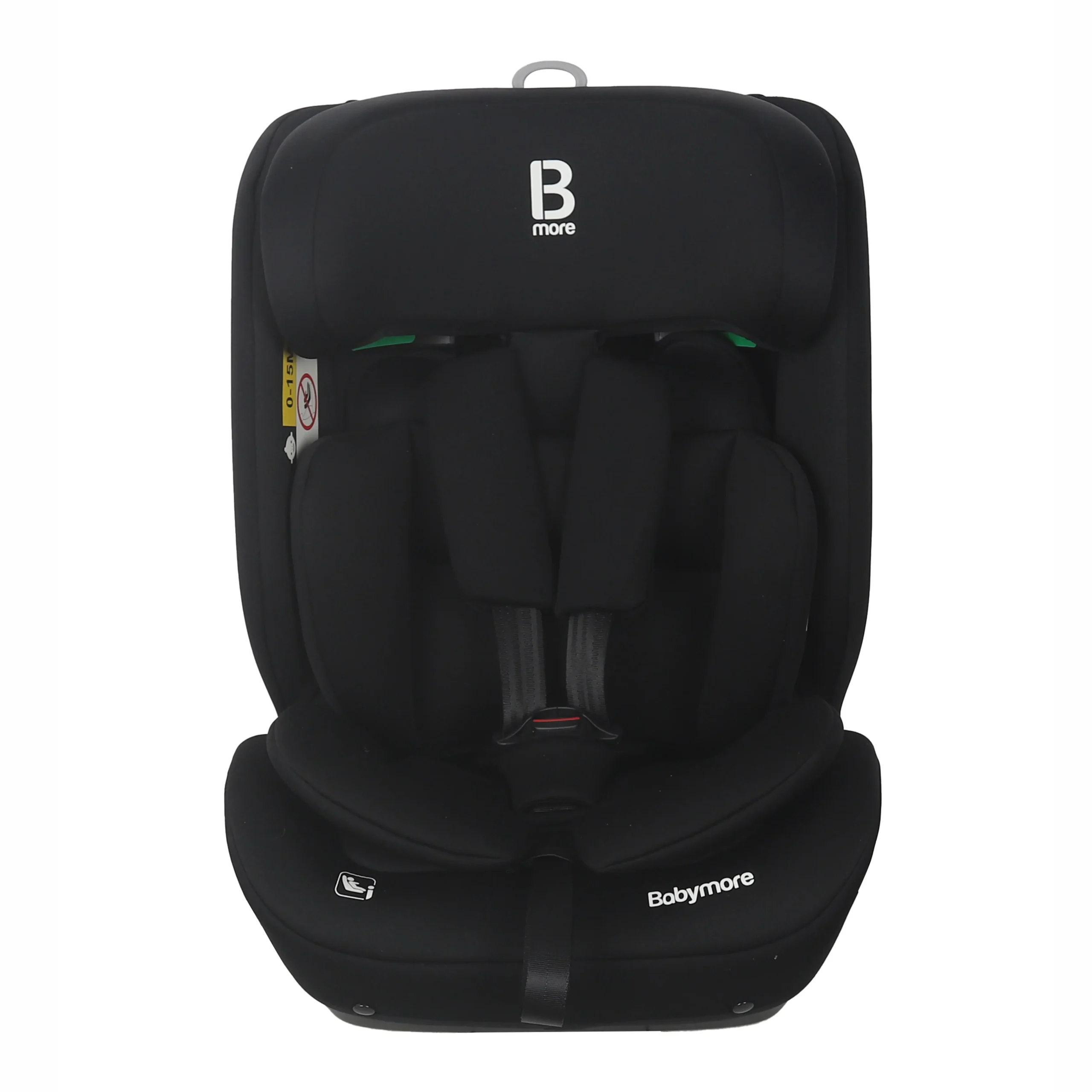
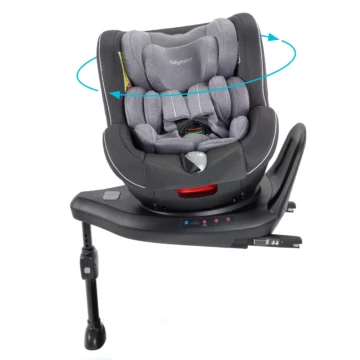
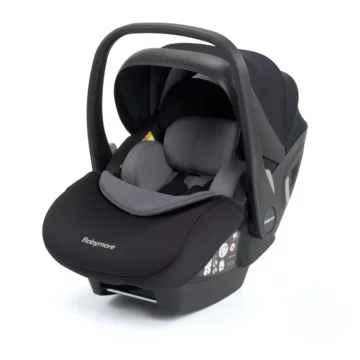
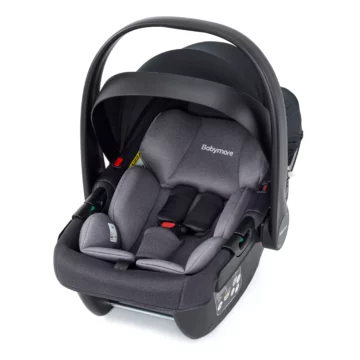
The first real decision is how far into your child’s life you want a single seat to last, our guide on infant carrier vs convertible car seat breaks down this exact choice in more depth. Coco and Pecan are both dedicated infant seats, rearward-facing and suitable from birth to approximately 15 months (40-87cm), designed to be lightweight and easy to carry between car and pram as part of a travel system, or to clip onto a compatible chassis from our prams and pushchairs range if you already own one. Kola and Macadamia take a different approach, rotating 360° and covering a much longer stretch of childhood: Kola from birth to around 4 years (up to 105cm), and Macadamia from birth all the way to around 12 years (up to 135cm), transitioning to the vehicle’s own seatbelt once your child is tall enough. Neither approach is objectively better, an infant seat suits families who want the lightest, most portable option for the early months and plan to buy a separate seat later, while an all-stage seat suits families who’d rather make one purchase and be done.
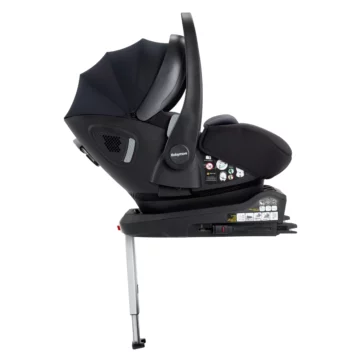
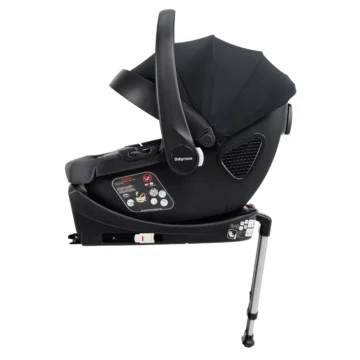
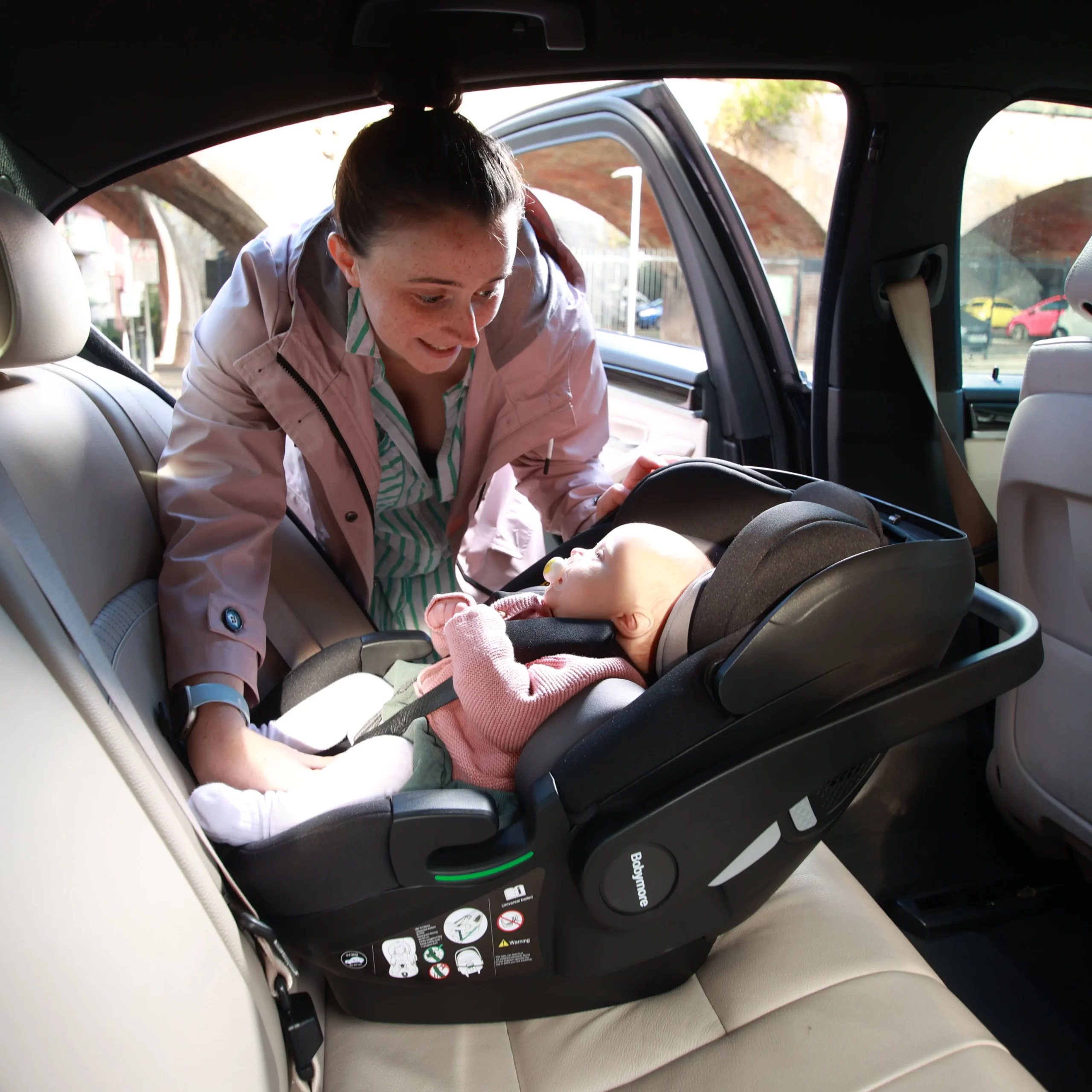
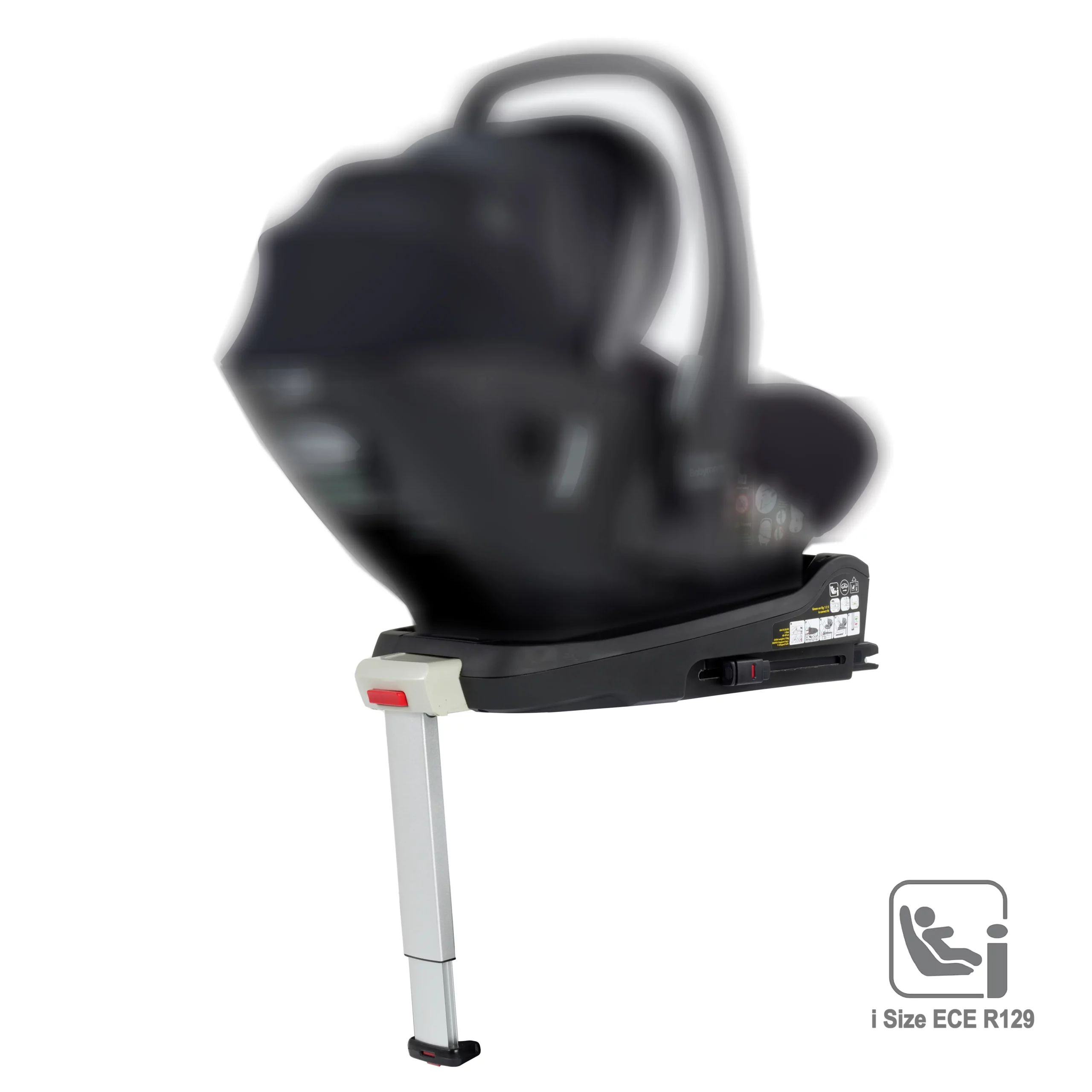
Every car seat in the range can be installed either belted directly into the car or paired with a matching Isofix base for one-button installation and release. A base isn’t a legal requirement in the UK, a correctly belted seat is just as safe, but it does reduce the chance of a fitting error and speeds up the in-and-out of daily use considerably. Our guide on do you need an ISOFIX base goes through the full case for and against each approach if you’re still deciding.
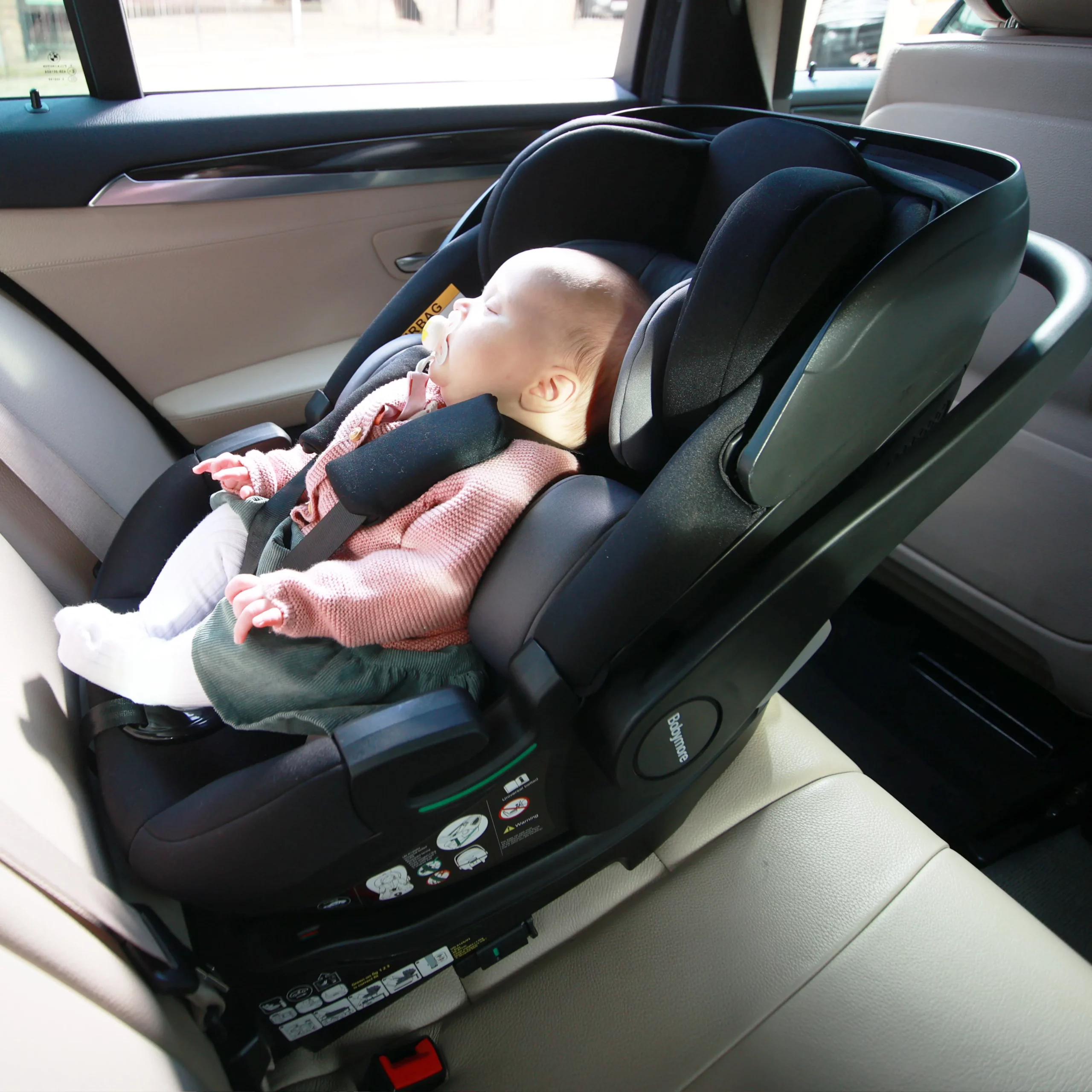
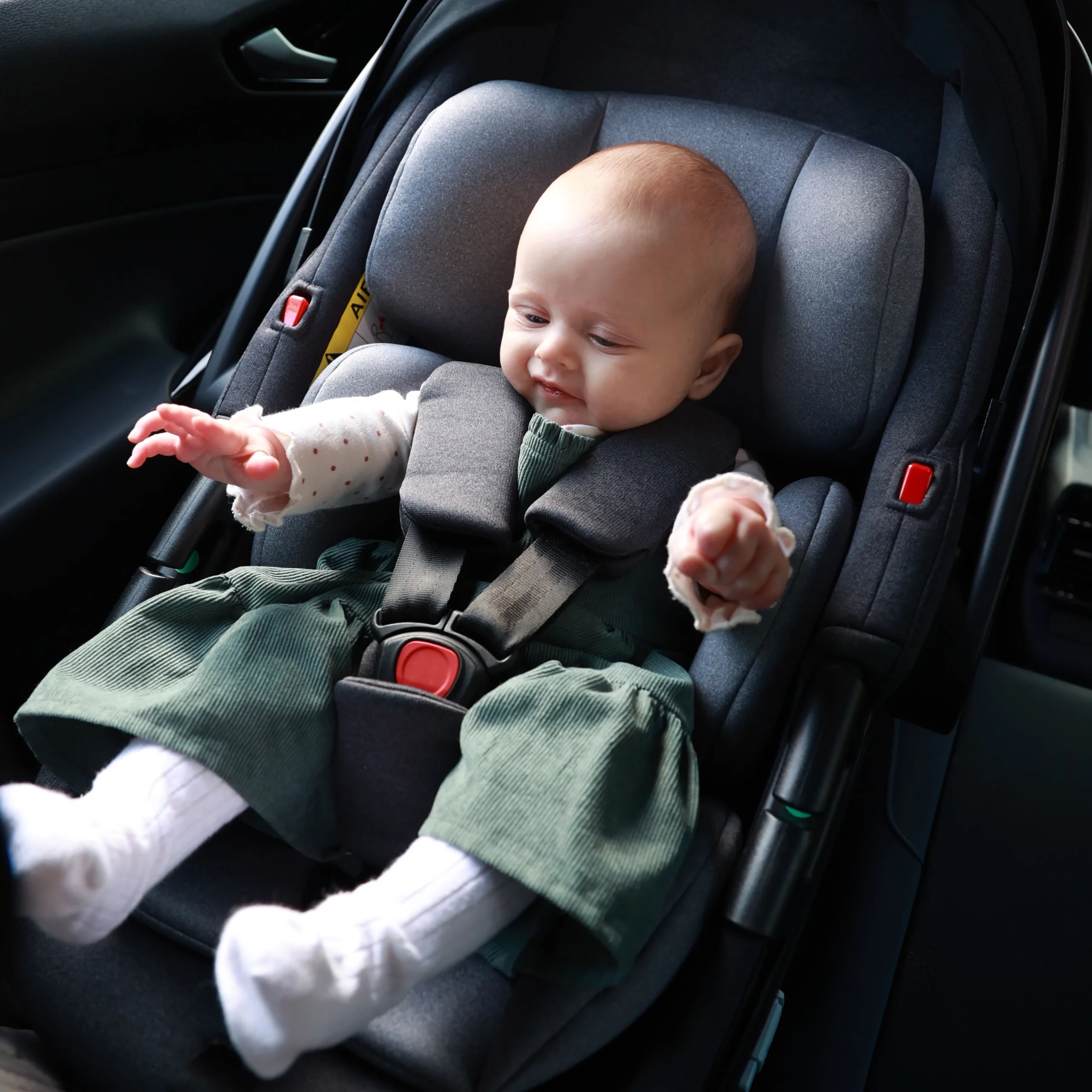
Beyond the core safety fit, the infant seats in particular differ in day-to-day comfort. Coco is built to be genuinely lightweight and streamlined, with multi-stage body hugg inlays that can be removed as your baby grows and a 3-point harness with enhanced side-impact protection. Pecan adds a double canopy, a 6-position headrest, and a deeper 138° recline, along with enhanced ventilation from the base and sides, worth considering if your baby tends to do a lot of car napping or you’re regularly on longer journeys.
Choosing a car seat is one of the few nursery decisions with a genuine safety deadline attached, your baby needs one for the journey home from hospital. Babymore’s car seats are all certified to the i-Size (R129) standard, the current EU safety regulation that bases fit on your child’s height rather than weight alone, and the range spans lightweight infant seats for the newborn stage through to rotating, extended-use seats designed to see a child through to their early teens. Every seat can be bought on its own or as part of a full travel system bundled with a compatible chassis.
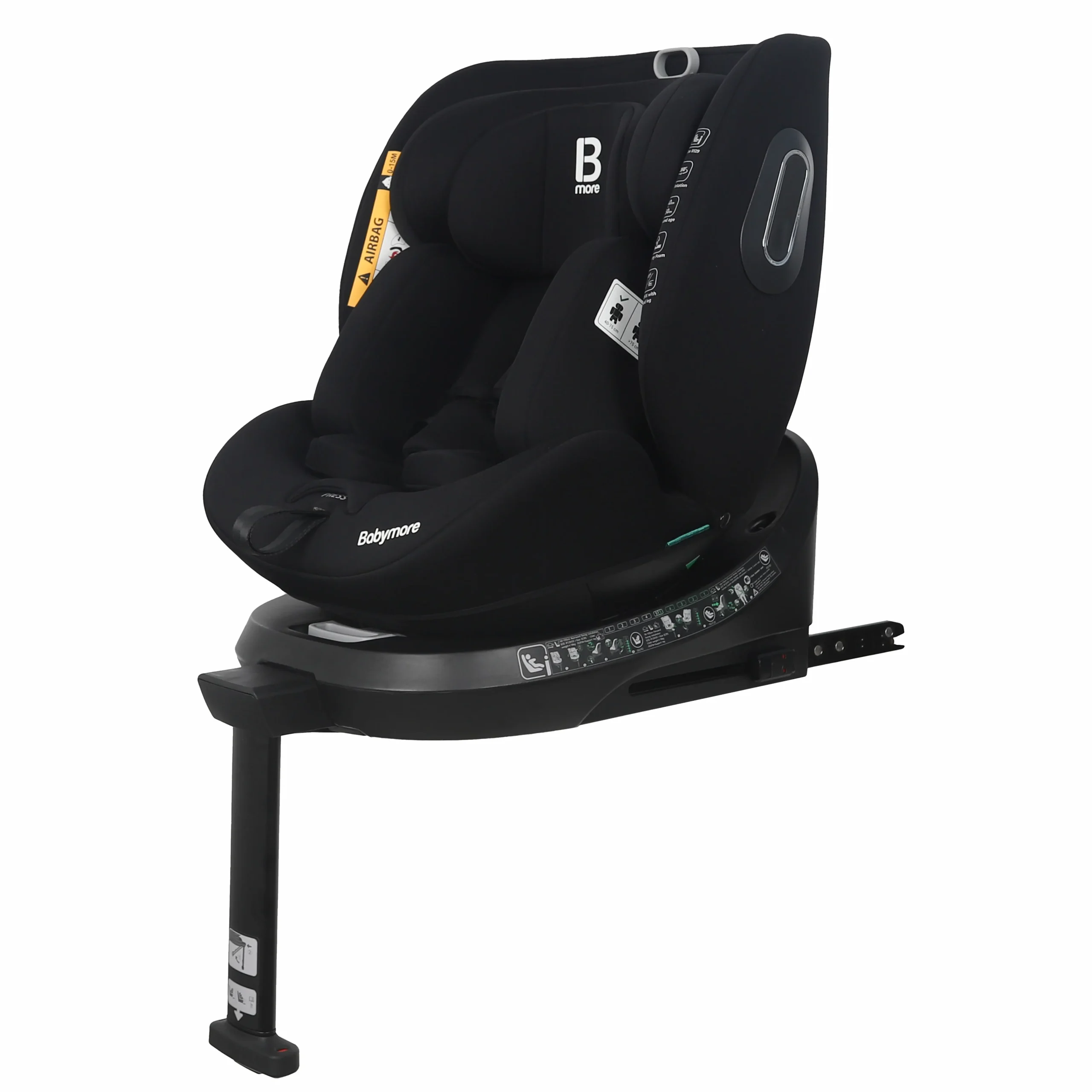
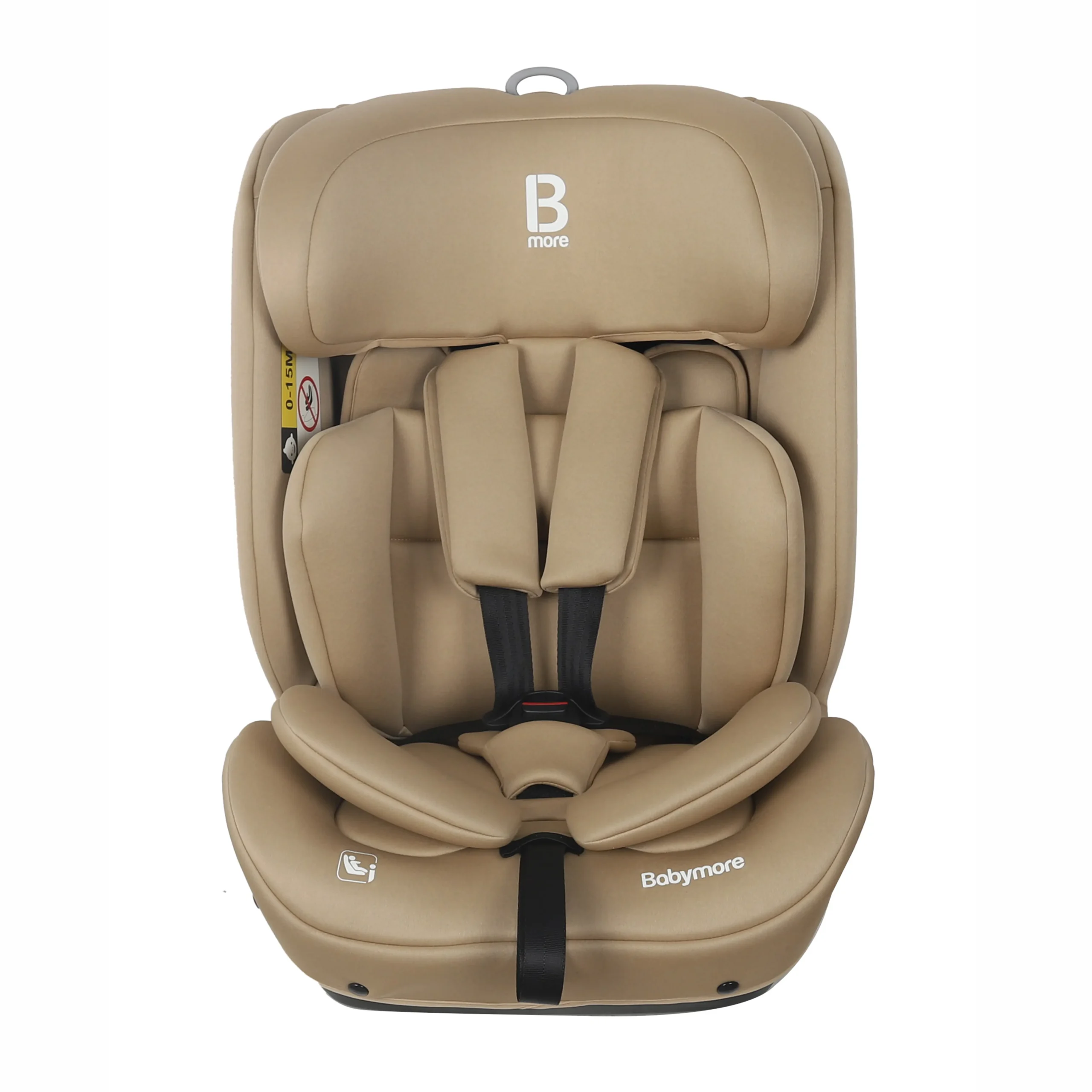
The first real decision is how far into your child’s life you want a single seat to last, our guide on infant carrier vs convertible car seat breaks down this exact choice in more depth. Coco and Pecan are both dedicated infant seats, rearward-facing and suitable from birth to approximately 15 months (40-87cm), designed to be lightweight and easy to carry between car and pram as part of a travel system, or to clip onto a compatible chassis from our prams and pushchairs range if you already own one. Kola and Macadamia take a different approach, rotating 360° and covering a much longer stretch of childhood: Kola from birth to around 4 years (up to 105cm), and Macadamia from birth all the way to around 12 years (up to 135cm), transitioning to the vehicle’s own seatbelt once your child is tall enough.
Neither approach is objectively better, an infant seat suits families who want the lightest, most portable option for the early months and plan to buy a separate seat later, while an all-stage seat suits families who’d rather make one purchase and be done.
Every car seat in the range can be installed either belted directly into the car or paired with a matching Isofix base for one-button installation and release. A base isn’t a legal requirement in the UK, a correctly belted seat is just as safe, but it does reduce the chance of a fitting error and speeds up the in-and-out of daily use considerably. Our guide on do you need an ISOFIX base goes through the full case for and against each approach if you’re still deciding.
Beyond the core safety fit, the infant seats in particular differ in day-to-day comfort. Coco is built to be genuinely lightweight and streamlined, with multi-stage body hugg inlays that can be removed as your baby grows and a 3-point harness with enhanced side-impact protection. Pecan adds a double canopy, a 6-position headrest, and a deeper 138° recline, along with enhanced ventilation from the base and sides, worth considering if your baby tends to do a lot of car napping or you’re regularly on longer journeys.



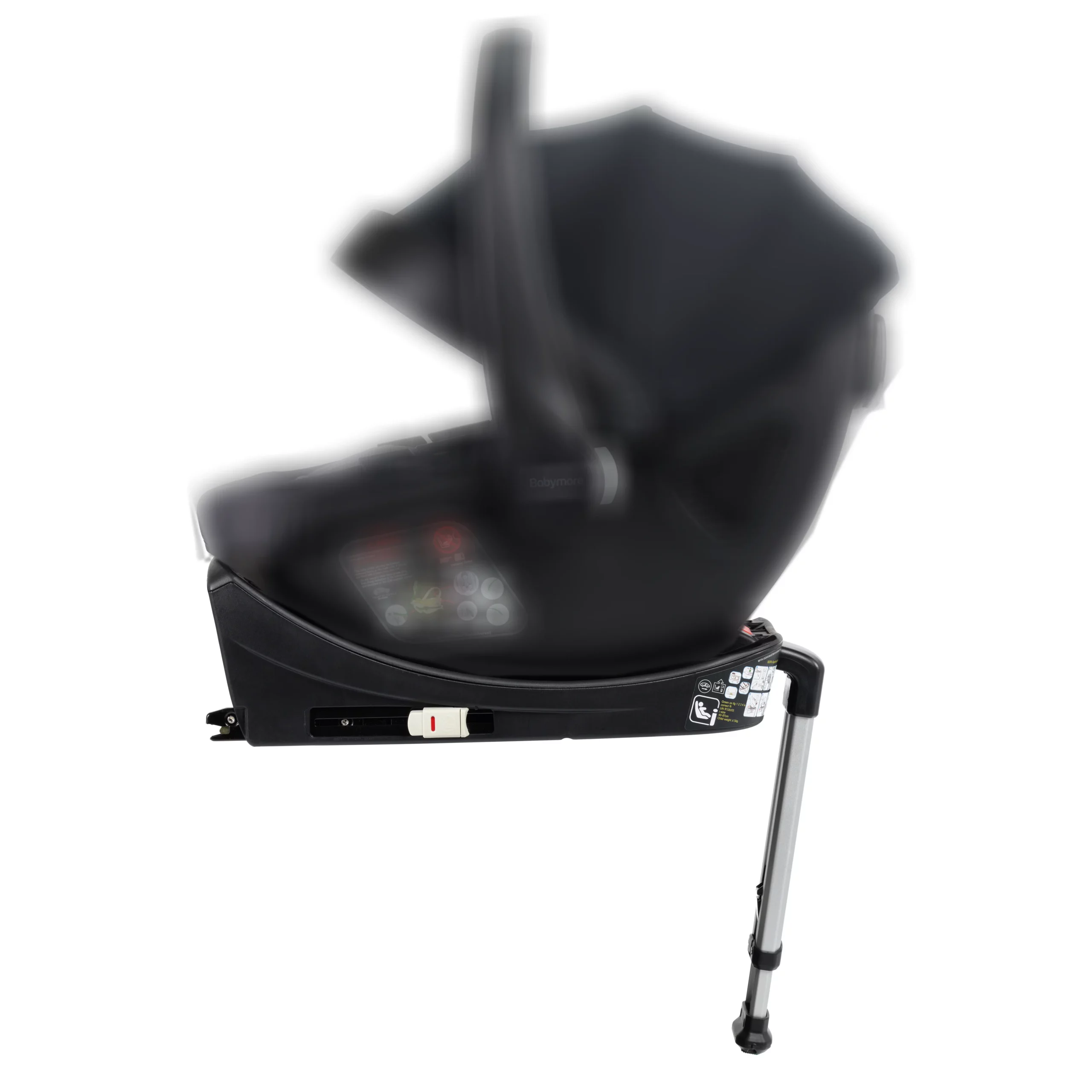
Choosing a car seat is one of the few nursery decisions with a genuine safety deadline attached, your baby needs one for the journey home from hospital. Babymore’s car seats are all certified to the i-Size (R129) standard, the current EU safety regulation that bases fit on your child’s height rather than weight alone, and the range spans lightweight infant seats for the newborn stage through to rotating, extended-use seats designed to see a child through to their early teens. Every seat can be bought on its own or as part of a full travel system bundled with a compatible chassis.
The first real decision is how far into your child’s life you want a single seat to last, our guide on infant carrier vs convertible car seat breaks down this exact choice in more depth. Coco and Pecan are both dedicated infant seats, rearward-facing and suitable from birth to approximately 15 months (40-87cm), designed to be lightweight and easy to carry between car and pram as part of a travel system, or to clip onto a compatible chassis from our prams and pushchairs range if you already own one. Kola and Macadamia take a different approach, rotating 360° and covering a much longer stretch of childhood: Kola from birth to around 4 years (up to 105cm), and Macadamia from birth all the way to around 12 years (up to 135cm), transitioning to the vehicle’s own seatbelt once your child is tall enough. Neither approach is objectively better, an infant seat suits families who want the lightest, most portable option for the early months and plan to buy a separate seat later, while an all-stage seat suits families who’d rather make one purchase and be done.
Every car seat in the range can be installed either belted directly into the car or paired with a matching Isofix base for one-button installation and release. A base isn’t a legal requirement in the UK, a correctly belted seat is just as safe, but it does reduce the chance of a fitting error and speeds up the in-and-out of daily use considerably. Our guide on do you need an ISOFIX base goes through the full case for and against each approach if you’re still deciding.
Beyond the core safety fit, the infant seats in particular differ in day-to-day comfort. Coco is built to be genuinely lightweight and streamlined, with multi-stage body hugg inlays that can be removed as your baby grows and a 3-point harness with enhanced side-impact protection. Pecan adds a double canopy, a 6-position headrest, and a deeper 138° recline, along with enhanced ventilation from the base and sides, worth considering if your baby tends to do a lot of car napping or you’re regularly on longer journeys.
Choosing a car seat is one of the few nursery decisions with a genuine safety deadline attached, your baby needs one for the journey home from hospital. Babymore’s car seats are all certified to the i-Size (R129) standard, the current EU safety regulation that bases fit on your child’s height rather than weight alone, and the range spans lightweight infant seats for the newborn stage through to rotating, extended-use seats designed to see a child through to their early teens. Every seat can be bought on its own or as part of a full travel system bundled with a compatible chassis.
The first real decision is how far into your child’s life you want a single seat to last, our guide on infant carrier vs convertible car seat breaks down this exact choice in more depth. Coco and Pecan are both dedicated infant seats, rearward-facing and suitable from birth to approximately 15 months (40-87cm), designed to be lightweight and easy to carry between car and pram as part of a travel system, or to clip onto a compatible chassis from our prams and pushchairs range if you already own one. Kola and Macadamia take a different approach, rotating 360° and covering a much longer stretch of childhood: Kola from birth to around 4 years (up to 105cm), and Macadamia from birth all the way to around 12 years (up to 135cm), transitioning to the vehicle’s own seatbelt once your child is tall enough.
Neither approach is objectively better, an infant seat suits families who want the lightest, most portable option for the early months and plan to buy a separate seat later, while an all-stage seat suits families who’d rather make one purchase and be done.
Every car seat in the range can be installed either belted directly into the car or paired with a matching Isofix base for one-button installation and release. A base isn’t a legal requirement in the UK, a correctly belted seat is just as safe, but it does reduce the chance of a fitting error and speeds up the in-and-out of daily use considerably. Our guide on do you need an ISOFIX base goes through the full case for and against each approach if you’re still deciding.
Beyond the core safety fit, the infant seats in particular differ in day-to-day comfort. Coco is built to be genuinely lightweight and streamlined, with multi-stage body hugg inlays that can be removed as your baby grows and a 3-point harness with enhanced side-impact protection. Pecan adds a double canopy, a 6-position headrest, and a deeper 138° recline, along with enhanced ventilation from the base and sides, worth considering if your baby tends to do a lot of car napping or you’re regularly on longer journeys.