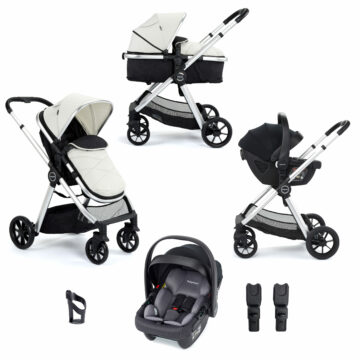
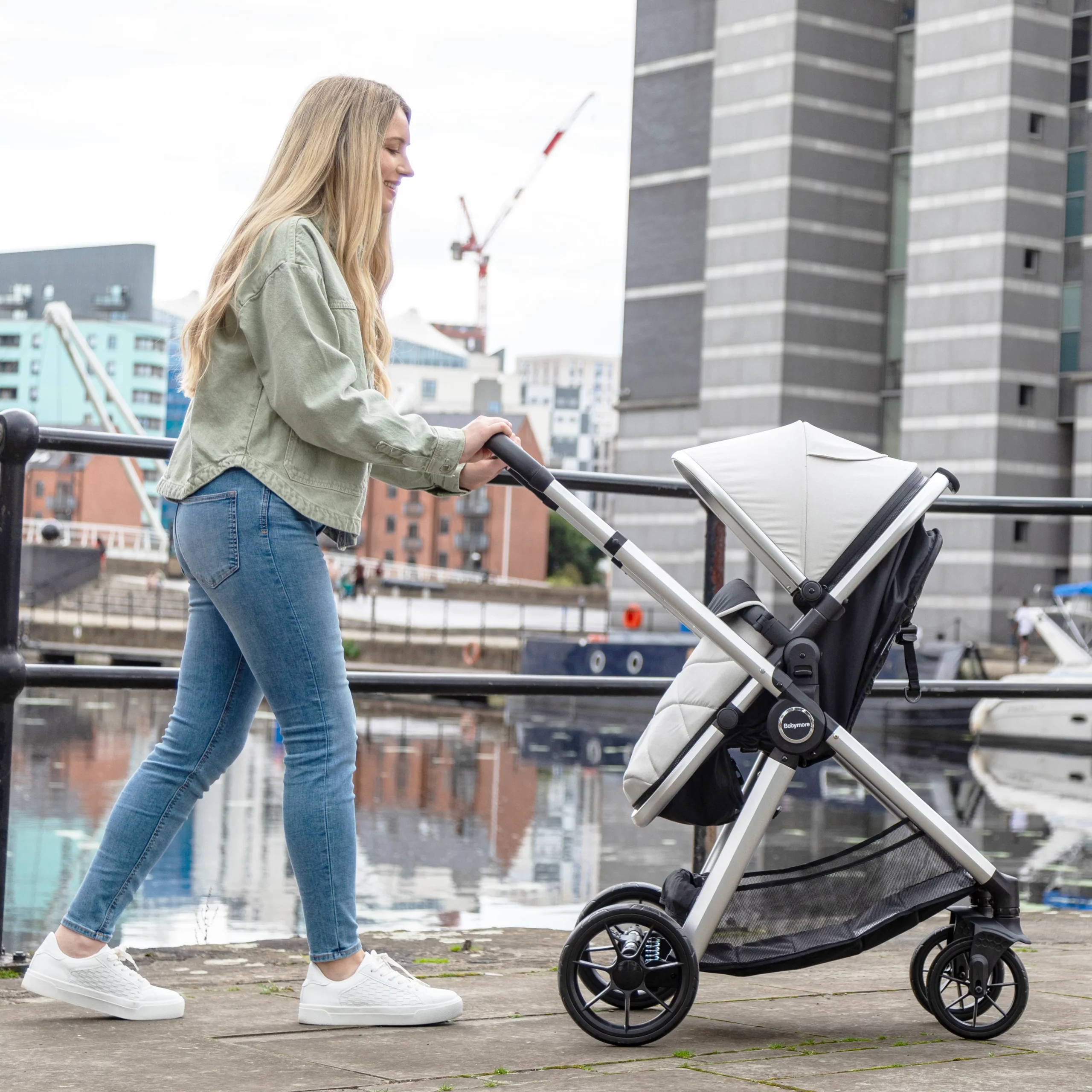
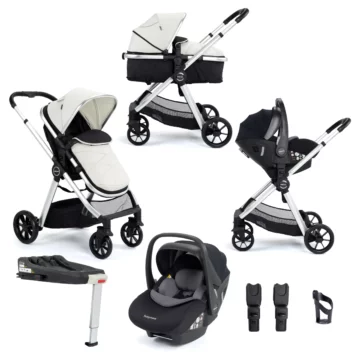
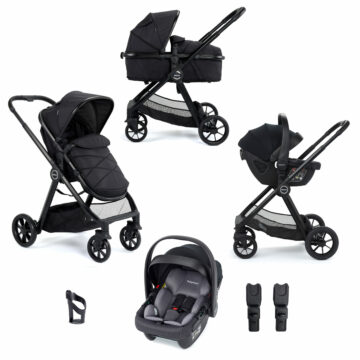
A travel system takes the guesswork out of matching a pushchair to a car seat separately, giving you one coordinated setup that moves your baby from car to pavement without disturbing a sleeping baby along the way. Babymore’s travel systems combine a chassis, a carrycot for the newborn stage, a seat unit for when your baby can sit up, and a compatible car seat, all designed and tested to work together rather than assembled from mismatched parts.
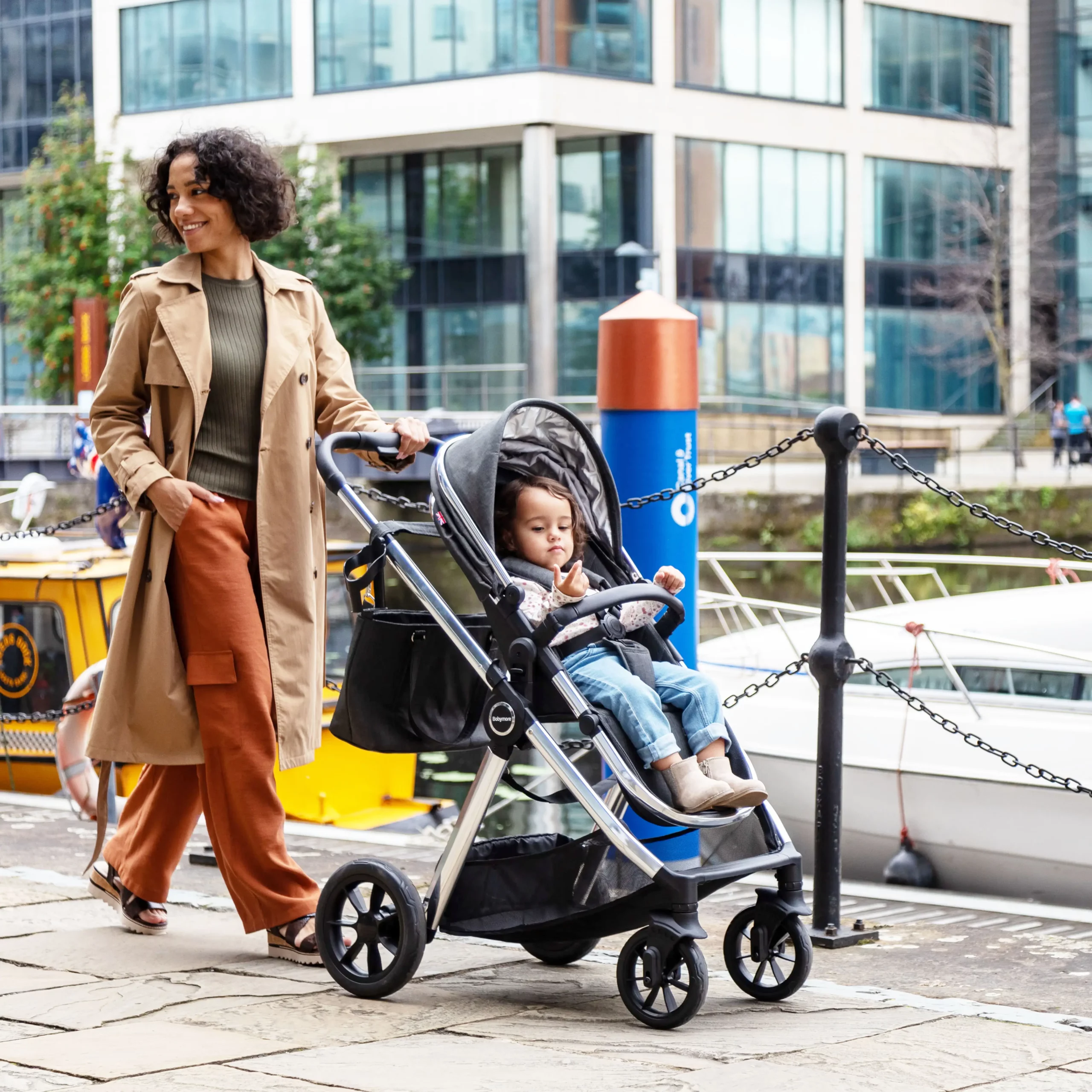
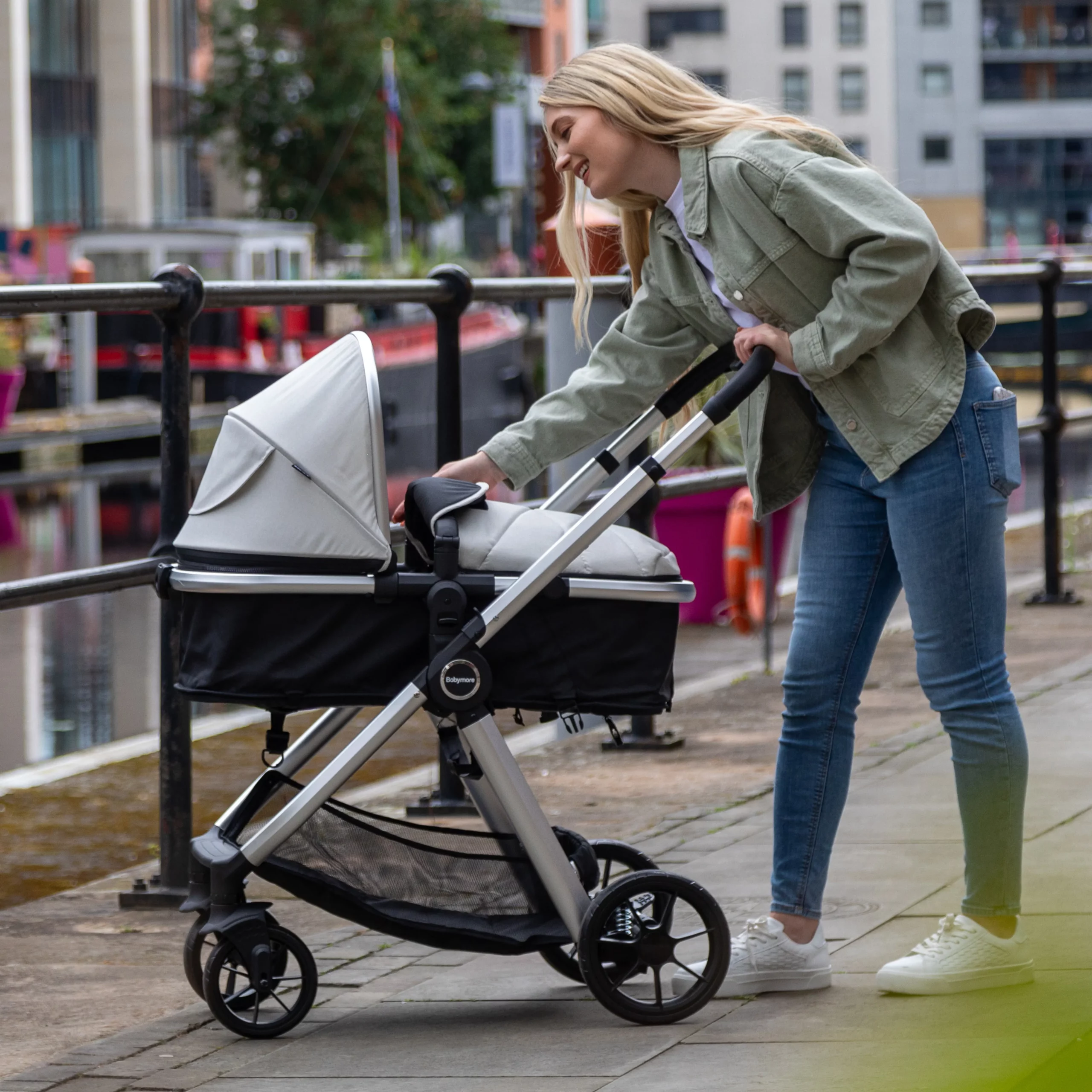
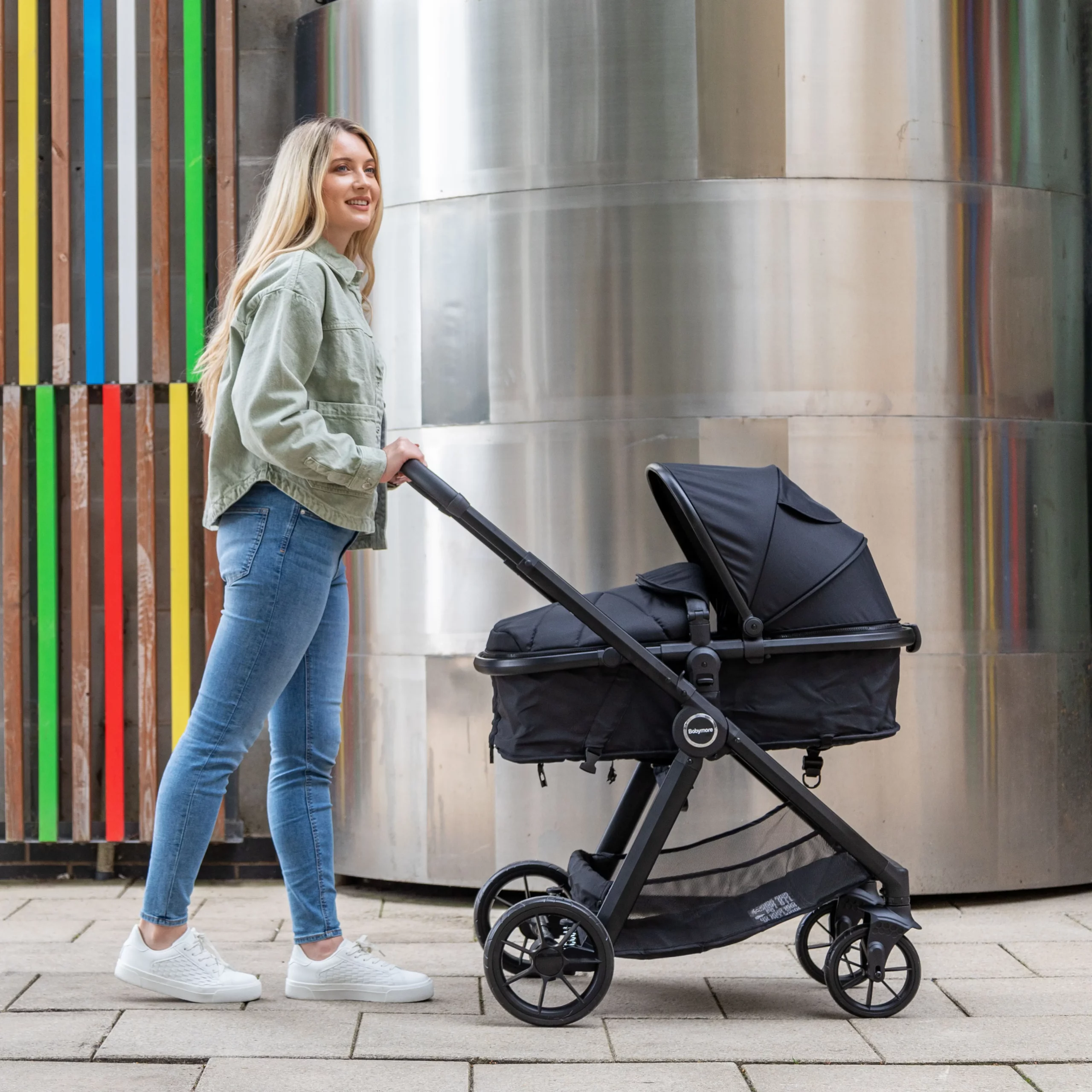
The same chassis carries your baby through several genuinely different stages. In the earliest months, the carrycot gives a true lie-flat sleeping surface for naps and outings, before the seat unit takes over once your baby can sit up unaided, generally from around six months, and remains suitable up to around four years old.
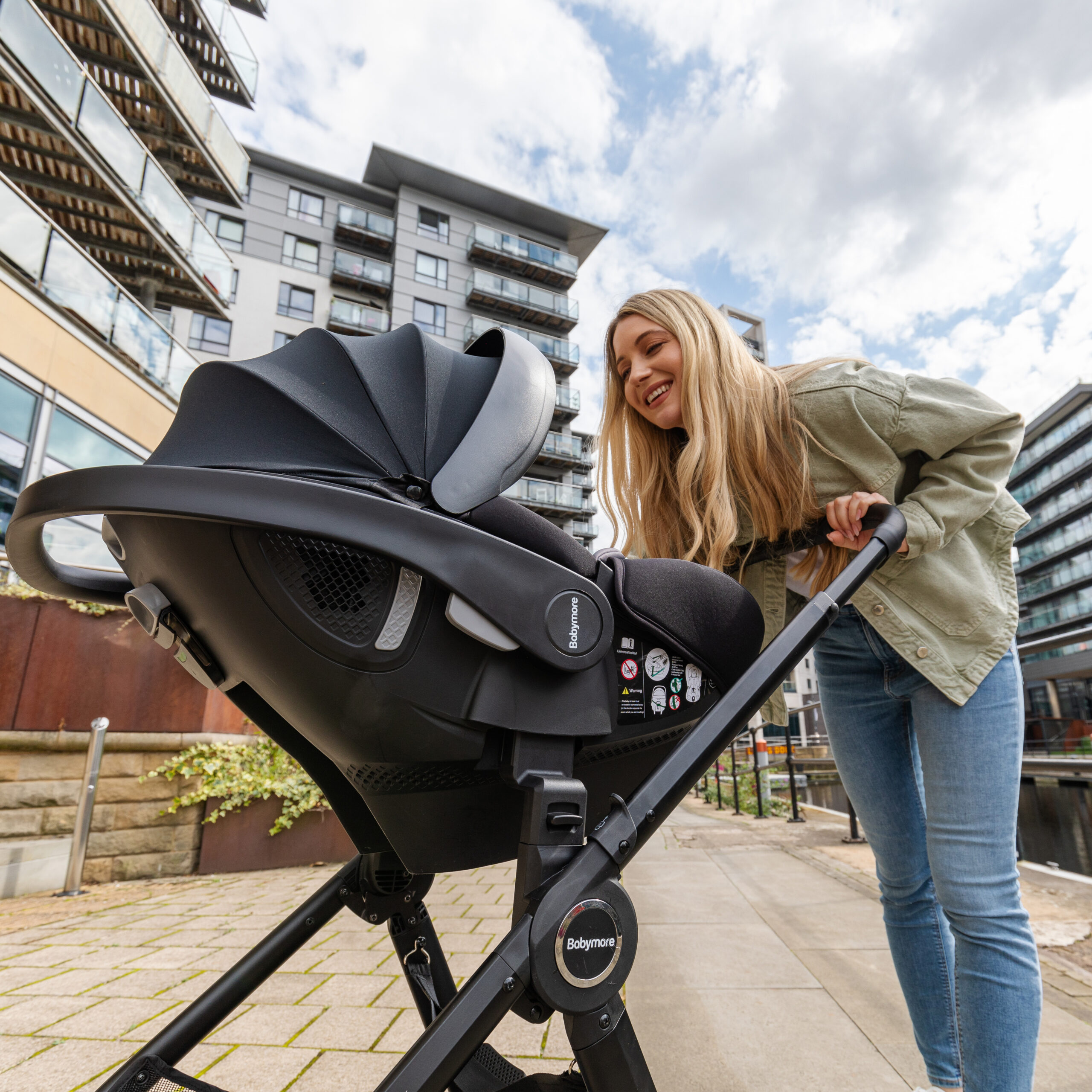
The infant car seat clips onto the same chassis using car seat adaptors, so a sleeping baby can move from car to pavement without waking, and it stays part of the system until your child outgrows it, typically around 15 months, at which point a larger, height-appropriate seat takes over.
Our guide on the travel system lifecycle and how long a travel system typically lasts covers this in more detail, and if you’re still deciding whether a travel system is right for you, our guide on what a travel system actually is is a good place to start.
Not every family needs the same car seat setup. If you’re mainly using the car for short, everyday trips, a lightweight infant seat like Coco keeps things simple. If comfort on longer journeys matters more, Pecan’s deeper recline and enhanced ventilation are worth the difference.
For families who want one car seat to last well beyond the travel system stage, Kola rotates 360° and extends coverage to age 4, both certified to the i-Size (R129) standard. Our car seat buying guide and car seat stages guide break this down further, and if you’d like to understand rotating seats specifically, see our guide on 360° rotating car seats.
Every chassis is tested to current British and European safety standards, and the range spans genuinely different use cases, from lightweight, everyday chassis designs to sturdier builds with puncture-proof wheels and sprung suspension for parks, gravel paths, and mixed terrain.
Folding mechanisms, storage baskets, and weatherproofing all vary by collection, so it’s worth thinking about your actual daily routine, city pavements, countryside walks, regular car journeys, before choosing. Our guides on choosing the right pushchair and weatherproofing your pushchair can help you match a setup to your routine. Once you’ve chosen your system, our step-by-step setup guide walks you through putting it all together.


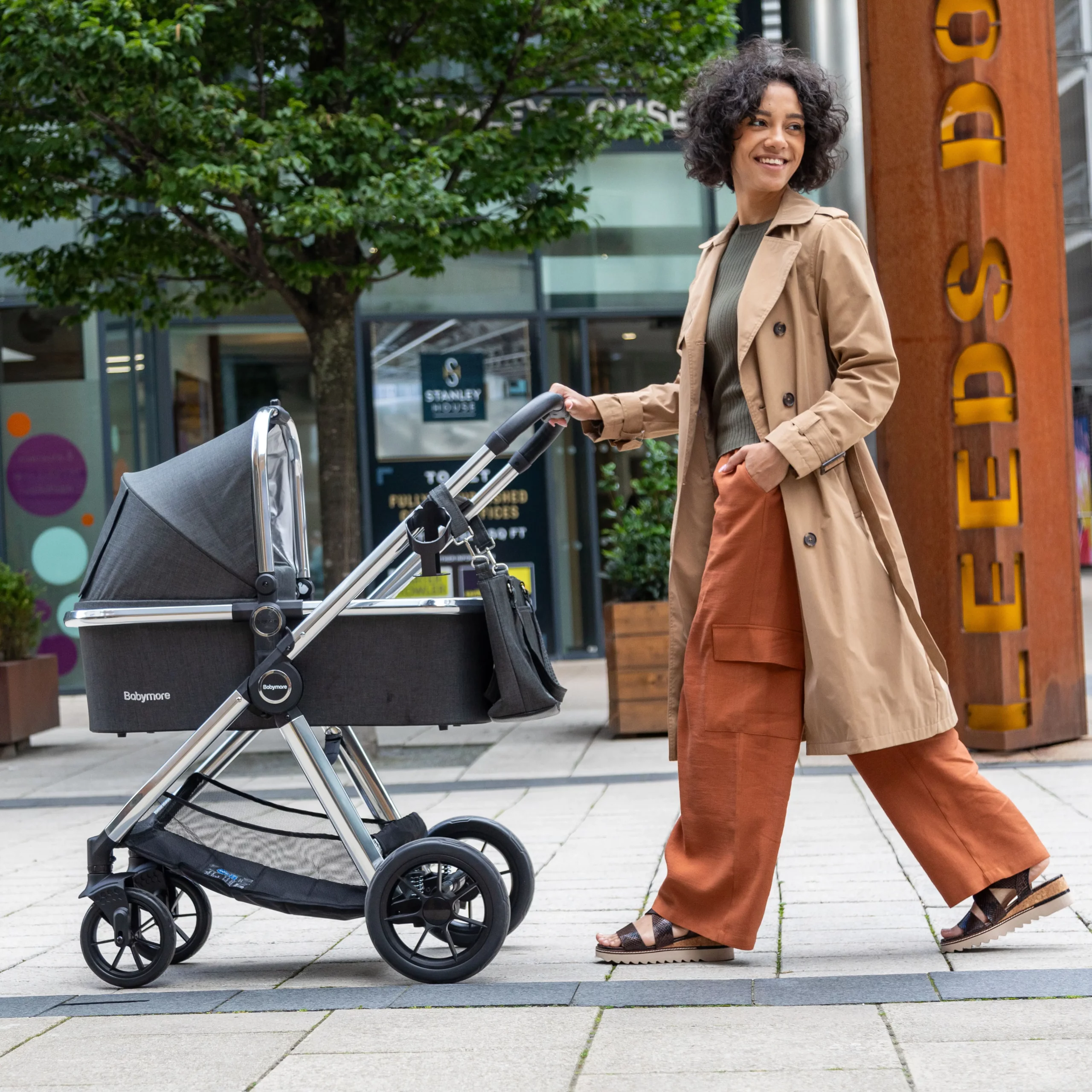
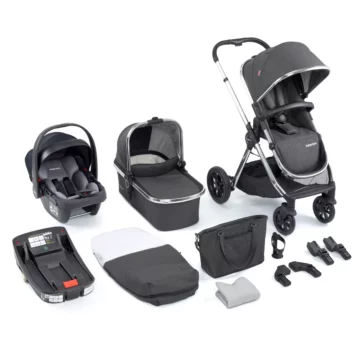

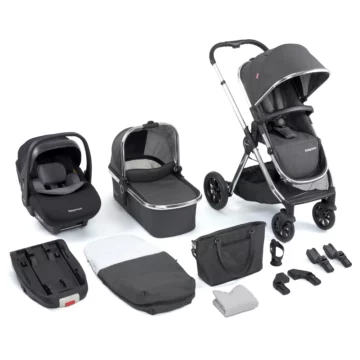
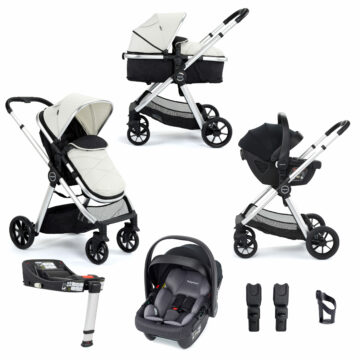

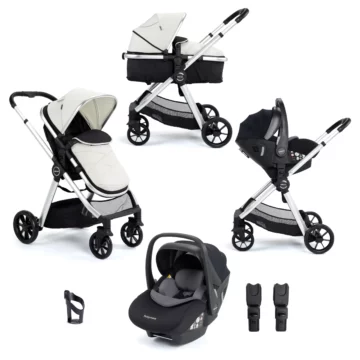

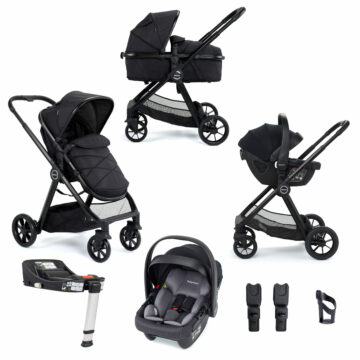
A travel system takes the guesswork out of matching a pushchair to a car seat separately, giving you one coordinated setup that moves your baby from car to pavement without disturbing a sleeping baby along the way. Babymore’s travel systems combine a chassis, a carrycot for the newborn stage, a seat unit for when your baby can sit up, and a compatible car seat, all designed and tested to work together rather than assembled from mismatched parts.
The same chassis carries your baby through several genuinely different stages. In the earliest months, the carrycot gives a true lie-flat sleeping surface for naps and outings, before the seat unit takes over once your baby can sit up unaided, generally from around six months, and remains suitable up to around four years old.
The infant car seat clips onto the same chassis using car seat adaptors, so a sleeping baby can move from car to pavement without waking, and it stays part of the system until your child outgrows it, typically around 15 months, at which point a larger, height-appropriate seat takes over.
Our guide on the travel system lifecycle and how long a travel system typically lasts covers this in more detail, and if you’re still deciding whether a travel system is right for you, our guide on what a travel system actually is is a good place to start.
Not every family needs the same car seat setup. If you’re mainly using the car for short, everyday trips, a lightweight infant seat like Coco keeps things simple. If comfort on longer journeys matters more, Pecan’s deeper recline and enhanced ventilation are worth the difference.
For families who want one car seat to last well beyond the travel system stage, Kola rotates 360° and extends coverage to age 4, both certified to the i-Size (R129) standard. Our car seat buying guide and car seat stages guide break this down further, and if you’d like to understand rotating seats specifically, see our guide on 360° rotating car seats.
Every chassis is tested to current British and European safety standards, and the range spans genuinely different use cases, from lightweight, everyday chassis designs to sturdier builds with puncture-proof wheels and sprung suspension for parks, gravel paths, and mixed terrain.
Folding mechanisms, storage baskets, and weatherproofing all vary by collection, so it’s worth thinking about your actual daily routine, city pavements, countryside walks, regular car journeys, before choosing. Our guides on choosing the right pushchair and weatherproofing your pushchair can help you match a setup to your routine. Once you’ve chosen your system, our step-by-step setup guide walks you through putting it all together.