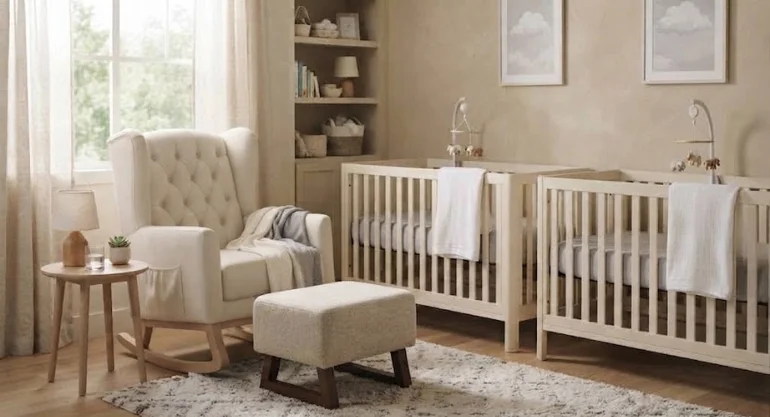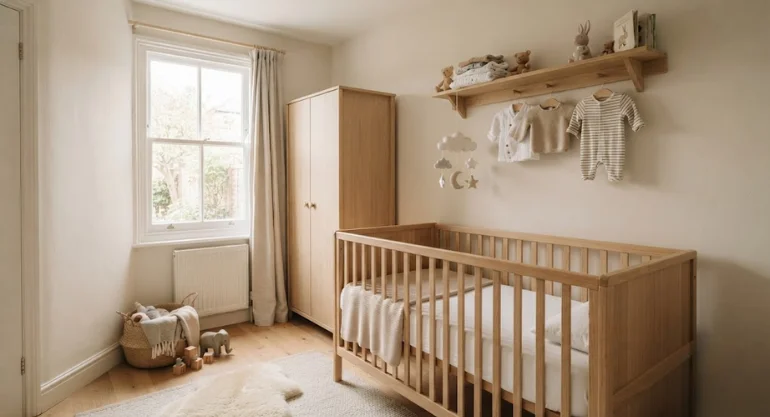
Most nurseries in the UK are small. Between converted box rooms, terraced house second bedrooms, and flats where every square foot counts, the average nursery rarely has the luxury of space that Pinterest boards seem to promise. And yet babies, somehow, come with an enormous amount of stuff. Muslins, sleepsuits in six different sizes, nappies bought in bulk, toys that multiply overnight, it all needs somewhere to go.
This is where good nursery storage ideas earn their keep. Done well, smart storage doesn’t just tidy a room, it changes how the whole space functions day to day, making 3am changes faster, morning routines calmer, and the room easier to keep on top of generally. This guide walks through practical, realistic nursery storage solutions for homes, from clever furniture choices to small organisational habits that make a genuine difference.
It’s easy to treat storage as an afterthought once the cot and pram are sorted, but a poorly planned nursery tends to become chaotic within weeks, not months. Clothes end up in the wrong sizes mixed together, nappy changes take longer because supplies aren’t within reach, and the room starts to feel cluttered even when it technically has enough furniture.
Good nursery organisation ideas start from a simple premise: everything should have a home, and that home should make sense for how you’ll actually use the room at 2am with a crying baby in your arms, not just how it looks when the room is first styled. This means thinking about reach, visibility, and zoning rather than just buying attractive baskets and hoping for the best.
Before buying any storage furniture, it’s worth working through a proper nursery furniture checklist so you have a clear picture of what the room needs to hold, from clothing and bedding to toys and changing supplies, rather than buying storage pieces reactively as clutter builds up.
In a small nursery, every piece of furniture should ideally serve more than a single purpose. A changing unit with a built in chest of drawers underneath does the job of two separate pieces in the footprint of one. A cot bed with an integrated under bed drawer offers extra storage for bedding or out of season clothes without taking up any additional floor space at all.
This is one of the biggest differences between a nursery that feels cramped and one that feels calm, even at an identical room size. Space saving nursery furniture isn’t about buying smaller items, it’s about buying items that pull double duty.
When floor space is limited, the walls become your best asset. Nursery shelves let you store books, folded clothes, nappies, and decorative items without eating into the room’s usable floor area. A few practical tips for shelving in a nursery specifically:
If you’ve chosen a cot bed with clearance underneath, this space is often completely wasted in the early months. Flat, wide storage boxes or drawers designed to slide under a cot are ideal for bedding, spare mattress protectors, or clothes in the next size up, items you need access to occasionally, but not daily.
Over the door organisers, whether fabric pocket systems or slim hanging rails, are one of the most underused nursery storage ideas around. They’re ideal for small, easily lost items like socks, hats, and hair accessories, and they add storage without taking up any floor space whatsoever.
Inside the wardrobe itself, adding a second, lower hanging rail roughly halfway down effectively doubles your hanging storage, since baby and toddler clothes are far shorter than adult clothing and rarely need the full wardrobe height.
Rather than storing items purely by category, it often works better to zone a nursery by activity. A changing zone should have nappies, wipes, cream, and spare clothes all within arm’s reach, without needing to turn around or walk across the room. A sleep zone should stay relatively clutter free, with only what’s needed for settling your baby close by. A play or reading zone, even a small one, benefits from having toys and books stored at a height your toddler can eventually reach, encouraging independence as they grow.
Baby clothes move through sizes at a startling rate in the first year. Rather than organising a wardrobe purely by item type, jumpers together, sleepsuits together, it’s often more practical to organise primarily by size, and only then by type within that. This makes it far quicker to grab what’s needed as your baby grows, and makes it obvious when it’s time to sort through and pass on or store away anything outgrown.
Babies and toddlers don’t need access to every toy at all times. Keeping a portion of toys in storage, rotating them every few weeks, keeps the room tidier and often makes rotated toys feel new and interesting again when they reappear. A labelled storage box, kept out of the main room, works well for this.
Open baskets are excellent for frequently grabbed items, muslins, soft toys, blankets, since there’s no lid to fiddle with during a night feed. Lidded bins work better for less frequently accessed storage, keeping dust off items and keeping visual clutter down. Labelling bins, even informally, saves considerable time later, particularly for shared childcare where a partner or grandparent needs to find things quickly.
In particularly small nurseries, a cot bed positioned against the longest wall, paired with a slim wardrobe rather than a double, tends to leave the most usable floor space. Wall mounted shelves and an over door organiser become especially valuable here, since floor standing furniture options are limited.
If the nursery is shared with an older sibling, or will be in future, look for storage furniture that can be clearly divided, separate wardrobe sections, labelled drawers, or distinct shelving zones, so belongings don’t become a single, chaotic mixed pile as both children grow.
For renters who can’t drill into walls for floating shelves, freestanding shelving units, over door organisers, and under cot storage boxes offer good alternatives that don’t require any permanent fixtures, while still meaningfully increasing storage capacity.
Choosing well designed nursery furniture from the outset makes ongoing storage considerably easier than trying to retrofit organisation into pieces that weren’t built for it. Babymore’s nursery furniture range includes wardrobes and drawer units designed with adjustable internal layouts, which means storage can adapt as your child’s needs change, rather than becoming impractical within a year or two.
If you’re building a nursery around a convertible cot bed, it’s worth looking at Babymore’s cot beds collection, since several models include under bed drawer storage as standard, a genuinely useful feature in smaller rooms where every inch matters.
And while it’s easy to focus entirely on storage furniture, don’t overlook the seating in the room either. A good nursing chair with a slim profile takes up considerably less floor space than a bulky armchair, while still offering the support you need for long feeding sessions, which matters more in a compact nursery than it might seem at first.
Once you’ve settled on your storage furniture, it’s worth reading our guide on how to assemble nursery furniture for practical advice on positioning everything for both safety and everyday ease of use, since even the best storage furniture underperforms if it’s placed awkwardly within the room.
Before finalising your nursery layout, run through the following nursery furniture checklist:
Nursery storage ideas that actually work tend to have less to do with stylish baskets and more to do with genuinely practical decisions made early on, choosing furniture that serves more than one purpose, making full use of vertical space, and organising by how the room is actually used rather than how it looks in a single styled photo. A well planned nursery doesn’t need to be large to feel calm and functional, it just needs storage that’s been thought through properly from the start.
Take the time to map out what the room genuinely needs to hold, choose furniture that can adapt as your child grows, and revisit the setup every few months as needs change. Get the fundamentals right, and even the smallest nursery can feel considerably more spacious and manageable than its square footage might suggest.
For small nurseries, furniture that combines two functions in one footprint tends to offer the best return on space, such as a changing unit with drawers built in underneath, or a cot bed with integrated under bed storage. Wall mounted nursery shelves are also particularly valuable in small rooms, since they add storage capacity without reducing the usable floor area at all.
Adding a second, lower hanging rail inside an existing wardrobe roughly doubles hanging capacity, since baby and toddler clothing rarely needs full adult wardrobe height. It also helps to organise primarily by size rather than by garment type, and to regularly remove and store away anything outgrown, which keeps the space genuinely usable rather than overflowing with clothes your baby has already grown out of.
It’s generally worth having the core pieces, a cot bed, a wardrobe or drawer unit, and a changing area, in place before your baby arrives, since setting up furniture becomes considerably harder once you’re also managing newborn sleep and feeding schedules. Smaller organisational items, such as baskets, over door organisers, or additional shelving, can reasonably be added gradually as you learn how your particular baby’s routine and storage needs actually play out.
Both have their place, and most well organised nurseries use a mix of the two. Open baskets work well for items you reach for constantly, such as muslins or soft toys, since there’s no lid to manage during a night feed. Drawers and lidded bins suit less frequently accessed storage, keeping dust and visual clutter down while still remaining easy to find when needed.
Freestanding shelving units, over door organisers, and under cot storage boxes all add meaningful storage capacity without requiring any permanent fixtures. Slim wardrobes with internal adjustable shelving also help maximize what you already have, since much of the improvement comes from organising existing wardrobe space more efficiently rather than adding new furniture altogether.
Regularly reviewing and removing outgrown clothes or unused toys, ideally every couple of months in the first year given how quickly babies grow, keeps storage from becoming overwhelmed. Rotating toys in and out of storage rather than keeping everything accessible at once also helps considerably, both in terms of tidiness and in keeping your toddler genuinely interested in what’s available to play with.