As the clocks go back and the heating comes on, a nursery that felt perfectly comfortable in September can turn into somewhere genuinely too cold, too warm, or too dry within a few weeks. Getting this right matters more than it might seem: room temperature is one of the factors safety organisations specifically link to safer sleep, alongside the usual advice on flat sleeping and clear cots. Here’s what UK guidance actually says about nursery temperature, humidity, and general winter safety, and how to act on it without overcomplicating things.
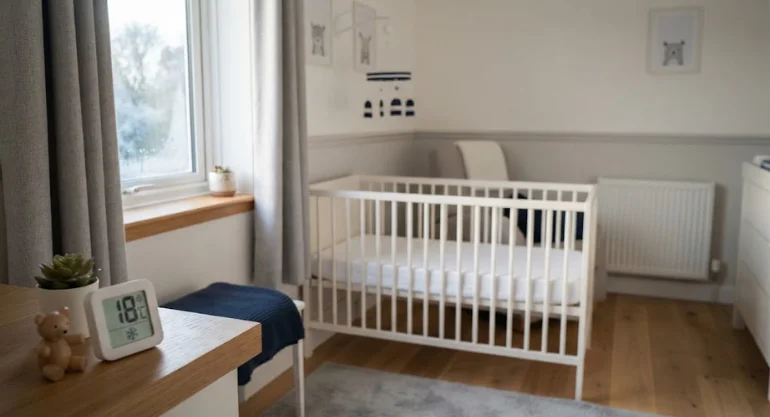
The Lullaby Trust and NHS recommend keeping your baby’s room between 16°C and 20°C, which reduces the risk of overheating; a known risk factor for sudden infant death syndrome (SIDS). Rather than guessing, the official advice is to use a room thermometer wherever your baby sleeps, since it’s genuinely difficult to judge room temperature by feel alone, especially once central heating is running.
On humidity, there’s no official NHS figure, but general home comfort guidance for a healthy indoor environment sits around 40–60%, which also helps limit condensation and mould, both worth avoiding in a nursery. Beyond temperature and humidity, winter-proofing a nursery also means checking for draughts, using any heater safely, and keeping the cot itself free of loose bedding regardless of how cold the room feels.
The Lullaby Trust states plainly: “the recommended room temperature for babies is 16–20°C so that they don’t get too hot.” This range holds throughout the year, but it’s easiest to get wrong in winter, when the instinct is often to heat a nursery well above what an adult bedroom would need, out of concern the baby will be cold.
That instinct is understandable but works against the guidance. The risk of SIDS is higher in babies who become too warm, not too cool, which is why the target range sits lower than many parents expect. If you’re setting up a nursery for the first time this winter, our nursery furniture checklist is a useful starting point for getting the basics, including where the cot itself sits in the room; right from day one.
Guessing doesn’t work reliably, particularly once central heating, radiators, and colder external walls are all part of the picture. The Lullaby Trust is specific here too: “it can be difficult to guess the temperature so use a room thermometer in the rooms where your baby sleeps.”
A simple room thermometer, placed away from direct sunlight, radiators, or draughts, gives you an accurate reading rather than relying on how the room feels when you walk in from a colder hallway. Many parents also check their baby directly by feeling the chest or the back of the neck — hands and feet are normally cooler and aren’t a reliable guide. If your baby’s chest or neck feels hot or sweaty, that’s a sign to remove a layer, regardless of what the thermometer says.
A too-cold nursery is less commonly discussed than overheating, but it’s a real concern in UK winters, particularly in older homes, box rooms, or rooms with a single-glazed window or an exterior wall. Signs worth checking for include:
If the room runs cold overnight, the safer response is to add a layer of clothing or an appropriately rated sleeping bag rather than piling on loose blankets, which carry their own suffocation risk in the cot. Our guide on creating a safe nursery environment covers safe sleep set-up alongside temperature more broadly, including why a bare cot matters whatever the season.
Unlike temperature, there’s no official NHS or Lullaby Trust figure for nursery humidity specifically. General home comfort and health guidance, though, points to somewhere around 40–60% relative humidity as comfortable and healthy for most rooms, including a nursery.
Winter tends to push humidity in one of two directions. Central heating dries the air out, which can leave a baby’s nose and skin feeling dry or irritated. At the other extreme, a poorly ventilated room, particularly with a window kept shut against the cold, can trap moisture and lead to condensation or even mould on walls and windowsills, neither of which belongs in a nursery.
A simple hygrometer (often built into the same device as a room thermometer) makes it easy to keep an eye on this without much ongoing effort. If the air feels persistently dry, a humidifier can help; if condensation keeps appearing on the windows, briefly ventilating the room during the day, even in winter, is usually enough to bring humidity back down.
If you’re using a heater to keep a nursery within the recommended range, safety matters as much as the temperature reading itself. A few practical checks:
Our article on nursery safety more broadly covers electrical safety, cord management, and other hazard checks worth running through alongside heater use specifically.
Draughts are one of the most common reasons a nursery runs colder than the rest of the house, particularly in period properties or rooms with an external wall. A few straightforward fixes:
Whatever the season, a few fundamentals stay constant and are worth checking as part of any winter nursery review:
If you’re due a mattress refresh or setting one up for the first time, our guide on why the right cot mattress matters explains what to look for, and Babymore’s cot mattress range includes pocket sprung, deluxe sprung, and eco fibre options sized for both cots and cot beds. For nurseries needing a wider refresh going into winter, our nursery furniture range and tips on organising a nursery furniture set are both worth a look, and if space is tight in a smaller room, nursery storage ideas that actually save space covers practical ways to keep a winter nursery from feeling cramped once extra layers and blankets start piling up.
Winter-proofing a nursery doesn’t require an elaborate set-up, it comes down to keeping the room within the 16–20°C range using an actual thermometer, watching for draughts and dryness rather than guessing, and using any heater with the same care you’d apply to any other appliance in a baby’s room. Combined with the sleep safety basics that don’t change with the seasons, it’s a short list that makes a real difference through the colder months.
Getting the rest of the nursery ready for winter? Browse Babymore’s nursery furniture and cot mattress ranges, or read our full nursery furniture checklist to make sure nothing’s missing before the temperature drops further.