When preparing for a baby, it’s natural to look for ways to save money. Baby gear can be expensive, and many parents consider buying a used car seat as a budget-friendly option.
But when it comes to second hand car seat safety, the answer is not as simple as yes or no. While second-hand items can work well for many baby products, car seats fall into a much more sensitive category because they are directly responsible for your child’s protection during travel.
In this guide, we’ll break down the real risks, what to check if you’re considering a used seat, and safer alternatives for child travel safety.
Car seats are designed to protect your baby in the event of sudden braking or a collision. Unlike clothing or prams, even a small unseen defect can reduce their effectiveness.
This is why manufacturers and safety experts are very cautious about recommending second-hand use. Visit Babymore’s car seat collection here and explore the diverse range of new and sturdy car seats that you might like for your child.
A car seat must:
If any of these factors are compromised, the seat may not perform as intended.
Babymore highlights the importance of choosing correctly tested and properly installed travel systems to ensure safety during everyday journeys, especially for newborns and infants using rear-facing seats.
When discussing used car seat risks, it’s important to understand that problems are not always visible.
A car seat may look perfectly fine but could have internal damage from:
Even a minor collision can weaken the structure without obvious signs.
One of the biggest concerns with buying a used car seat is not knowing its full history. If the seat has been involved in an accident, it may no longer provide proper protection, even if it looks intact. Babymore has a very well-curated blog written on common car seat mistakes that you might want to skim through.
Most safety guidelines strongly advise replacing car seats after any collision.
Yes, car seats can expire.
Over time, materials such as plastic, foam, and straps degrade due to:
Using expired car seats can reduce performance in critical moments.
Second-hand seats may come without:
Missing parts can lead to incorrect installation, increasing risk during travel.
Child safety regulations improve over time. A used seat may no longer meet the latest standards, even if it was compliant when originally sold.
If you are considering second hand car seat safety, there are strict conditions that must be met.
A used car seat should only be considered if:
Even then, many experts still recommend buying new for maximum peace of mind.
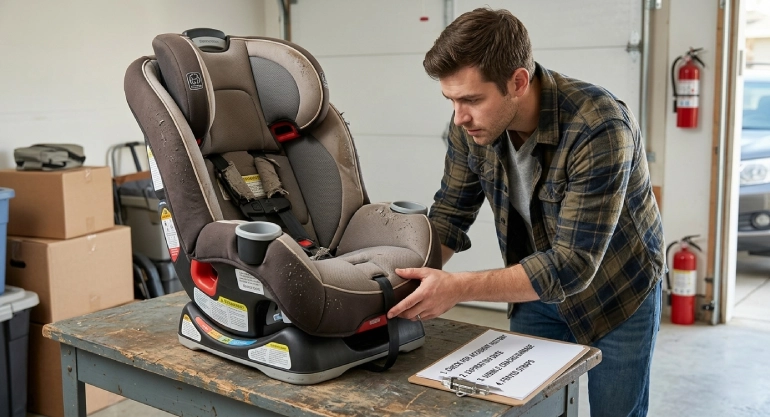
Whether new or used, every parent should perform car seat safety checks before using any seat.
Here is a simple checklist:
| Safety Check | Why It Matters |
| No cracks or damage | Ensures structural strength |
| Harness works smoothly | Proper child restraint |
| Correct expiry date | Maintains material safety |
| ISOFIX/base compatibility | Secure installation |
| Strap condition | Prevents failure during impact |
| Manual available | Ensures correct setup |
A properly installed and well-maintained car seat is one of the most important parts of child travel safety.
Babymore also provides guidance on correct installation and usage within their travel system support resources, helping parents ensure safe everyday journeys.
While second-hand options may seem cost-effective, new car seats provide key advantages:
Modern travel systems, like those available in Babymore’s range, are designed with updated safety features and compatibility for newborns and growing babies, helping parents avoid the uncertainty that comes with used products.
Many parents are surprised to learn that expired car seats should not be used, even if they look fine.
Car seats typically expire after 6–10 years depending on the model.
Over time:
Using an expired seat significantly increases risk during travel, especially in higher-impact situations.
If budget is a concern, there are safer options than second-hand seats:
Babymore offers travel systems designed for long-term use, combining stroller and car seat functionality, which can be more cost-effective while maintaining safety.
When it comes to second hand car seat safety, the most important thing to understand is that car seats are not like other baby items. Their condition directly impacts your child’s safety in real-world situations.
While a used seat might seem like a good deal, risks such as hidden damage, unknown accident history, or expired materials often outweigh the savings.
For peace of mind, most experts recommend choosing a new, certified seat from a trusted brand that meets current safety standards.
Your child’s safety during travel is not an area where compromise is worth the risk.