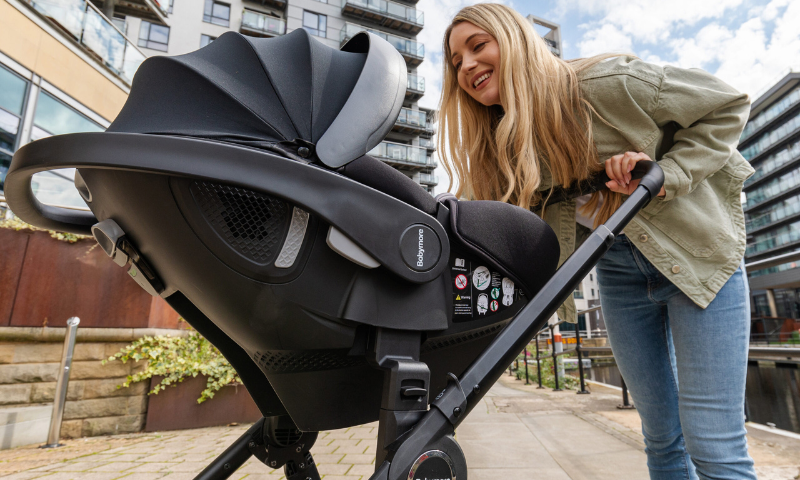
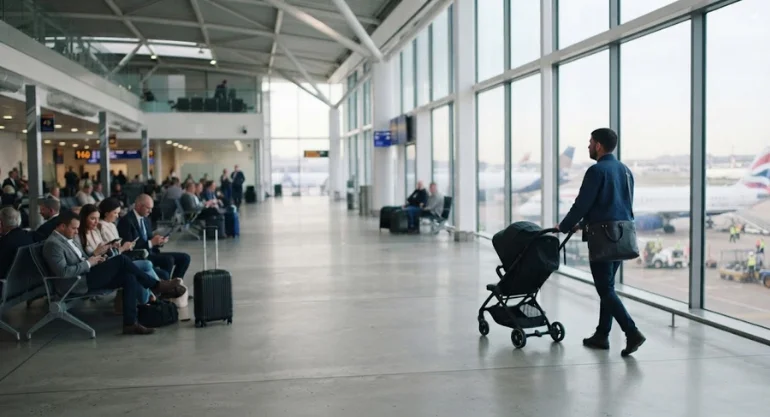
Flying with young children can feel daunting, and the pushchair is often the biggest worry. The good news is that most airlines let you take a pushchair for free when you’re travelling with a baby or young child, whether you have a lightweight pushchair or pram or a full baby travel system. Collapsible pushchairs can usually be used right up to the aircraft door and then stored in the hold, while a few compact models may be allowed in the cabin. This guide explains what each major UK airline allows, the size and weight limits, how gate-checking works, how to get through security, how to protect your pushchair, and what to do if it’s damaged.
Quick Answer
Yes, you can take a pushchair on a plane, and it’s usually free. Most airlines allow each infant or child to bring up to two baby items free of charge (such as a pushchair, car seat, travel cot or baby carrier). Your pushchair can normally stay with you until the departure gate or aircraft door, where it’s tagged and put in the hold. Only small, lightweight, fully collapsible pushchairs, typically under 10 kg and around 55 x 40 x 20 cm, may be allowed in the cabin, and not on every airline. Check your airline’s policy before you travel, tag the pushchair at check-in, and use a travel bag to protect it.
Understanding Airline Policy
Airline rules differ by carrier, aircraft and sometimes route, so check yours before you fly. Ignoring the rules can mean stress, and sometimes extra charges, at the airport.
There are three ways to travel with a pushchair:
- Gate-check (the most common): you use the pushchair through the airport, then hand it over at the gate or aircraft door.
- Check it in at the desk: it goes into the hold at check-in.
- Take it into the cabin: only possible if it’s small enough, and only on some airlines.
Gate-Checking vs Checking in at the Desk
- Gate-checking means you can use the pushchair up to the aircraft door or steps. Staff take it from you, fold it into the hold, and you collect it on arrival. It’s handled less, and you’ve got somewhere to put your child while you queue.
- Checking in at the desk sends it to the hold earlier. It’s less convenient, because you’ll be carrying your child through security and the terminal, but some parents prefer it for an expensive pushchair they want to wrap carefully.
Most families gate-check, and the airline will usually tag the pushchair at check-in or at the gate. If you haven’t chosen a pushchair yet, our guide on how to choose a pram for your lifestyle explains what to look for, including how easily it folds.
UK Airline Pushchair Rules at a Glance
| Airline |
Free allowance |
Pushchair rules |
Where you get it back |
| British Airways |
Up to 2 items per child or infant (collapsible pushchair, car or booster seat, travel cot, baby back carrier) |
Aircraft-door service for single-piece, slimline, fully collapsible pushchairs up to 38 x 117 x 38 cm including wheels |
Aircraft door (orange “Return to Aircraft Door” label) at some destinations; larger pushchairs go to the baggage carousel |
| Ryanair |
2 baby items free (pushchair, car seat, booster seat or travel cot); extra items for a fee |
Use the pushchair up to the aircraft steps; tag it at the check-in desk or boarding gate |
At the aircraft steps or in the baggage hall, depending on the airport |
| easyJet |
Two free baby items per infant (such as pushchair, car seat or travel cot) |
Gate-checked pushchairs are free; a pushchair is allowed in the cabin only if it fits within cabin bag limits |
At the aircraft door or baggage belt, depending on the airport |
| Jet2 |
2 items per child or infant free of charge (each up to 32 kg) |
Keep the pushchair until the plane steps or airbridge |
Baggage reclaim |
| TUI |
Pushchair and car seat free in the hold |
Cabin pushchair allowed if under 10 kg and no bigger than 55 x 40 x 20 cm, with a hand luggage label from check-in |
Luggage belt |
| Wizz Air |
One free pushchair per infant |
Goes in the hold |
Check at the gate |
| Virgin Atlantic |
Free |
Certain compact models may be allowed in the cabin if within limits |
Confirm at the gate |
| Qatar Airways |
One free collapsible pushchair per child |
Hold |
Check on the day |
Sources: the airlines’ own help pages (British Airways, Ryanair, Jet2, TUI) and Which? (March 2026) for the others. Policies change, so confirm on your airline’s website, particularly for easyJet, Wizz Air and Virgin Atlantic.
Travelling with an infant car seat too? Most airlines count it as one of your free baby items. Browse Babymore’s car seats, and see the car seat section below for the rules.
Airline-Specific Rules
easyJet
easyJet allows two free baby items per infant, for example a pushchair, a car seat or a travel cot. Large prams are gate-checked, and a pushchair is only allowed in the cabin if it’s small and light enough to fit within the airline’s cabin bag limits. Tag the pushchair at bag drop, or ask at the gate.
Ryanair
Ryanair lets you bring two baby equipment items free of charge, including a pushchair or buggy. You can use the pushchair right up to the aircraft steps. Tag it at the check-in desk or the boarding gate, and ask ground staff where you’ll collect it. Anything beyond the two free items can be checked in for a fee.
British Airways
British Airways lets each child or infant check in up to two items free, including a collapsible pushchair. Slimline, single-piece pushchairs up to 38 x 117 x 38 cm can be returned to the aircraft door; this isn’t offered at every destination, so check at check-in. Larger pushchairs are collected from the baggage carousel. A compact folding pushchair may be allowed in the cabin if it fits hand luggage limits and there’s space.
Jet2
Jet2 allows two items per child or infant free of charge, each up to 32 kg. You can keep the pushchair right up to the plane steps or the airbridge, where it goes into the hold, and you collect it at baggage reclaim.
Qatar Airways
Qatar Airways allows one free pram or collapsible pushchair per child, which travels in the hold. Small collapsible models may be allowed in the cabin, depending on space, so ask at check-in.
What About TUI in Detail
TUI makes it simple:
- Free in the hold: you can check in pushchairs and car seats for free.
- Cabin pushchairs: a pushchair can come into the cabin if it weighs less than 10 kg, is no bigger than 55 x 40 x 20 cm, and has a hand luggage label provided at check-in. It counts as the adult’s larger hand luggage item, and you can still bring one smaller item that fits under the seat in front.
- Use it to the gate: you can use your pushchair in the airport and hand it to staff at the gate before boarding. Tell the ground staff at check-in so you get a label.
- Fully collapsible: pushchairs must collapse completely.
- On arrival: pushchairs and car seats are returned on the luggage belt, and you may have a long walk from the aircraft to reclaim.
Traveller Advice
- Pushchairs must be fully folded at the gate.
- Large prams, travel systems or car seats may need to be checked in separately.
- Many families choose a lightweight or inexpensive travel pushchair for flying, because luggage handling can be rough. Our guide on how to choose a travel pushchair can help. Compare options in Babymore’s pushchairs.
- A pushchair doesn’t normally reduce your baggage allowance, but if no child or infant is travelling with it, standard hold luggage charges may apply.
Size, Weight and Carry-On Guidelines
Typical cabin bag dimensions are around 56 x 45 x 25 cm, which is the size commonly used as a guide for cabin baggage. Individual airlines set their own limits: TUI, for example, allows 55 x 40 x 20 cm and 10 kg for a cabin pushchair. A cabin pushchair usually replaces your hand luggage, so you can’t bring a separate large bag.
For the hold, pushchairs generally need to be fully collapsible, and many airlines set a limit of around 10 kg for gate-checked pushchairs, although some, like Jet2, allow up to 32 kg per item. Always confirm the figures for your airline and aircraft, and check your pushchair’s folded size and weight against them. A pushchair that’s well looked after also folds more smoothly at the gate, so see our pushchair maintenance tips before you travel.
What Size of Pram Can You Take on a Plane?
Compact, lightweight, foldable prams are usually accepted as carry-on if they fit the airline’s cabin limit (around 55 x 40 x 20 cm in many cases). Larger prams are normally checked in or gate-checked. As a guide:
- Cabin-friendly: a very compact, fast-fold travel pushchair, typically under 7 to 10 kg. Even then, it’s up to the airline and the crew on the day, and overhead lockers can be full.
- Gate-check: a standard lightweight stroller or umbrella-fold pushchair.
- Hold or special handling: full-size prams, travel systems and carrycots. Check with your airline about how these are handled. For help telling them apart, see our guide to the difference between a pram, buggy, pushchair, stroller and travel system.
If you’re looking for a compact option, read our guide on how to choose a compact pushchair and browse Babymore’s strollers and pushchairs and check the folded size and weight before you travel.
How Gate-Checking Works, Step by Step
- Before you travel: read your airline’s policy, and add the pushchair to your booking if the airline asks you to.
- At check-in: tell staff you have a pushchair and ask for a tag. Check whether it will be returned at the aircraft door or the baggage reclaim.
- Through security: the pushchair goes through the X-ray, so you’ll need to fold it. Children who can walk can usually walk through the scanner, and you carry younger ones through.
- At the gate: use the pushchair until boarding. Staff will ask you to fold it at the aircraft door or steps.
- Practise folding it one-handed, as you may only have a short time at the aircraft door.
- On arrival: collect it at the aircraft door or the baggage reclaim, depending on the airline and airport. Check it for damage straight away.
Getting Through the Airport With a Pushchair
- Security: pushchairs normally need to be folded and screened. Heathrow advises being ready to fold it before you reach the checkpoint. Gatwick has dedicated family lanes for passengers with young children or pushchairs.
- Using it in the terminal: most airlines let you use your pushchair in the terminal and take it to the gate.
- Buggy loan: this varies by airport. Gatwick, for example, doesn’t offer pushchairs to borrow, so don’t rely on one.
- Facilities: baby changing rooms are available in the terminals, usually before and after security. Keep changing essentials in an easy-to-reach bag; our guide on what to pack in a nappy bag has a checklist.
- Extra help: many airports have free luggage trolleys and paid porter or assistance services that can help with buggies and bags.
Can You Take a Car Seat on a Plane?
Many airlines allow a car seat on board if you’ve bought a seat for your child, or you can check it in as one of your free baby items. Ryanair, for example, requires car seats to be forward-facing, approved for air travel, with a 5-point harness and no wider than 43 cm. See our guide on whether you can take a car seat on a plane, and our guide to fitting an ISOFIX car seat properly for when you arrive and need to fit it in a hire car or taxi. If you’re thinking of buying a new one, read how to choose a car seat.
Travelling With a Double Pushchair, Travel System or Carrycot
- Double pushchairs: each baby or infant usually has their own free allowance, so two infants can generally have two pushchairs, but a double is bulky, harder to gate-check and worth protecting with a padded bag. Confirm with the airline before you fly.
- Travel systems: you may be able to check the chassis and car seat separately. Ask the airline how they handle each part. New to them? Read what is a travel system, then see Babymore’s baby travel systems.
- Carrycots and moses baskets: take them to the plane door, where staff can usually place them in the hold. Tag them at check-in or the gate. If a travel cot is one of your free baby items, our guide to travel cots vs standard cots may help.
How to Protect Your Pushchair From Damage
Pushchairs can get scuffed, bent or wet in the hold, so a little preparation helps.
- Use a padded travel bag. Many parents say it’s the single most useful step. Plastic airline bags give limited protection. Our guide to pram and pushchair accessories covers travel bags and other useful extras.
- Fold it compactly and engage the fold lock.
- Remove detachable parts such as cup holders, phone holders, rain covers and clips, and carry them with you.
- Label it with your name and flight number.
- Take photos before you hand it over, so you can show its condition.
- Keep it in good order. Our pushchair maintenance tips will help you check the wheels, brakes and fold before you travel.
What to Do if Your Pushchair Is Damaged or Lost
- Check it before you leave the airport, at the aircraft door or at baggage reclaim.
- Report damage immediately to the airline’s baggage desk, before you leave the arrivals hall, and ask for a Property Irregularity Report (PIR).
- Keep evidence: your boarding pass, baggage tag and the photos you took before check-in.
- Follow up in writing. Airlines often have a short claim window (commonly around seven days), so check your airline’s terms.
- Check your travel insurance, which may cover loss or damage, especially for a more expensive pushchair.
Cleaning Your Pushchair After a Flight
Hold storage can leave a pushchair dusty or damp. Wipe down the frame and wheels, let the fabric dry fully, and check the brakes and fold. Our guide on how to clean a pushchair explains how, and our tips on storing a stroller compactly help once you’re home.
Alternatives to Taking Your Own Pushchair
- A baby carrier or sling: it frees your hands at passport control, security and baggage reclaim.
- Hiring a pushchair at your destination: many holiday companies and rental firms offer them.
- A cheap travel stroller: less financial loss if it’s damaged or lost.
Smart Tips for Travelling With a Pushchair
- Check the airline’s policy early, including whether you need to add the pushchair to your booking.
- Choose a collapsible model that folds quickly and compactly.
- Use a travel bag or cover to protect it.
- Remove detachable accessories such as cup holders and rain covers.
- Photograph the pushchair before check-in.
- Report damage immediately at the airline desk.
- Arrive early, so you have time for tagging, security and gate procedures.
- Tell staff at check-in and at the gate that you’re travelling with a pushchair, and ask where it will be returned.
- Use a baby carrier while you wait, especially once the pushchair has gone to the hold.
- Consider travel insurance that covers loss and damage to baby equipment.
For packing ideas, see our guide on what to pack in a nappy bag.
The Takeaway
Taking a pushchair on a plane is generally allowed and often free, but the rules differ by airline. Choose a compact, collapsible model, check the size and weight limits, protect it with a travel bag, tell the staff, and be ready for either gate-check or cabin use. Plan ahead and you’ll be through the airport with a lot less stress.
Looking for a pushchair for your next trip? Browse Babymore’s prams and pushchairs and baby travel systems.
Frequently Asked Questions
01- Can you take a pushchair on a plane?
Yes. Most airlines let you take a pushchair for free when travelling with a baby or young child. It’s usually used up to the gate or aircraft door and then stored in the hold.
02- Can you take a pushchair as cabin baggage?
Sometimes. Only small, lightweight, fully collapsible pushchairs, typically under 10 kg and around 55 x 40 x 20 cm (TUI’s limit, for example), are allowed in the cabin on some airlines. It usually replaces your hand luggage. Check with your airline before you fly.
03- Do you have to pay to take a pushchair on a plane?
Usually not. Airlines such as British Airways, Ryanair, easyJet, Jet2 and TUI allow baby equipment free when travelling with a child or infant. Extra items beyond the free allowance, or a pushchair with no child travelling, may incur charges.
04- What size pushchair can you take on a plane?
For the cabin, around 55 x 40 x 20 cm and under 10 kg is typical, and cabin bag limits are often around 56 x 45 x 25 cm. For British Airways’ aircraft-door service, the limit is 38 x 117 x 38 cm. Always check your airline’s limits.
05- Can I use my pushchair at the airport?
Yes. Most airlines let you use it until the gate or aircraft door. It will need to be folded for security screening.
06- Where do I collect my pushchair after the flight?
It depends on the airline and airport. It may be returned at the aircraft door or steps, or at baggage reclaim. Ask the staff when you tag it.
07- Do I need to put my pushchair in a bag?
It’s not required, but strongly recommended. A padded travel bag protects it from scuffs, dirt and moisture, and helps you recognise it.
08- Can I take a double pushchair on a plane?
Yes, but each infant normally has their own allowance, so two infants can generally have two free items. Double pushchairs are bulky and harder to gate-check, so use a padded bag and check with your airline.
09- Can I take a car seat on a plane?
Yes. You can usually check it in as one of your free baby items, or use it on board in a seat you’ve booked if it’s approved for aircraft use. Check your airline’s rules.
10- Can a pushchair go through airport security?
Yes. It will need to be folded and screened, so be ready to fold it before the checkpoint.
11- What should I do if my pushchair is damaged?
Report it to the airline’s baggage desk before leaving the airport, get a Property Irregularity Report, keep your photos and baggage tag, and check your insurance.
12- What’s the best type of pushchair for flying?
A lightweight, compact, fast-folding pushchair is easiest to gate-check, and the smallest models may be allowed in the cabin. Check the folded size and weight, and remember the final decision rests with the airline.