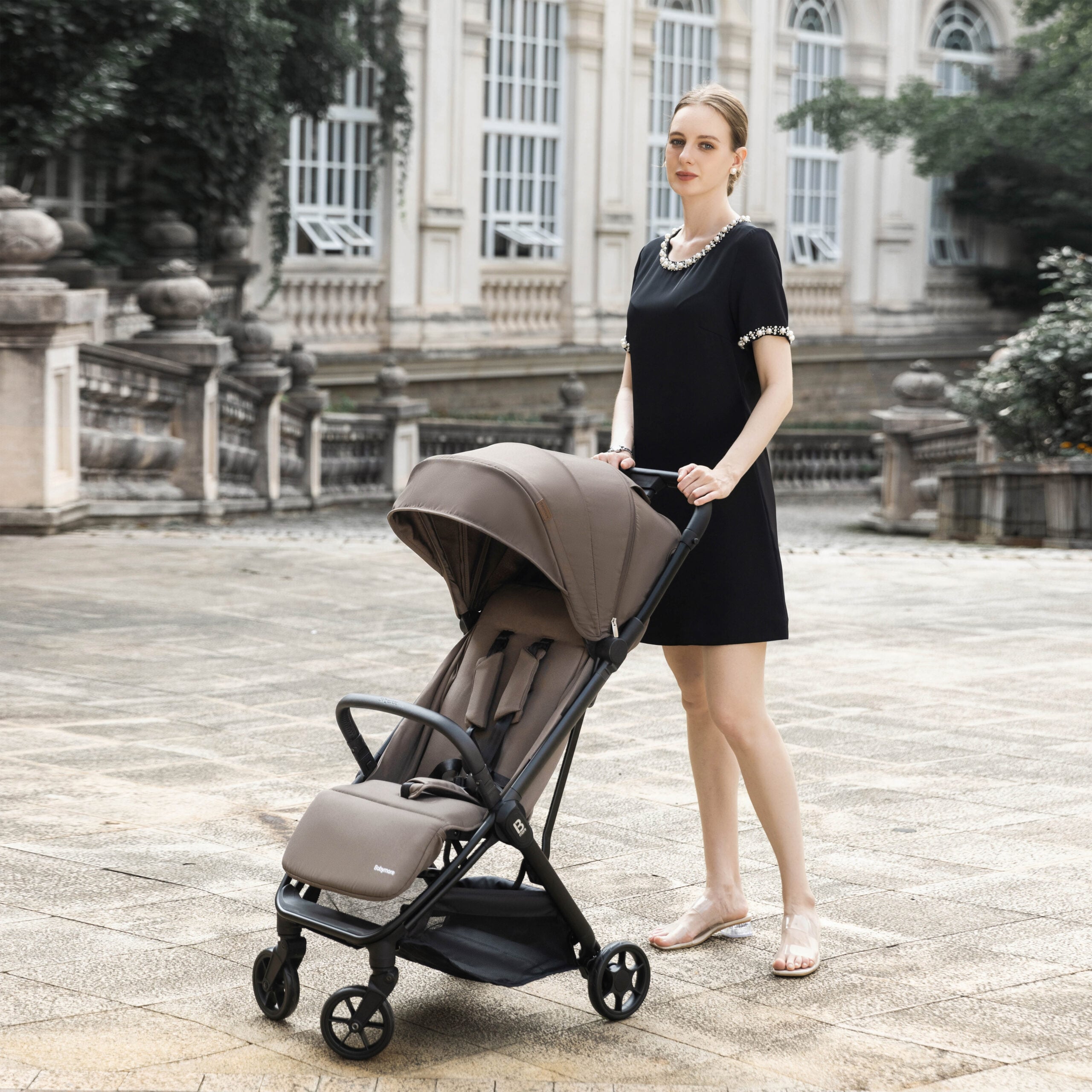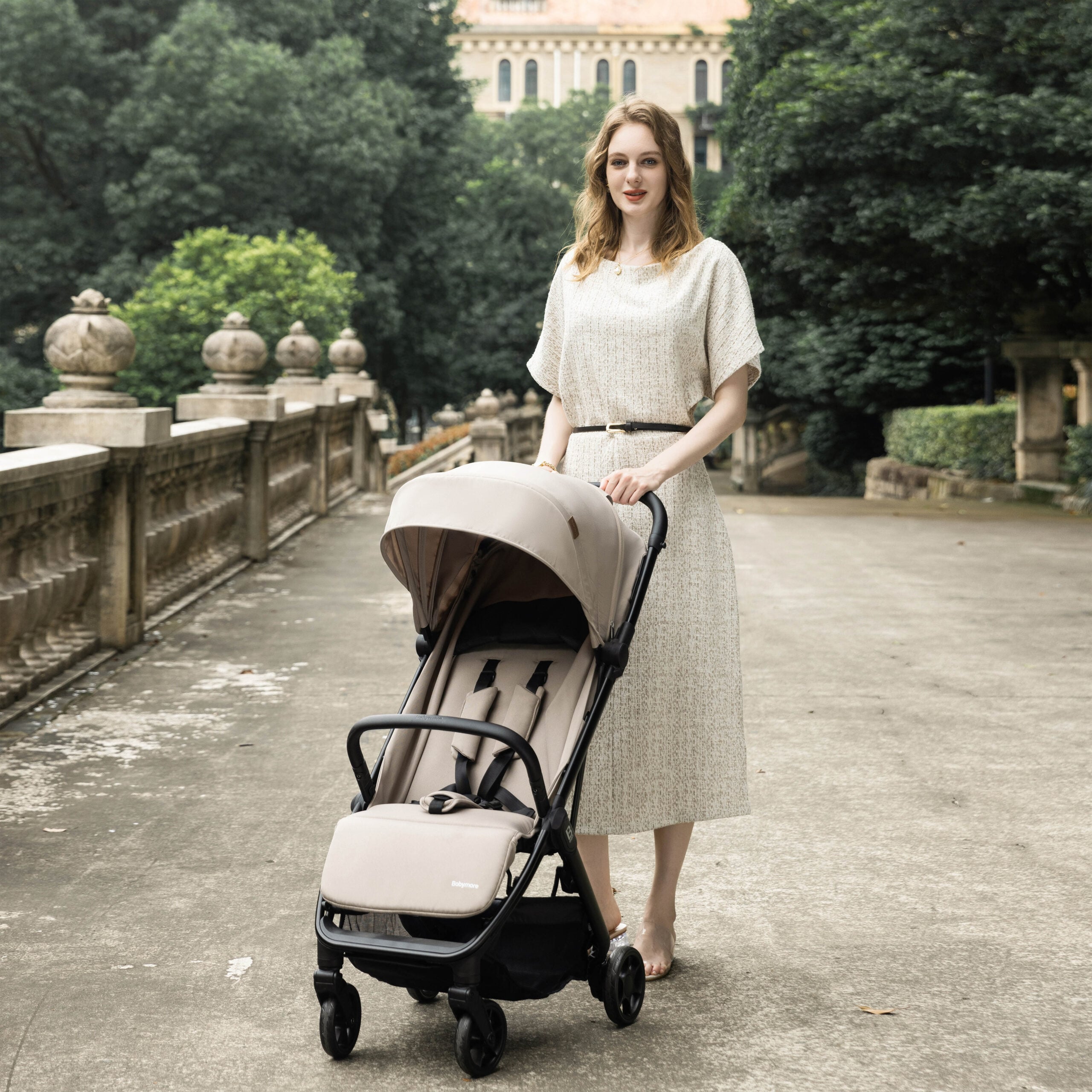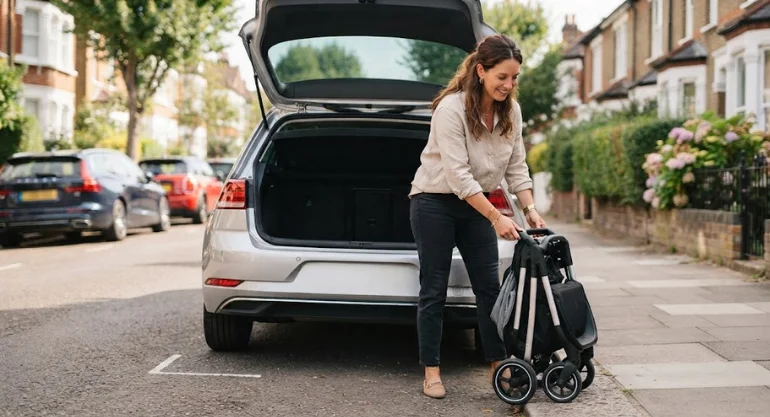
Space is precious for most families. You might live in a flat with a narrow hallway, drive a small car with a tight boot, or rely on buses and trains to get around. In each case, a bulky pram quickly becomes a daily frustration. That’s why more parents are searching for a compact pushchair UK families can fold, lift and store without a struggle.
But “compact” means different things to different brands. This guide to choosing a compact pushchair explains what to measure, which features matter most, and how to find a pushchair that fits your home, your car and your routine. To see what’s available, browse Babymore’s full range of prams and pushchairs.
A compact pushchair is designed to take up as little space as possible when folded, while still being practical for everyday use. You’ll see a few terms used for these models:
If you’re unsure how these differ from prams and travel systems, our guide to the difference between a pram, buggy, pushchair, stroller and travel system explains each one clearly.
A compact pushchair suits families who:
Many parents use a full baby travel system in the newborn months, then switch to a small folding pushchair once their baby can sit up. Others choose a compact model from the start, provided it offers a suitable recline for younger babies.
Folded size is the single most important factor when choosing a compact pushchair. Don’t rely on descriptions like “ultra-compact” or “tiny fold”. Instead, look for the small folded dimensions (L x W x H) listed in the product specifications, and compare them with the spaces you actually have.
Before you buy, measure:
Remember that a pushchair that’s narrow when folded but very long may still not fit a small boot. Always compare all three measurements. For more space-saving ideas, see our tips on how to store a stroller compactly.
A lightweight folding pushchair makes everyday life easier. It’s much simpler to lift into the car, carry up stairs, or hold while you get your child onto a bus.
As a rough guide:
Think honestly about how often you’ll lift it. If you live in a first-floor flat without a lift, every kilogram matters. If the pushchair mostly goes from hallway to pavement, you may prefer a slightly heavier model with better suspension. Either way, look for one that’s easy to lift and carry, ideally with a carry handle or shoulder strap.
How a pushchair folds matters just as much as how small it gets. You’ll often be folding it while holding your child, a bag or shopping, so look for a mechanism that’s quick and simple.
Common fold types include:
Also check that the pushchair:
If you can, try folding and unfolding it several times in a shop, or watch a video demonstration before you buy. It’s also worth knowing the common fold errors to avoid, so you don’t run into issues once you’re using it day to day.
Not every compact stroller UK parents buy is suitable from birth. Newborns need to lie flat, so if your baby is under around six months, look for:
If your baby is still very young, a pram pushchair with a carrycot may be the better choice for now. You can then switch to a compact model later. Our guide on when to move your baby from pram to pushchair explains the signs your baby is ready. For a deeper comparison, read our article on pram vs pushchair.
For older babies and toddlers, check the maximum weight limit. Many compact pushchairs are suitable up to around 22 kg, which covers most children until they no longer need a pushchair.
A smaller fold sometimes means compromises elsewhere. Make sure your compact pushchair still offers:
Check the handlebar height too. Some compact pushchairs have fixed handles that may feel low for taller parents.
Compact pushchairs often have smaller wheels to keep the fold small. These are fine on smooth city pavements and shopping centre floors, but they can struggle on gravel, grass or cobbles.
If you regularly walk on rougher ground, look for:
Our pushchair guide explains how to match wheels and suspension to the way you actually use your pushchair.
A smaller frame often means a smaller shopping basket. Check both the basket’s size and its maximum weight limit, and consider whether it can hold your changing bag, snacks and a few bits of shopping.
If the basket is small, accessories can help. A cup holder, a clip-on changing bag or a handlebar organiser can add storage without adding bulk. Our guide to pram and pushchair accessories covers the most useful options.
In the UK, your pushchair needs to handle rain, wind and the occasional sunny spell. Look for a compact pushchair with a compatible raincover, an extendable hood and a footmuff option for winter. In warmer months, it’s also worth knowing how to keep your baby cool in a stroller or pushchair.
For seasonal tips, read our guides on getting your pushchair ready for autumn, preparing your pushchair for winter adventures and how to choose the best pushchair for summer adventures.
A compact design should never come at the expense of safety. In the UK, look for pushchairs that meet the BS EN 1888 safety standard. Also check that the brakes are easy to engage and that the frame feels stable, especially when bags are hung on the handlebar, and out and about at places like the playground. You can find out more about how Babymore products are tested on our Safety Assurance page.
Even the smallest pushchair needs a home. A few simple habits can make storage much easier:
Regular care will also keep the fold mechanism working smoothly. Our guides on how to clean a pushchair and our pushchair maintenance tips explain what to check and how often.
Before you buy, ask yourself:
Choosing a compact pushchair comes down to three questions: where will it be stored, how often will you lift it, and how old is your child? Measure your spaces, check the folded dimensions carefully, and test the fold before you buy. The right compact fold pushchair will make everyday life simpler, from the school run to the supermarket and every trip in between.
Ready to find your perfect match? Explore the Babymore prams and pushchairs range, including the Yara Compact Stroller. Check our sale for the latest offers, or visit the Babymore blog for more parenting guides.