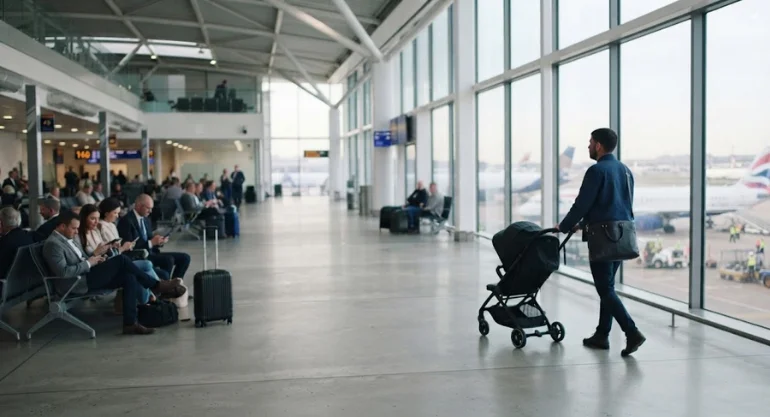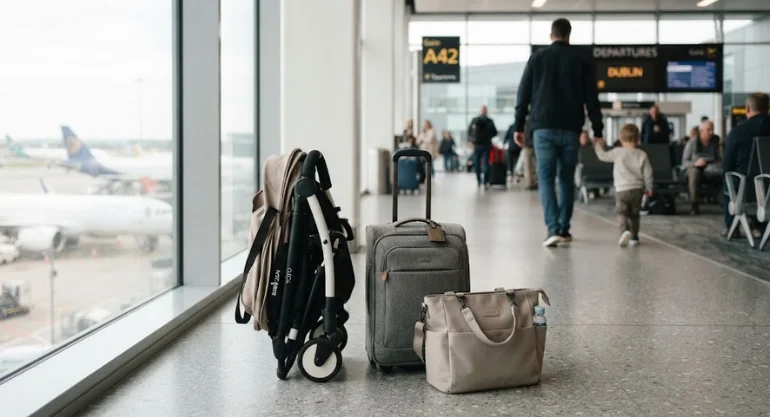
Travelling with a baby or toddler is much easier with the right wheels. Your everyday pram may be perfect for walks around the neighbourhood, but it can quickly become a burden at airport security, on a crowded train or on cobbled holiday streets. That’s why so many parents invest in a dedicated travel pushchair.
With so many models calling themselves “compact” or “travel-friendly”, though, it can be hard to know which one will actually make your trip easier. This guide explains how to choose a travel pushchair, the features that matter most, and the questions to ask before you buy. If you’re just starting to browse, take a look at our full range of prams and pushchairs to see what’s available.
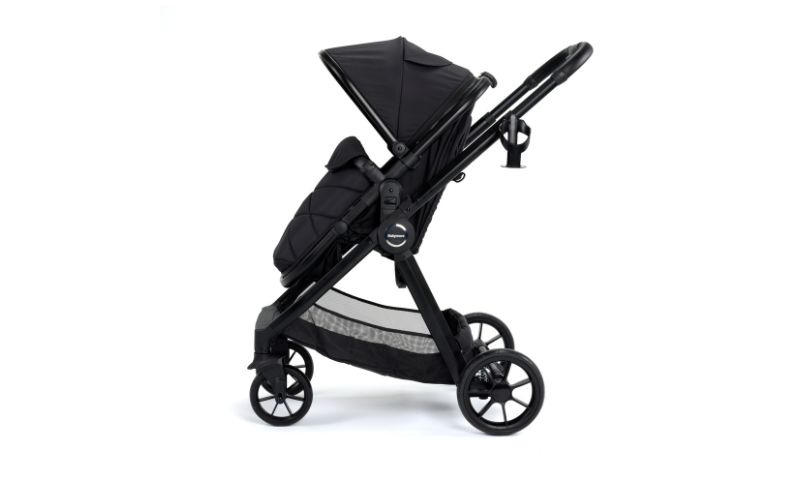
A travel pushchair, sometimes called a travel buggy or travel pram, is a pushchair designed to be light, quick to fold and small enough to carry or store in tight spaces. Compared with a full-size pram, it usually weighs less, folds into a much smaller package, and trades some bulk and storage for portability.
If the terminology feels confusing, our guide to the difference between a pram, buggy, pushchair, stroller and travel system explains each one clearly. You can also read our comparison of pram vs pushchair to understand which suits your child’s stage.
Some models are so compact they fold down to cabin-size pram dimensions, which means certain airlines may let you take one on board as hand luggage. Others are simply lighter and easier to handle than an everyday pushchair. Both types can work well as a buggy for holidays, depending on how you travel.
Full-size prams and baby travel systems are built for comfort and durability, but they have drawbacks on the move:
A good pushchair for travelling solves most of these problems while keeping your child safe and comfortable. Many families keep a full travel system for everyday use at home and add a compact stroller, such as the Yara Compact Stroller, for trips and holidays.
The whole point of a lightweight pushchair for travel is that you can lift and carry it easily. Many travel buggies weigh roughly 5 to 8 kg. Anything lighter usually means compromises on wheels or seat comfort, and anything heavier starts to lose the advantage.
Think about how often you’ll carry it: up station steps, onto a bus, or over your shoulder while holding your child. If a pushchair has a carry strap or handle, that’s a useful bonus.
Folded dimensions matter more than weight for many families. Check the exact measurements in centimetres rather than relying on words like “ultra-compact”. A small fold is also a big help at home, and our tips on how to store a stroller compactly show how to make the most of limited space.
If you want a pram for flights that can go in the overhead locker, compare its folded size with your airline’s cabin baggage allowance. Many cabin-friendly pushchairs are designed to fit within common hand-luggage limits. However, airline rules vary and change, so always confirm with your specific carrier before you fly.
A quick, one-handed fold is one of the most valuable features in a travel buggy. Picture yourself at the aircraft door or on a train platform, holding your child in one arm. Can you fold the pushchair with your free hand in a few seconds?
Look for:
If possible, try the fold in a shop or watch a video demonstration before buying.
Not every lightweight stroller is suitable from birth. Newborns and young babies need to lie flat or almost flat, so if you’re travelling with a baby under about six months, look for:
If your baby is still in the early months, a pram pushchair with a carrycot or a travel system paired with one of our baby and toddler car seats may be a better fit for now. Not sure when your little one is ready for a seat unit? Our guide on when to move your baby from pram to pushchair explains the signs to look for, and our piece on when a baby can sit in a front-facing stroller or pushchair covers exactly when to make the switch to forward-facing.
For toddlers, check the maximum weight limit. Many travel pushchairs are suitable up to around 22 kg, which means you can use them for several years — see our Baby Milestones Guide for what to expect at each stage.
Safety should never be sacrificed for a smaller fold. In the UK and Europe, check that the pushchair meets the BS EN 1888 safety standard for wheeled child conveyances. You can read more about how we test our products on our Safety Assurance page, and see our tips on pushchair safety at the playground for everyday use too. Also look for:
Holiday terrain is rarely perfect. You might face cobbles, sandy paths, uneven pavements or airport carpets. Small plastic wheels can struggle on rough ground, so consider:
If you’ll mostly be in cities and airports, lighter wheels are fine. For countryside or beach holidays, prioritise better wheels and suspension. Our pushchair guide goes into more detail on matching wheels and suspension to the terrain you’ll actually use.
A good buggy for holidays should protect your child from the elements. Look for an extendable hood with a high UPF rating, a peekaboo window, and a compatible raincover. Some models also come with a sun canopy or mosquito net, which is especially useful for warm destinations.
Heading somewhere hot? Read our guide on how to choose the best pushchair for summer adventures. For colder breaks, our advice on preparing your pushchair for winter adventures covers footmuffs, raincovers and more, and our guide to weatherproofing your pushchair is worth a read whatever the season.
Your child may nap in the pushchair on long travel days, so comfort matters. Check for:
Travel pushchairs generally have smaller baskets than full-size prams. Even so, a usable basket for nappies, snacks and a water bottle makes a big difference. Check the basket’s weight limit as well as its size.
If basket space is tight, the right add-ons can help. A cup holder, a changing bag that clips to the frame, or a padded travel bag for flights can all make trips easier. See our guide to pram and pushchair accessories for ideas.
If you or your partner are tall, make sure the handlebar is at a comfortable height. Some travel pushchairs have fixed handles that may feel low for taller parents. A smooth, responsive push also makes long days of sightseeing more pleasant.
If you plan to use your pushchair for flights and train travel, a few extra points are worth considering.
For flights:
For trains:
You’ll often see the phrase airline approved pushchair in product listings. This usually means the folded size fits within typical cabin baggage dimensions for many airlines. It does not guarantee that every airline will accept it on board, as each carrier sets its own rules, and these can differ by route, fare type or aircraft. Treat “airline approved” as a helpful guide, not a promise, and always check your airline’s current policy, our guide on taking a pushchair on a plane covers this in more depth.
Sand, sun cream, spilled snacks and airport handling all take their toll. When you get home, give your pushchair a quick check-over. Wipe the frame, wash removable fabrics, and check the brakes, wheels and harness for wear. Our guides on how to clean a pushchair and our pushchair maintenance tips will help keep it in top condition for your next adventure.
Before you buy, ask yourself:
Knowing how to choose a travel pushchair comes down to matching the pushchair to the way you travel. If you fly often, prioritise a small fold and a quick one-handed mechanism. If you’re exploring cities or countryside, focus on wheels, suspension and comfort. And if you’re travelling with a newborn, a lie-flat recline is essential.
The right lightweight pushchair for travel can turn stressful airport dashes and busy train journeys into much smoother experiences, leaving you free to enjoy the trip with your little one. Browse the Babymore prams and pushchairs collection, check our sale for current offers, or explore more parenting tips on Babymore.