There’s a particular smell that comes with a freshly assembled nursery, that slightly sharp, chemical-adjacent scent hanging around a brand new cot bed or wardrobe. Most parents notice it, and a fair number start Googling whether it’s actually safe to have a newborn sleeping a few feet from it. It’s a reasonable question to ask, and the honest answer sits somewhere between “don’t panic” and “it’s still worth taking a few sensible steps.” At Babymore, nursery preparation questions like this come up often enough in the run-up to a due date that it’s worth walking through what’s actually happening, and what genuinely helps.
New furniture smell in a nursery comes from volatile organic compounds (VOCs), naturally occurring in wood finishes, adhesives, and packaging materials, gradually releasing into the air as the furniture settles, a process known as off-gassing. In the UK, furniture sold for children is subject to UK REACH chemical restrictions and specific safety standards, so reputable, compliant nursery furniture isn’t the same unregulated risk some older articles describe.
That said, it’s still sensible to unbox and assemble new furniture a few weeks before your due date, ventilate the room well with open windows or a fan, and avoid masking the smell with air fresheners or scented candles, which add their own VOCs rather than removing anything.
The smell itself comes from volatile organic compounds, VOCs for short, a broad category of chemical compounds that evaporate at room temperature from things like wood finishes, adhesives used in manufactured wood, foam padding, and even the plastic wrapping furniture is shipped in. This process, commonly called off-gassing, is a completely normal part of how newly manufactured furniture settles once it’s unpacked and exposed to room-temperature air. It isn’t unique to nursery furniture or to any particular brand, it happens with sofas, mattresses, flat-pack wardrobes, and freshly painted walls too.
This is where a lot of the content on this topic, particularly from older or US-based sources, tends to lean more alarmist than the UK regulatory picture actually supports. In the UK, furniture manufactured or sold for children’s use is subject to UK REACH, the regulation governing restricted chemical substances in consumer products, alongside specific safety standards for cots, cot beds, and other nursery furniture.
This means reputable UK nursery furniture has already been tested against restrictions on a range of substances before it ever reaches your home, which is a meaningfully different starting point from generic, unregulated flat-pack furniture.
That said, “regulated” doesn’t mean “zero smell” or “zero off-gassing”, it means the substances involved are restricted to levels considered safe under UK and EU product safety law, not that off-gassing doesn’t happen at all. Newborns breathe more air relative to their body weight than adults do, and spend far more time in the room than anyone else in the house, so taking a few sensible precautions before your baby’s first night in the nursery is a reasonable, low-effort step, even without cause for alarm.
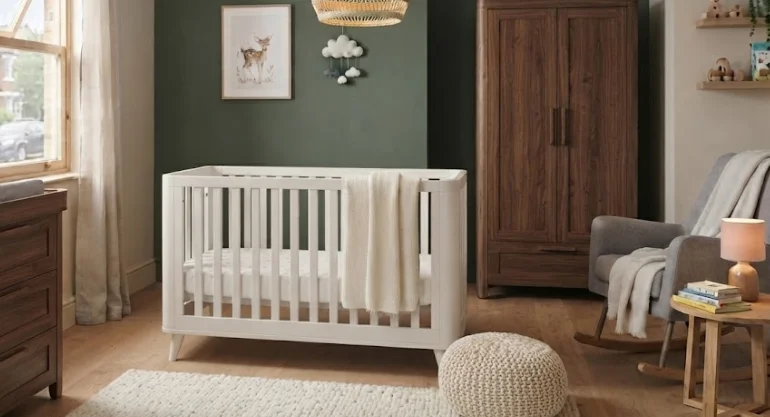
Unbox and assemble furniture as early as practical: The strongest off-gassing typically happens in the first few days after unpacking, then tapers off steadily over the following weeks. Assembling your cot bed, such as a Kimi Cot Bed, wardrobe, and chest changer several weeks before your due date, rather than the week before, gives the room genuine time to air out before your baby is actually sleeping in it. If you’re buying everything as a coordinated bundle, our nursery furniture sets are worth ordering with this same lead time in mind, since assembling several pieces at once naturally takes longer than a single item.
Ventilate the room properly, not just briefly: Open windows for extended periods over the days following assembly, and use a fan to actively circulate air through the room rather than relying on a closed window crack. Moving air clears VOCs considerably faster than a still, sealed room.
Avoid rushing furniture straight into daily use: If your schedule allows it, let the room sit ventilated and unused for a week or two after assembly before treating it as the baby’s primary sleeping space, particularly for the mattress and any upholstered pieces, which tend to hold onto smell longer than solid wood surfaces.
For example, a cot mattress can be prepared well ahead of your baby’s arrival as part of the same nursery setup process.
Skip air fresheners, plug-ins, and scented candles entirely: This is one of the most consistent pieces of advice across nursery preparation guidance, and for good reason: these products don’t remove VOCs, they add their own on top of what’s already there, along with fragrance chemicals that can be their own source of irritation for a newborn’s developing respiratory system. If the room still smells faintly after ventilating, more time and airflow is the fix, not a covering scent.
Consider timing your big furniture delivery around your third trimester: Giving a natural buffer of several weeks between assembly and your baby’s arrival. We cover this kind of nursery planning timeline in more detail in our guide on essential nursery furniture, if you’re still working out what to buy and when. If you’re planning a complete room, a nursery furniture set can also make it easier to organise delivery and assembly in advance.
While off-gassing understandably gets a lot of attention, it’s worth treating it as one part of a broader nursery furniture safety check before your baby’s first night in the room, not the only thing to verify. A few other checks worth doing at the same time as airing out new furniture:
New furniture smell in a nursery is a normal, expected part of bringing brand new, freshly manufactured pieces into a room, not a sign that something’s gone wrong. With UK-compliant furniture, a bit of ventilation time and sensible timing does almost all of the practical work, no need for masking scents or extreme measures. Treating it as one part of a broader pre-arrival safety check, alongside fittings, anti-tip fixings, and mattress fit, is the more useful way to think about getting the nursery genuinely ready.
If you’re still finalising your nursery setup, Babymore’s nursery furniture range is designed and tested to UK and European safety standards from the outset. This can include practical pieces such as a nursery chest changer for everyday changing and storage needs. Our guide on small nursery ideas is worth a read next if you’re working out how to fit everything into the room comfortably once it’s aired out and ready to go. For more on keeping the room organised once your furniture is in place, our nursery storage ideas guide and our piece on the benefits of a chest changer cover the practical side of day-to-day nursery life beyond just the initial setup.