Jungle, safari, and woodland nurseries have stayed near the top of UK nursery trend lists for years, and it’s easy to see why. They’re warm, gender-neutral, and genuinely timeless in a way that a lot of licensed character themes simply aren’t, since your child won’t outgrow a giraffe or a fox the way they’ll outgrow a specific cartoon. At Babymore, we get asked fairly often how to build this kind of look around a furniture range that isn’t itself printed with animals, and the honest answer is that it’s less about buying “jungle furniture” specifically and more about choosing the right neutral base and layering the theme on top through colour, texture, and decor.
This guide walks through the real differences between jungle, safari, and woodland themes, how to choose furniture that works as a base for any of them, and where to actually find decor and furniture deals without overspending.
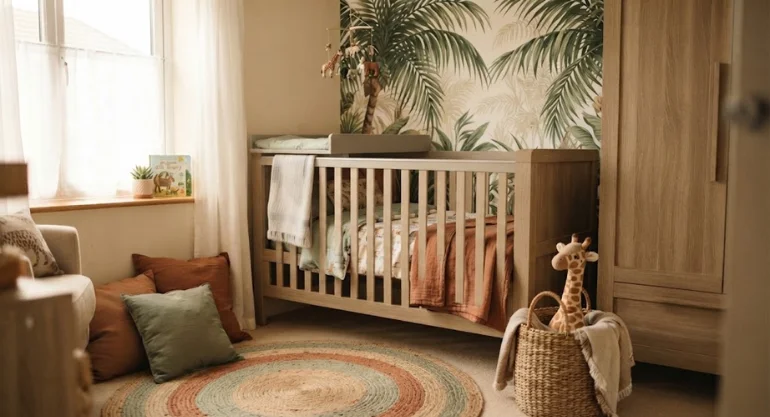
To create a jungle, safari, or woodland-themed nursery, start with neutral wooden furniture in a warm tone, oak, whitewash, greywash, or cashmere all work, since these finishes sit comfortably under any of the three themes without clashing. Build the actual theme through wallpaper or a mural, animal-print soft furnishings, textured rugs, and wall art, rather than searching for furniture printed with jungle motifs, which is genuinely hard to find and tends to date faster than a neutral wood finish.
Jungle leans tropical and bold (palm leaves, monkeys, toucans, saturated green), safari leans earthy and warm (lions, elephants, giraffes, terracotta and mustard tones), and woodland leans soft and muted (foxes, rabbits, squirrels, sage green and blush pink), so the decor layer is what actually defines which of the three you’re building.
These three themes get used almost interchangeably in a lot of nursery content, but they carry genuinely distinct moods, and knowing which one you’re actually going for makes shopping for decor considerably easier.
Jungle themes lean tropical and vibrant: dense greenery, palm leaves, monkeys, toucans, and often a bolder, more saturated colour palette. It’s the boldest and most playful of the three.
Safari themes lean warm and earthy, built around savanna animals like lions, elephants, giraffes, and zebras, typically in terracotta, mustard, and sandy neutral tones rather than jungle’s brighter greens.
Woodland themes are the softest and most muted of the three, built around forest creatures like foxes, rabbits, hedgehogs, and squirrels, usually in sage green, dusty pink, or soft neutral palettes. It’s the theme most likely to still feel appropriate once your child moves into a toddler bedroom.
There’s genuine overlap between all three, and plenty of real nurseries blend elements from two, a jungle-safari hybrid using both tropical leaves and savanna animals is common, so treat these as a spectrum rather than three strictly separate boxes.
This is the part that trips people up when they search specifically for “jungle nursery furniture.” Furniture printed or carved with animal motifs exists, but it’s rare, often expensive, and tends to lock you into a theme your child may outgrow well before the furniture itself wears out. A better, more flexible approach used by most professional nursery designers is to choose genuinely neutral, natural-toned furniture, then build the theme entirely through decor layers that are far cheaper and easier to update later.
Warm wood tones do a lot of the visual work here. An oak finish, like our Luno collection and Veni collection, pairs naturally with both jungle and safari themes, since the warm tone echoes the earthy, organic feel both themes are going for. A softer whitewash or greywash finish, like our Caro collection, suits a more muted woodland look particularly well, letting sage greens and dusty pinks take center stage without competing with a bolder wood tone. Cashmere and cream finishes, found across our Lux collection, work as a genuinely flexible middle ground that suits any of the three themes equally well.
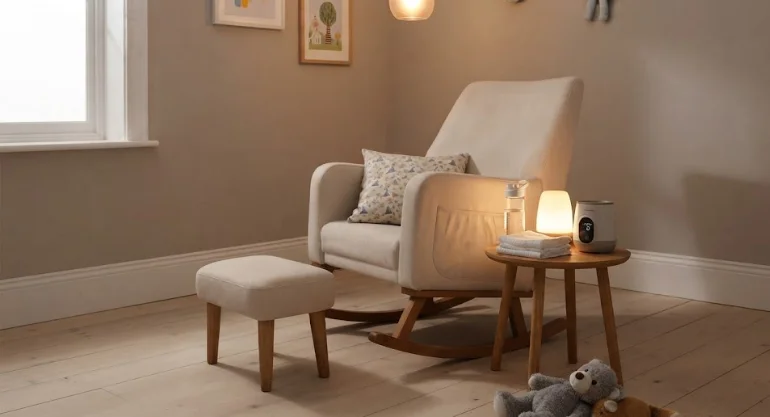
Whichever theme you’re building toward, a few safety points are worth keeping front of mind, particularly with cot-adjacent decor. Keep any hanging decor, mobiles, bunting, or fairy lights well away from the cot itself and out of reach once your baby is mobile. Avoid heavy wall art directly above the cot, and secure any wall-mounted shelving properly rather than relying on adhesive strips for anything holding weight. If you’re using a rug near the cot or changing area, a low-pile, securely placed option reduces trip risk during night feeds and changes, something we touch on more generally in our guide on setting up a night feed station.
If you’re working with a smaller UK nursery, a box room or a terraced house second bedroom, going all-in on a full jungle mural and matching soft furnishings can quickly make the room feel cluttered rather than characterful. A more space-conscious approach is to pick two or three strong theme elements, a mural on one wall, a matching rug, and a single statement cushion, and let the neutral wood furniture and plain walls elsewhere give the room breathing room. Our guide on small nursery ideas covers this balance in more depth if space is a genuine constraint.
Themed furniture printed specifically with jungle or safari motifs is genuinely rare in the UK market, and mostly found in smaller, gift-style accessory pieces rather than full cot beds or wardrobes, so “jungle themed nursery furniture sale” searches are usually better served by finding a strong sale on quality neutral furniture, then spending the savings on the decor layer instead. Babymore runs regular sales across several collections, including the Caro, Kimi XL, and Velvet ranges, with savings that can run into the hundreds of pounds on full nursery sets.
Timing your purchase around these sales, while still leaving enough lead time before your due date, is worth planning for. Our guide on when to buy nursery furniture covers how to balance sale timing against giving yourself enough runway before the baby arrives.
A genuinely great jungle, safari, or woodland nursery comes down to layering, not searching for furniture that’s already themed. Start with a neutral, warm-toned wooden base, then build the character of the room through wallpaper, textiles, and decor that’s far easier and cheaper to swap out as your child grows.
Babymore’s nursery furniture range spans warm oak, whitewash, greywash, and cashmere finishes, giving you a flexible base for any of these themes, and our nursery furniture sets are worth checking for current sale pricing before you start layering on the decor. For more on organising the finished room once your theme is in place, our guide on nursery storage ideas that actually save space is a useful next read.