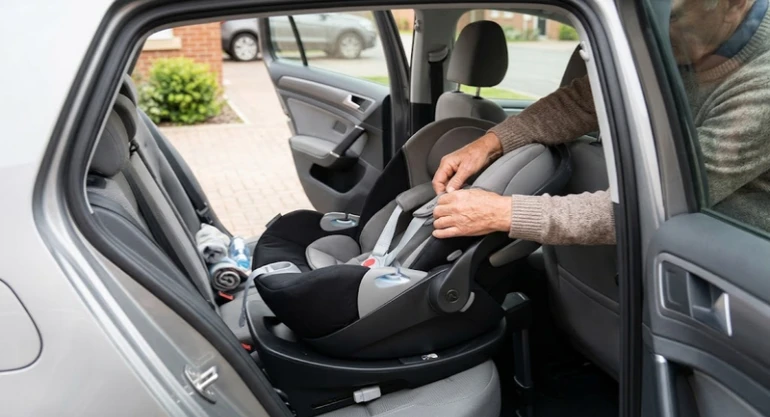
Grandparents do the school run, nursery pick-ups and weekend trips. A second family car might be used for childcare, carpooling or the odd longer journey. But your baby or toddler’s car seat usually lives in your car. So what should you do about a car seat for a grandparent’s car in the UK? Do the rules change for occasional use? And what’s the safest, simplest and most affordable way to equip a second vehicle? This guide by Babymore explains the law, compares your options, and gives you a practical checklist so every journey is safe.
Quick Answer
In the UK, a child must use the correct child car seat in any car, including a grandparent’s or a second car, until they are 12 years old or 135 cm tall, whichever comes first. Occasional use isn’t an exemption, and the driver is responsible for children under 14. For most families the safest options are: a second car seat that stays in the grandparent’s car, a second ISOFIX base if you use an infant carrier, or a seat that grows with your child. Choose an approved (R129 i-Size or R44) seat that fits your child and the car, and have whoever drives shown how to fit it properly.
Do Grandparents Need a Car Seat in Their Car?
Yes. The law is the same for every driver and every car. According to GOV.UK, children must normally use a child car seat until they’re 12 years old or 135 cm tall, whichever comes first. Points that matter for grandparents and second cars:
- The driver is responsible. Which? explains that for children under 14, the driver is responsible for making sure they are in the right seat or wearing a seat belt. Police can give an on-the-spot fine, and if a case goes to court the fine can be up to £500.
- “Just a short trip” isn’t an exemption. The limited exceptions, such as an unexpected, necessary and short journey, don’t cover planned trips like a regular school run or childcare pick-up.
- Only approved seats can be used. Seats must carry the “E” mark and be approved to R129 (i-Size) or ECE R44. See R44 vs R129 car seat regulations for the difference.
- Rear-facing for babies. Seats approved to R129 must be rear-facing until a child is over 15 months old.
- Children under 3 must always be in a child car seat in most cases.
Our guide to UK car seat laws and limits covers the full rules, our car seat regulations guide has the details on standards, and for a quick overview of what each stage looks like, see our car seat stages in the UK.
What about taxis and other exceptions?
There are limited exceptions in the law, for example in licensed taxis and minicabs. But they’re about specific circumstances, not about grandparents’ cars. If you’re curious, read do you need a car seat in a taxi? UK law explained.
Which Car Seat Setup Is Best for a Grandparent’s or Second Car?
There’s no single answer, because it depends on how often the car is used, your child’s age and your budget. Here are the main options:
| Option |
Best for |
Pros |
Things to consider |
| A second car seat that lives in the grandparent’s car |
Regular childcare |
Always ready; no daily swapping; fewer fitting mistakes |
You need to buy a second seat |
| One infant carrier plus a second ISOFIX base |
Babies in an infant carrier |
The carrier clicks in and out; quick and easier to fit correctly |
Bases are specific to the seat, and the car needs ISOFIX points |
| A seat that grows with your child |
Toddlers and older children |
Lasts for years; fewer purchases |
Check it suits your child’s current size and the car |
| Moving one seat between cars |
Occasional use only |
Costs nothing extra |
Fitting takes time and mistakes are easy, so check it every time |
| A booster seat |
Older children |
Lighter and quick to set up |
Only suitable once your child is the right size and age |
1. A second seat for the grandparent’s car
For anything beyond the occasional trip, a dedicated second seat is the simplest and safest solution. It stays fitted, the grandparent learns how it works, and nobody has to swap seats in a rush. If your budget is tight, a good-value approved seat is much safer than moving one seat around every day.
2. A spare ISOFIX base
If you use an infant carrier, you can leave one base in each car, so the carrier simply clicks in. Our guides to what an ISOFIX car seat is, whether you need an ISOFIX base and how to fit your ISOFIX car seat properly explain how this works. Babymore’s Coco i-Size baby car seat and Pecan i-Size baby car seat can be fitted with a belt or a matching ISOFIX base, and you can buy the Coco ISOFIX base or Pecan ISOFIX base separately. Check the product page for what’s included.
Check the car first. ISOFIX only works if the car has ISOFIX anchor points. Older cars may not, so check the vehicle handbook before you buy. If your seat uses a support leg, read about ISOFIX and support leg compatibility too.
3. A seat that grows with your child
If your child is past the infant stage, a seat that covers a wide range avoids repeat purchases. Babymore’s Hazel i-Size seat is listed for 76 to 150 cm (15 months to 12 years), and the Shea 360° i-Size seat for 40 to 150 cm (0 to 12 years). If you’re curious about swivel seats, read about 360 rotating car seats. Our guide to multi-stage car seats from birth to 12 years explains the pros and cons, and infant carrier vs convertible car seat helps you compare.
4. Moving one seat between cars (occasional use only)
If the second car is used rarely, you can move the seat. But every re-fit is a chance for a mistake. If you do this:
- Fit it using the manufacturer’s instructions each time.
- Check the harness and seat belt are tight and correctly routed.
- Re-check the fit before the first journey, not at the roadside.
Read are baby car seats hard to install? and our list of common car seat mistakes before you start.
5. A booster for older children
For children who have outgrown a harness seat, a lighter booster is quicker to move. A high-back booster also gives head and side support (see the importance of side-impact protection). See our guide to the safest high-back booster seats. Make sure your child is the right size and age before moving to a booster, using the stages guide above.
Lightweight, Portable and Budget Car Seats: What to Know
Parents often search for a “portable” or “lightweight” car seat for travel or for a second car. Keep these points in mind:
- Legal first. In the UK, only approved seats (marked with an “E” and R129 or ECE R44) can be used. A seat that isn’t approved isn’t a legal option, however portable it is.
- “Lightweight” is about convenience, not safety. An infant carrier that clicks on and off a base is easier to carry. A grow-with-me seat is heavier but needs no swapping.
- A budget seat can be a smart choice for a second car, as long as it is approved, suits your child’s height and weight, and fits the vehicle. Babymore’s pricing varies, so compare current prices on the car seat range.
- Don’t compromise on fit. A cheap seat that doesn’t fit the car properly is worse than a well-fitted one. Check compatibility before you buy.
- Avoid second-hand seats for a spare. You can’t be sure of its history, and a seat that has been in an accident should be replaced. See our guides to buying a second-hand car seat and replacing a car seat after an accident. Childcare charities also advise replacing seats generally around five years old.
- Use the manual. A seat without fitting instructions is harder to use correctly. Keep the manual with the seat in the grandparent’s car.
For help choosing, read our guide to choosing a car seat.
Car Seats for Carpooling and Shared School Runs
If you share lifts with other parents, the same law applies:
- The driver is responsible for children under 14, including other people’s children.
- Planned trips aren’t “unexpected.” The exception for unexpected, short, necessary journeys doesn’t cover regular school runs.
- Each child needs the right seat for their height and weight, and it must suit the car.
- Agree who provides what. Many families let each child bring their own seat, or keep a booster in each car.
- Check the fit before you drive. Ask the seat’s owner to show you how it fits.
- Insurance: if you carry children as part of work, tell your insurer. The charity Child Car Seats advises anyone using their own vehicle for work to declare it, and to check that child passengers are covered. For occasional lifts between friends, ask your insurer if you’re unsure.
- Seating positions matter. Our guide on which position in the car is safest for a baby’s car seat can help.
Handover Checklist for Grandparents and Other Drivers
Before anyone else drives your child, go through this together. A quick walk-through is the best way to prevent mistakes.
- Show them the seat. Demonstrate how to fit it, and how to remove it if needed.
- Hand over the manual, or keep it in the car.
- Check it’s the right seat for your child’s current height and weight. Check the label.
- Show them the harness. It should be snug, with no slack. Our guide on how tight a baby car seat harness should be has details.
- No bulky coats. See can you put a coat on a baby in a car seat?
- Rear-facing for as long as the seat allows. Read extended rear-facing car seats and when a baby can face forward.
- Airbags. A rear-facing baby seat must never go in a front seat with an active airbag.
- Never leave a child alone in the car, and take breaks on longer trips. See the car seat 2-hour rule.
- Agree the basics: who fits the seat, what to do if it moves, and who to call with questions.
- Keep the seat in good condition. Replace it after any crash and check for wear, and keep it clean with our guide on how to clean a baby car seat. More tips are in our baby car seat safety tips.
Don’t Forget the Pram or Pushchair
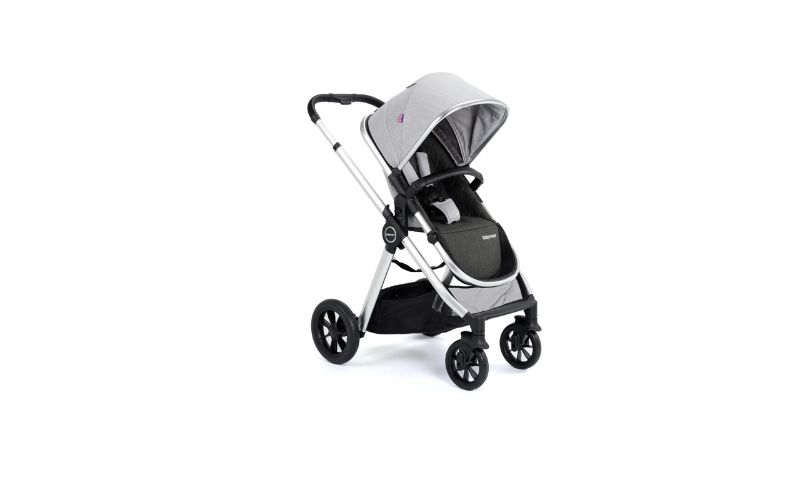
If grandparents also take the baby out, a lightweight pushchair or a travel system that fits an infant carrier makes handovers easier (check car seat and pushchair compatibility first). Browse our travel systems and prams and pushchairs, or read our pushchair guide. If you’re taking your seat on a plane instead, see can you take a car seat on a plane?
Final Thoughts
Occasional use doesn’t mean occasional safety. Whichever car your child travels in, the same rules apply: the right approved seat, fitted correctly, with a driver who knows how to use it. For regular childcare, a second seat or a spare ISOFIX base is usually the simplest, safest answer. For more advice, see our guide to car seat safety.
Frequently Asked Questions
01- Do grandparents need a car seat in their car?
Yes. Children must use the correct child car seat in any car until they’re 12 or 135 cm tall, whichever comes first, and the driver is responsible for children under 14.
02- Can I use the same car seat in two cars?
Yes, but each re-fit increases the chance of an installation mistake. If you swap often, consider a second ISOFIX base or a second seat.
03- Is it OK to keep a spare car seat for childcare?
Yes, and it’s often the safest option. Choose an approved seat that suits your child’s size, and keep the manual with it.
04- What is the best car seat for a second car?
It depends on your child’s age and how often you use it. For babies, an infant carrier with a second ISOFIX base is convenient. For older children, a grow-with-me i-Size seat or a booster may suit.
05- Can I use a budget car seat for my second car?
Yes, as long as it is approved (R129 or R44), suits your child’s height and weight, and fits the car properly.
06- Are portable or travel car seats legal in the UK?
Only if they are approved to R129 or ECE R44 and carry the “E” mark. A seat that isn’t approved isn’t legal, however portable.
07- Can a grandparent drive a baby without a car seat for a short trip?
Not for planned journeys. The exceptions are limited, such as an unexpected, necessary short trip for children aged 3 or over, so plan ahead.
08- Who is responsible if a child isn’t in the right car seat?
The driver, for children under 14. A fine can be up to £500 if a case goes to court.
09- Can I lend my car seat to a friend for carpooling?
You can, but make sure it suits the child using it, is in good condition, comes with its manual and has been shown how to fit it.
10- How do I know a car seat will fit another car?
Check the seat’s manual and the car’s handbook, and test-fit before the first journey. For ISOFIX seats, the car needs ISOFIX points.
11- Should I buy a second-hand car seat for my second car?
We’d avoid it. You can’t be sure of its history, and a seat that has been in an accident should be replaced.
12- How long does a car seat last?
Child Car Seats advises replacing seats generally around five years old, or after a crash. Check the manufacturer’s guidance for your seat.