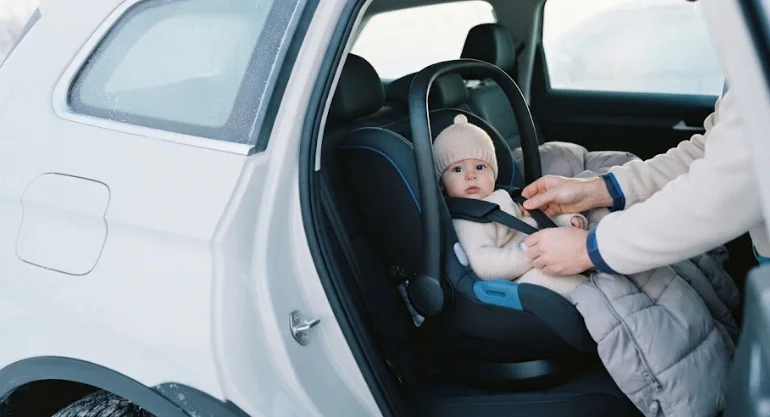
No, a baby or child shouldn’t wear a thick or puffy coat under the car seat harness. In a crash, the padding compresses, leaving slack in the harness that can reduce how well it holds your child. Instead, dress your baby in thin, snug layers, fasten and tighten the harness, then put a blanket or the coat over the top of the buckled harness. Check the fit with the pinch test: if you can pinch any webbing at the shoulder, the harness is too loose.
Every autumn, the same question comes up on parent forums and in Facebook groups. Your baby is wrapped up in a snowsuit, it’s freezing outside, and the instinct is to leave them bundled up. The trouble is that what feels like a snug fit can be hiding a lot of slack. Here’s why it matters, how to check, and what to do instead. Learn more with Babymore.
A car seat harness only works if it fits closely against your child’s body. A thick coat, padded snowsuit or puffy bunting bag adds a layer of air-filled padding between the child and the straps. When you tighten the harness over it, the straps feel snug. But in a collision the force squashes the padding flat, and what felt tight suddenly isn’t. The result is slack at exactly the moment you need the harness to hold.
This is well established in child passenger safety guidance. Consumer Reports explains that bulky or puffy material under a harness can compress in a crash and create slack between a child and their harness, which raises injury risk. Nationwide Children’s Hospital makes the same point, noting that a coat often makes the harness too loose. Both are US organisations, but the physics is the same on UK roads and the advice matches what UK car seat guidance says. Our own guide on car seat tips for bad weather covers the same issue.
You can find out whether a coat is a problem without any special equipment.
For everyday checks, use the pinch test. With your child buckled in, try to pinch the webbing at their collarbone. If you can grab a fold of it between your finger and thumb, tighten the harness until you can’t. Our guide on how tight a baby car seat harness should be explains the harness position and strap height as well.
The answer is thin layers that sit close to the body. Good options are:
Thin layers are easy to add or remove, and they don’t compress. Hats, socks and mittens keep the extremities warm and don’t affect harness fit. As a rule, the more a garment feels like padding or puffiness, the less suitable it is under a harness.
Remember that cars heat up quickly. A baby who is wrapped up for a cold car park can get too warm once the heater is on, so dress them for the cabin temperature and add or remove layers on top as needed.
The key principle is to secure the harness first, then add warmth over the top.
A blanket over a harnessed child is fine if it follows the rules above. A blanket draped over the whole carrier is a different matter. Covering an infant carrier completely can reduce airflow and let the temperature inside climb, and you can’t see your baby’s face. If you need to shield your baby from rain or wind, a cover that’s designed for the seat is a better choice. Keep their face visible and check on them often.
It’s also worth being cautious about anything that goes between your baby and the seat. Padded liners, thick inserts, fluffy fleece bunting bags and snuggly pods can all compress in a crash or move the baby away from the harness. Seat manufacturers test their seats the way they’re designed to be used, so extras that haven’t been approved for that seat can affect how it performs.
Which? advises that car seats are crash-tested in the way they’re designed to be used, and that adding accessories not approved by the manufacturer could compromise the seat’s safety or void its warranty. It recommends using only products supplied or recommended by the seat’s manufacturer, and it also notes that unapproved products could invalidate your insurance. ‘Which?’ also lists car seat blankets with soft padding as a concern, because the padding compresses in an accident and can loosen the harness.
So when you shop for winter extras:
Our guides on common car seat mistakes and baby car seat safety tips cover other errors worth avoiding, and the UK car seat regulations explain what the legal standards mean.
With the clocks going back, more journeys happen in the dark and the cold, which is when mistakes are easiest to make. Our guide on car seat safety when the clocks go back looks at visibility and loading in the dark. If you’re also due to move your child up a stage, our guide to choosing a car seat can help, and understanding car seat limits explains how to tell when a child has outgrown their seat. Babymore’s car seats range has options for every stage.
Keeping a baby warm and keeping them safe in a car seat don’t have to conflict. Thin layers underneath, a properly tightened harness, and warmth added on top solve it for almost every winter journey. If you’re ever unsure, do the coat test and the pinch test, and check your manual for approved accessories.
Looking at your next car seat? Browse Babymore’s car seats or read our guide on car seat tips for bad weather for more winter advice.