Last Updated: February 2026
Parents in the UK have absorbed one clear legal change: if you buy an i-Size seat, your child must remain rear-facing until 15 months. That’s the law—but it isn’t the full safety picture.
This guide explains why extended rear-facing (ERF) car seats in the UK offer greater protection beyond 15 months, what evidence supports rear-facing until 4 years, and how to choose the right ERF seat for your family.
Extended Rear-Facing (ERF) means keeping your child travelling rear-facing (facing backwards) in their car seat for longer than the legal minimum of 15 months, rather than switching to forward-facing as soon as allowed.
In practical terms, ERF means:
Why those higher numbers matter: Weight and height limits determine how long your child can stay in the safest seating position.
Rear-facing car seats are much safer because they offer better protection for a child’s head, neck, and spine during a collision.
By supporting the entire back of the body, a rear-facing seat spreads crash forces more evenly, greatly reducing the strain on the neck.
This is especially important because a child’s head makes up around 25% of their body weight, compared to about 6% in adults, while their neck is still developing and particularly fragile.
Keeping children rear-facing supports the head and neck together, lowering the risk of serious or life-threatening injuries in a crash.
Multiple studies and safety reviews show that children aged 0–4 years are significantly less likely to be injured when rear-facing compared to forward-facing.
According to the National Institute of Health (NIH), children aged 0-4 years are less likely to be injured in a motor vehicle crash if they are restrained in a rear-as opposed to forward-facing car safety seats.
Sweden’s long-standing national recommendation is for children to travel rear-facing until around 4–5 years old, and decades of crash data show this approach reduces serious injuries and saves lives.
This guidance reflects international best practice and evidence-based child safety research.
Extended rear-facing offers both safety and everyday advantages:
If your child still fits rear-facing within the seat’s limits, there’s no safety reason to turn them forward simply because they’ve reached 15 months. Always check your seat’s label and manual.
The Swedish Plus Test (often called the “Plus Test”) is a highly demanding additional safety test used alongside standard EU approval.
Its purpose:
To ensure that a child in a tested seat would not sustain severe or life-threatening injuries in a real-world frontal crash.
Seats that pass the Plus Test are often recommended for families who want maximum crash protection, especially for extended rear-facing to higher weights.
If you’re comparing ERF seats, a Plus Test pass is a strong extra safety credential — though not legally required.
When shopping for extended rear facing car seats UK, use this checklist:
Here’s a comprehensive guide by Babymore on how to fix an ISOFIX car seat.
Learn more about how to choose the right car seat for your baby.
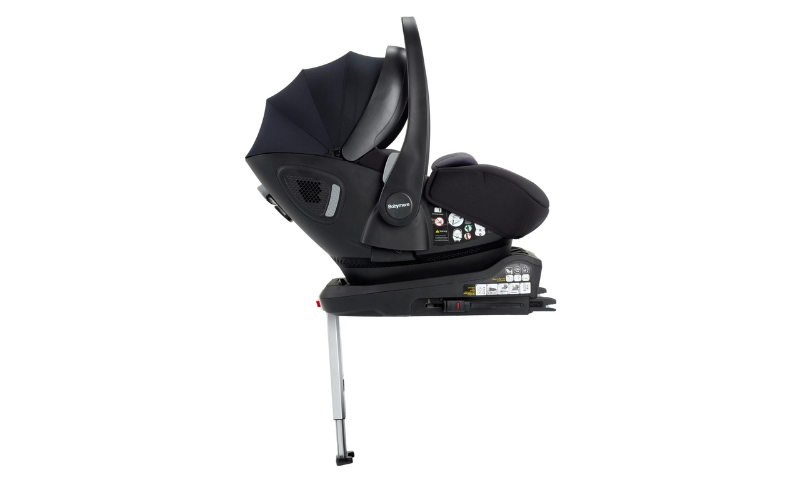
If you’re considering ERF, explore Babymore’s range of i-Size car seats that are designed with extended rear-facing capability, allowing children to stay rear-facing well beyond the legal minimum, with ISOFIX installation, and supportive recline for everyday comfort and safety.
Yes, when practical and possible.
While UK law allows forward-facing from 15 months, evidence and best practice clearly show extended rear-facing reduces head and neck injury risk.
If your family can fit an ERF seat that keeps your child rear-facing longer (to 18–25 kg or up to the seat’s height limit), it’s a sensible, evidence-backed safety choice.
15 months is a legal minimum, not the safest stopping point.