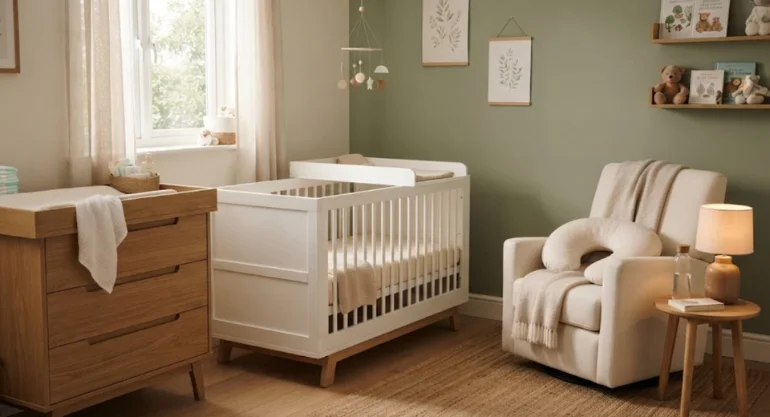
Every parent furnishing a nursery eventually hits the same decision: buy a coordinated set, or pick each piece separately and build the room up over time. The instinctive assumption is usually that a set is the better deal, bundles are supposed to save money, but it’s worth actually checking that assumption against real numbers rather than taking it on faith.
At Babymore, we sell both routes, complete sets and standalone pieces, so we can give a genuinely honest answer, backed by real pricing, rather than a sales pitch for whichever option happens to be more convenient for us.
In most cases, buying a nursery furniture set genuinely does cost less than buying the same pieces individually, sometimes considerably less, since bundling lets retailers offer a combined discount that standalone pieces don’t carry. Using real Babymore pricing as an example, a Luno Veni chest changer and wardrobe bought separately cost £578 combined, only slightly less than the entire 3-piece Luno set, cot bed included, at £714 on sale.
That means the cot bed itself effectively costs a fraction of what it would as a standalone purchase. Sets also guarantee consistent wood tone and hardware across every piece, which individually sourced furniture can’t promise. Buying individually still makes sense if you’re spreading the cost over several months, already own one or two pieces, or only need part of a full room setup.
A 2 piece nursery furniture set typically bundles a cot bed with a chest changer. A 3 piece set adds a full wardrobe on top of that. Buying individually means selecting each piece, a cot bed, chest changer, and a wardrobe, as separate purchases, potentially even from different collections or finishes if you’re mixing and matching.
Rather than a vague “sets usually save money” claim, here’s an actual example using real Babymore pricing from our Luno Veni oak collection. Bought separately, the chest changer costs £239 and the wardrobe costs £339, £578 combined for just those two pieces, before a cot bed is even factored in.
The full 2-piece Luno set, which includes the cot bed alongside a matching chest changer and wardrobe, along with a coordinated under-cot storage drawer, is priced at £714 on sale, only £136 more than the changer and wardrobe alone would cost. In effect, the cot bed, the single largest and most expensive piece of the three, is being added to the set for a fraction of what it would likely cost as a standalone purchase.
This pattern holds across several of our other collections too. Full 3-piece sets like our Eva, Caro, and Kimi ranges regularly carry their own sale pricing, sometimes saving well over £100 off the combined cost of buying each piece separately, which is worth checking directly against the individual piece prices for whichever collection you’re considering before assuming either route is automatically cheaper.
Cost isn’t the only factor worth weighing here. Buying a set guarantees that your cot bed, chest changer, and wardrobe are finished in genuinely matching wood tone and hardware, not just a similar shade that happens to look close in photos. Colour and finish can vary noticeably between individually sourced pieces, even within the same named collection, if they’re bought at different times or, worse, from different brands entirely. A set removes that guesswork completely, which matters more than it might seem once the pieces are actually sitting next to each other in the room.
A set isn’t automatically the right call for every situation. Buying pieces separately genuinely makes sense if:
Set pricing fluctuates with genuine sales, not just marked-up “was” prices, so timing matters if you’re chasing the best value. A few practical tips:
It’s worth separating “best price” from “best value” here, since they’re not always the same thing. A convertible cot bed that lasts from birth through to around four or five years old delivers considerably more value per pound spent than a cheaper, non-convertible cot that needs replacing with a separate toddler bed within two years, even if the initial price looks higher.
The same logic applies to a full 3 piece set versus a 2 piece set plus a mismatched, separately sourced wardrobe bought later at a higher individual price: the genuinely better long-term value isn’t always the smaller number on the price tag today.
The numbers genuinely back up the common assumption here: a coordinated nursery furniture set is usually the better value option, often saving a meaningful amount compared to buying the same pieces separately, while also guaranteeing a consistent finish across the whole room. Buying individually still has its place for specific budgets and room layouts, but it’s worth running the real math, as shown above, rather than assuming either option is automatically cheaper.
If you’re comparing options for your own nursery, Babymore’s nursery furniture sets and individual nursery furniture ranges are worth checking side by side using this same approach, and our guide on essential nursery furniture is a useful next read if you’re still deciding which pieces you genuinely need.