Search for a cot mattress and you’ll soon see the word “breathable”, on foam, sprung and fibre mattresses alike. It sounds reassuring, and many parents wonder whether a breathable mattress is safer or whether they need one at all. This guide separates the facts from the marketing: what a breathable cot mattress actually is, whether it makes a difference, how to tell if a baby mattress is breathable, and what really matters for safe sleep.
A breathable mattress is optional, not essential. There is no standard definition of “breathable” for baby mattresses, and the Lullaby Trust, the UK’s safer sleep charity, advises parents to treat “breathable” and temperature-control claims with caution. What matters far more is that the mattress is firm, flat, waterproof-covered, the right size and tested to UK standards. Airflow can be a useful extra, but it doesn’t replace those basics, and it doesn’t make a soft mattress safe.
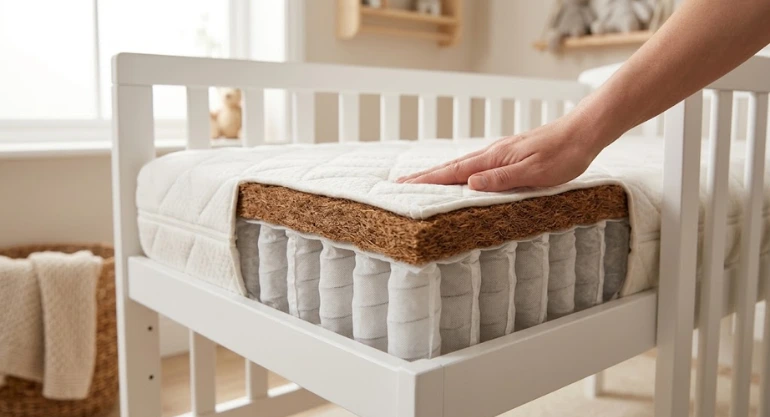
In marketing, a breathable crib or cot mattress is one designed to increase airflow at or through the sleep surface. Manufacturers may achieve this with:
The key point is that “breathable” is a marketing term, not a safety certification. There is no single standard test for it, and it doesn’t describe one standard construction, so two mattresses both called breathable can be very different.
Fact: There is no sufficient evidence that a mattress marketed as breathable prevents SIDS (sudden infant death syndrome) on its own. Our guide to the best mattresses and bedding for babies is a useful companion. The Lullaby Trust’s product guide advises ignoring “breathable” claims, saying it is more important that the mattress is waterproof, or has a fitted waterproof cover or layer, which helps stop bacteria building up inside it.
Fact: Breathability doesn’t replace firmness. The Lullaby Trust says soft mattresses are known to increase the risk of SIDS, and that a mattress should be firm enough that a baby’s head doesn’t sink in more than a few millimetres. A soft foam mattress doesn’t become safe because it has holes or a mesh cover.
Fact: It doesn’t. Look for BS EN 16890 (mattresses for cots), BS 1877-10 and BS 7177 (low hazard) instead. Even these standards check construction, chemicals and fire safety, and the Lullaby Trust notes they don’t confirm a product reduces SIDS risk.
Fact: They can. Many mattresses have a waterproof layer for hygiene with a breathable core beneath it. The Lullaby Trust still wants a waterproof cover or layer on the mattress, so look for both.
Fact: Safe sleep advice is unchanged. Put your baby on their back, on a firm, flat surface, with a clear cot and no pillows, bumpers or loose blankets. Breathability doesn’t replace any of this.
Fact: Overheating is linked to a higher SIDS risk, and airflow may help comfort. But claims that a mattress controls temperature should be treated with caution, and room temperature, clothing and bedding matter more. Keep the cot away from radiators and direct sunlight, and avoid overwrapping. Our guide to winter-proofing your baby’s nursery explains how.
No, you don’t need one. A breathable mattress is optional. If you like the idea, choose one for airflow, comfort or easier cleaning, but only after the basics are covered. A simple checklist:
It’s a common worry, and it’s the reason safe sleep guidance puts such emphasis on the sleep surface. Soft surfaces are linked to a higher risk, because a baby can sink into them or have their face covered. That’s why the advice is a firm, flat mattress, a baby on their back, and a clear cot, with no pillows, duvets, bumpers or soft toys. Our cot safety guide covers the rest of the cot set-up.
A mattress sold as breathable doesn’t change this advice. If you’re worried about your baby’s sleep, speak to your health visitor or GP, and follow current guidance from the NHS and the Lullaby Trust.
Because there’s no standard test, you can’t rely on the label alone. To judge a “breathable” claim:
| Type | Airflow | Things to check |
|---|---|---|
| Sprung / pocket sprung | Air can flow between the springs | Still needs to be firm, flat and waterproof-covered |
| Coir / fibre | Natural fibre core lets air circulate | Check the cover is waterproof or has a waterproof layer |
| Foam | Varies; dense foam holds less airflow and some foam can retain heat | Make sure it’s a firm cot foam, not adult or soft foam |
| Slotted or ventilated | Holes or slots aim to let air through | A waterproof cover or layer is still needed |
Spring and pocket sprung cot bed mattresses are a popular choice because they hold their shape and air can flow between the springs. They’re fine for babies as long as they’re firm, flat, correctly sized and standards-tested. “Airflow” is a bonus, not the reason to choose one. Browse Babymore’s pocket sprung and deluxe sprung cot bed mattresses.
They can be, if they are firm cot foam that meets the standards. A “breathable” label doesn’t make a soft or adult foam mattress suitable. For more, read are foam & memory foam mattresses safe for babies?
Mattresses with slots, holes or channels, sometimes sold as “airflow” or “flow” mattresses, are designed to let air through. That can add airflow, but apply the same checks: firm, flat, waterproof cover or layer, correct fit and BS EN 16890.
If your mattress is two-sided, use the side the manufacturer says is for babies, which is usually the firmer one. The softer side is meant for toddlers, so don’t flip to it early. Babymore’s Premium Core cot bed mattress and cot mattress have an infant side and a toddler side. For when and how to flip, see DUAL-SIDED COT MATTRESS: WHEN TO FLIP TO THE SOFTER TODDLER SIDE.
For a wider look at choosing a cot or cot bed mattress, including size and fit, firmness, hygiene, thickness and safety standards, read Babymore’s mattress guide.
Babymore’s mattress range uses pocket sprung, dual core and fibre builds with a coir and fibre core, and is foam-free. The product pages say the coir and fibre core promotes airflow. As with any manufacturer’s claim, we’d encourage you to treat that as a comfort feature and to focus on the basics: firm, flat, waterproof-covered, correctly sized and tested to British standards. Browse the Eco Fibre cot mattress, the Premium Core range and all baby mattresses. Check your cot’s size first with our cots and cot beds range, and use our nursery checklist to plan the rest of the nursery.
“Breathable” is a pleasant feature but not a safety guarantee. When choosing a mattress, start with what the evidence supports: firm, flat, waterproof, well fitted and tested to British standards. If it’s also breathable, that’s a bonus.
Ready to choose? Browse Babymore’s baby mattresses, cots and cot beds and nursery furniture.