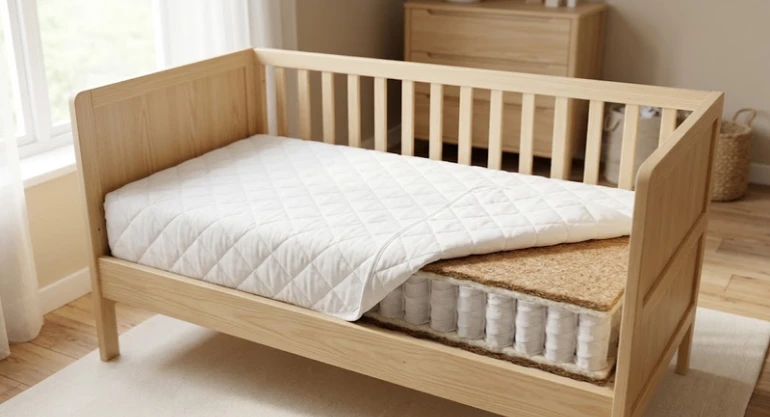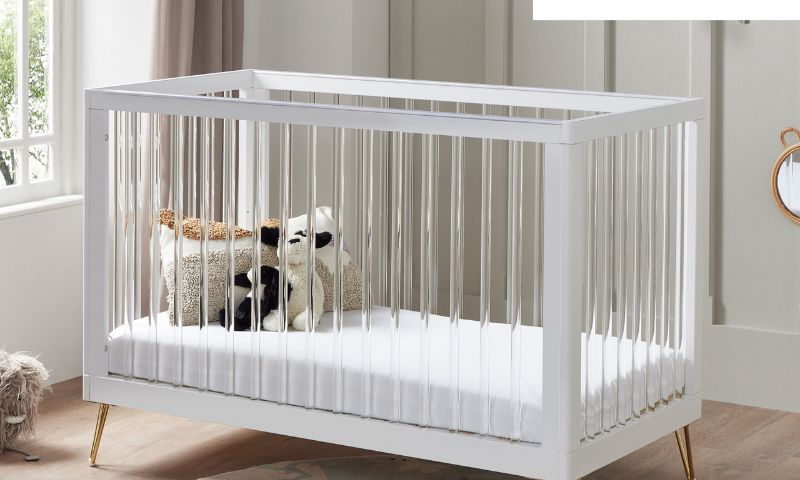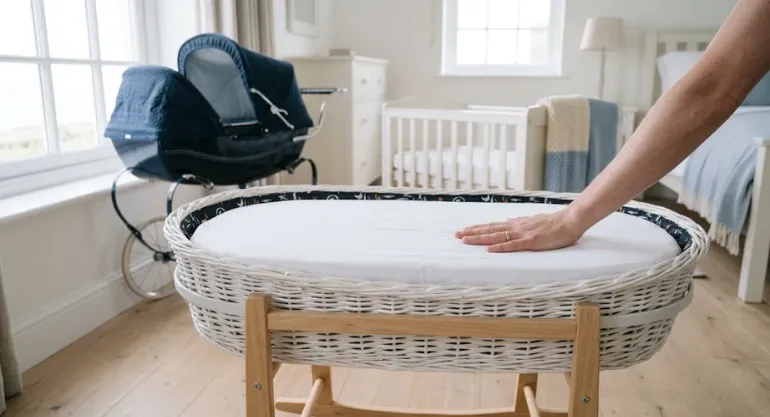
Newborns spend a lot of time in small sleep spaces: a Moses basket by the bed, a carrycot on the pram frame, a bassinet in the living room. Each has its own mattress, and parents often aren’t sure what’s included, whether it can be flipped or washed, or when to replace it. What mattress do you need for a Moses basket, bassinet, carrycot or pram, and how do you look after it? The short answer is to use the mattress made for that exact product, keep it firm, flat and waterproof, never add padding, and replace it with the manufacturer’s own if it wears out. This guide covers sizes, flipping, washing and replacement for each type.
Quick Summary:
| Sleep space | Typical use | Mattress notes |
|---|---|---|
| Moses basket | Newborn, by the bed or around the house | Often about 74 x 28 cm or 66 x 28 cm; sizes vary by basket |
| Bassinet / crib | Newborn, home | No UK standard; measure or use the maker’s mattress |
| Carrycot | Newborn, on a pram frame or on its own | Flat base mattress, usually supplied by the maker |
| Pram (lie-flat seat) | Out and about | Use the maker’s mattress or pad |
| Bedside crib | Newborn, next to your bed | Model-specific; see our bedside crib mattress guide |
Moses baskets are small and the mattress is usually sold to fit a particular basket. Retailer guides list common sizes of about 74 x 28 cm, or 66 x 28 cm for smaller baskets, but there is no standard, so measure inside yours or check the maker’s listing. Babies typically outgrow a Moses basket by about three to four months, or sooner if they roll or push up. Our guides to Moses baskets and cribs and what size mattress fits a crib explain more.
The Lullaby Trust’s advice is clear: use a firm, flat, waterproof mattress and don’t add extra padding. A baby’s head should not sink in more than a few millimetres. See how firm a baby mattress should be. That means no cushions, rolled towels or extra layers to “soften” the basket. See also why mattress toppers aren’t recommended for babies.
It depends on the mattress. Some are designed with one waterproof side and one softer side, or with different faces for different seasons, and flipping them would change the surface. We haven’t found a general rule, so follow the label or the manufacturer’s instructions, and never flip a mattress if it puts a softer or non-waterproof side upward. If the mattress is the same on both sides and the instructions allow it, rotating it can help it wear evenly.
“Bassinet” is the American word for what UK parents might call a crib, a carrycot or a rocking cradle. The same principles apply: firm, flat and the exact size of the bassinet, with no gaps. If you’re buying a replacement, use the manufacturer’s own, or one they state is compatible. If you’re shopping from the UK, our crib mattress size guide lists typical sizes and how to measure.
A carrycot is a lie-flat sleeping bag-like compartment that attaches to a pram frame. A pram with a lie-flat seat may also have a pad. The Lullaby Trust says babies are safest sleeping flat on their back on a firm, flat, waterproof mattress, and warns that car seats aren’t flat, so babies shouldn’t sleep in them for long periods. See our guides on how to choose a pram and pram vs pushchair.
Many carrycots include a base mattress, but it varies by brand and model, and some are sold as add-ons. We haven’t checked specific models such as the Baby Elegance or Baby Jogger Compact, so check the retailer’s listing or manual for your exact pram to see what’s included. If the mattress isn’t included, buy the maker’s own. Our 2-in-1 vs 3-in-1 pram pushchair guide explains what comes in each set.
You don’t have to change it on a schedule, but replace it if it sags, is damaged, stays damp or smells, or no longer fits snugly. If you’re buying a used pram, check the condition of the mattress and have the original instructions. See how long baby mattresses last for the signs. If you’re unsure how long to keep using a pram, see when to stop using a pram.
Always follow the care label first. As a general approach:
For accidents, see our guides on cleaning pee from a baby mattress and cleaning poop, sick and milk stains, and how to clean a baby mattress.
Don’t use a mattress that leaves gaps at the sides. Use only one mattress, and don’t stack a second on top. For travel cots, see our travel cot mattress guide, and our newborn sleep setup guide covers the rest of the sleep space.
A fitted waterproof protector made for the exact size helps keep a small mattress clean, and a spare makes night-time changes easier. See our mattress protector guide.
For Moses baskets, bassinets, carrycots and prams, the rule is the same: the right mattress for the product, firm, flat and waterproof, with nothing added. Check the size before buying a replacement, follow the care label when washing, and replace it if it wears out.
Browse Babymore’s baby mattress range.