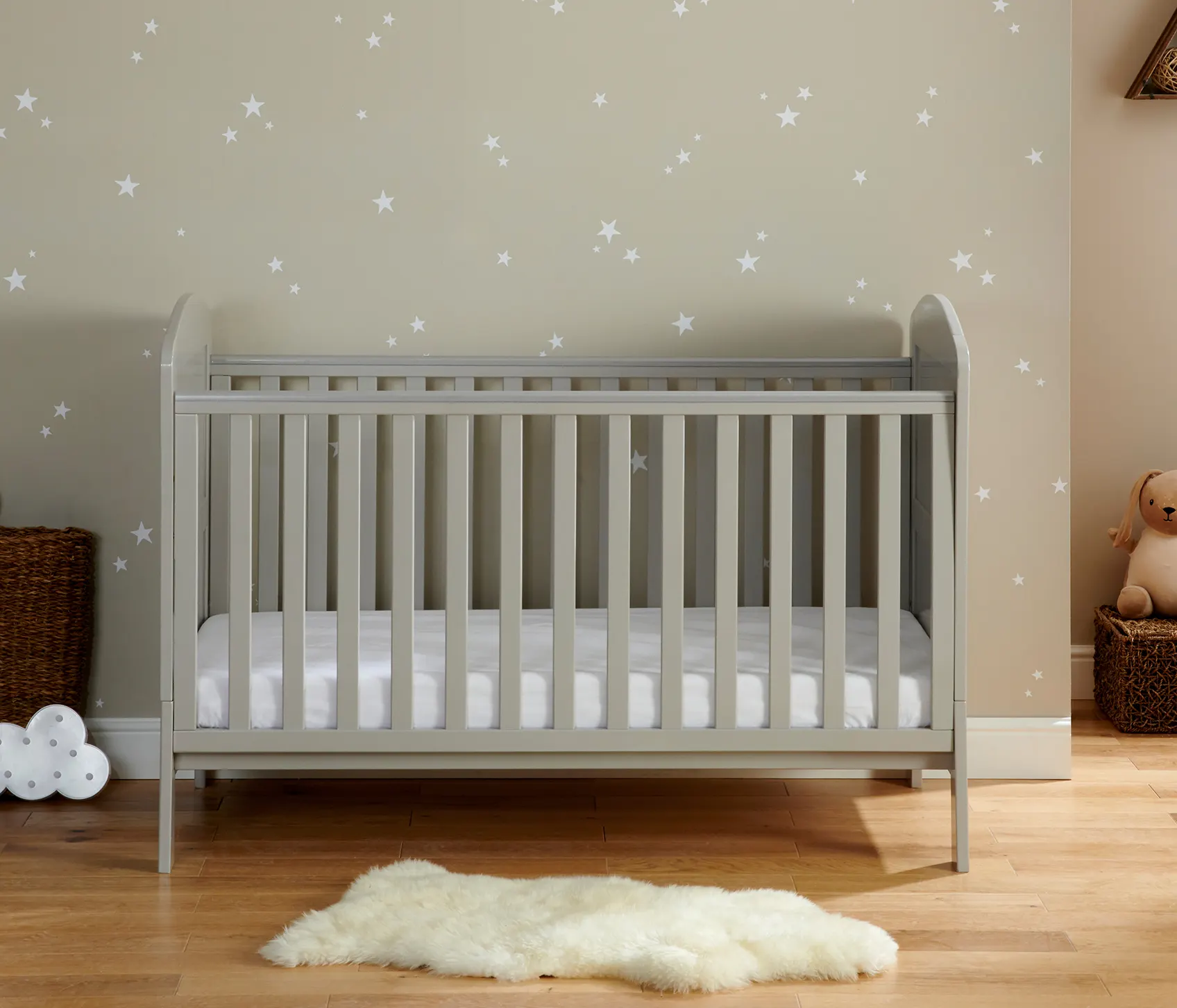
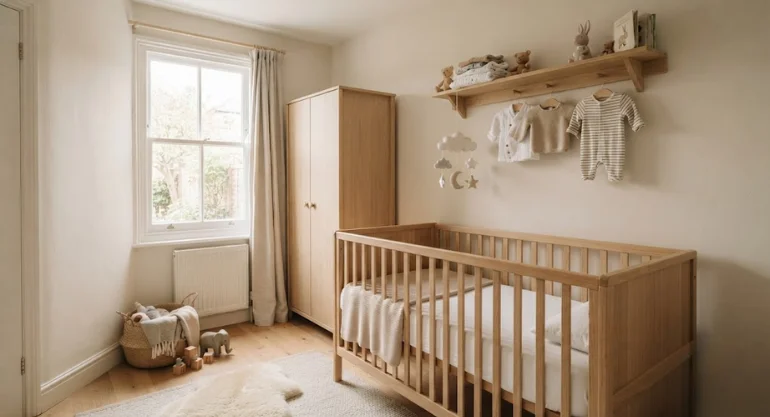
It’s 2am, the cot is in pieces, you’re away from home, or your baby has finally dropped off in your bed. Can a baby sleep on an adult mattress? What about an air bed, a blow-up mattress or a mattress on the floor? The short answer is that adult mattresses and air mattresses are not safe sleep surfaces for a baby, and a floor mattress is not a substitute for a cot for young babies. This guide explains why, what the safer-sleep advice says, what to do in an emergency, and what changes as your baby gets older.
Quick Answer:
- Short answer: No, a baby should not sleep on an adult mattress or an air mattress.
- What to use: A firm, flat, waterproof-covered mattress made for babies, in a cot, Moses basket or similar sleep space, with nothing soft in it.
- Adult mattresses: Usually too soft, and the large gaps and bedding around them add risk.
- Air mattresses: Softer still, and they can leave gaps at the edges.
- Floor mattresses: Not covered by standard safe sleep advice for young babies, so speak to the Lullaby Trust or your health visitor before using one.
- No cot yet? Use the nearest safe alternative (see below) and get a proper cot as soon as you can.
- Please note: This is general information, not medical advice, so speak to your health visitor if you have questions.
Adult, Air and Floor Mattresses at a Glance
| Feature |
Adult mattress |
Air / blow-up mattress |
Mattress on the floor |
Baby cot mattress (recommended) |
| Firmness |
Usually too soft for a baby |
Too soft and can sag or deflate |
Depends on the mattress |
Firm and flat |
| Gaps and edges |
Gaps to walls, headboards and bedding |
Edges can pull away or fold |
Gaps to walls and furniture |
Fits the cot snugly (no more than 3 cm gap per Babymore’s guidance) |
| Bedding risk |
Pillows, duvets and other people |
Soft bedding on a soft surface |
Soft bedding and floor-level hazards |
Fitted sheet, nothing else |
| Safe for a young baby? |
No, unless following bedsharing guidance |
No |
Not recommended; ask for advice |
Yes |
Can a Baby Sleep on an Adult Mattress?
Not for their own sleep. Adult mattresses are designed for comfort, not for babies who can’t yet lift or turn their heads. The Lullaby Trust recommends a firm, flat mattress in good condition, with the head sinking only a few millimetres. Most adult mattresses are softer than that, many have pillow tops, and the bed usually has pillows, duvets and other people on it. Our guide on how firm a baby mattress should be explains the test, and our summary of the Lullaby Trust’s mattress and bedding advice covers the basics.
Why are adult mattresses not safe for babies?
- They are too soft. A baby’s face can sink into the surface and block breathing.
- They are the wrong size. There can be gaps between the mattress and the headboard, wall or frame where a baby could become trapped.
- They carry extra items. Pillows, duvets, throws and cuddly toys are all risks.
- They are not tested to the baby standard. Cot mattresses are tested to BS EN 16890. Adult mattresses are not.
- Overheating. Thick bedding on a deep mattress can make a baby too hot.
Is it OK for a baby to sleep in your bed?
Many families end up sharing a bed at times. Safer sleep guidance for bedsharing (for example, local safeguarding partnership guidance based on Lullaby Trust advice) says:
- Keep pillows, sheets and blankets away from the baby, and always put the baby on their back.
- Make sure the baby can’t fall out of bed or get trapped between the mattress and the wall.
- Don’t let other children into the bed. If an older child shares, a parent should sleep between the child and the baby.
- Don’t bedshare if either parent smokes, either parent has had alcohol, drugs or drowsy medication, the baby was born before 37 weeks, or the baby weighed 2.5 kg (5½ lb) or less.
- Never sleep with a baby on a sofa or armchair.
The safest place for the baby is still their own sleep surface in the same room as you for at least the first six months. See our newborn sleep setup guide and co-sleeping safety tips.
When can a baby sleep on a regular mattress?
There’s no official age at which a baby switches to an adult mattress. Most babies move from a cot or cot bed into a toddler bed somewhere around 18 months to three years, and that bed should have a firm mattress that suits the child. Follow the manufacturer’s guidance and see our guides on the suitable age for a cot bed and when it’s time to change from a cot to a bed. If you’re asking because your baby is under 12 months, the answer is to keep using a firm baby mattress in a cot or similar sleep space.
Can a Baby Sleep on an Air Mattress or Blow-Up Mattress?
No. This is the clearest answer in the whole guide. The US Consumer Product Safety Commission (CPSC) says air mattresses are too soft for sleeping infants. It reported 16 deaths since 2002, mostly infants under eight months placed to sleep on air mattresses: eleven suffocated face down on the mattress, and five suffocated after falling into gaps between the mattress and the bed frame, furniture or a wall.
That is American data, but the principle applies anywhere: a generic inflatable mattress is made for adults and older children, even when properly inflated may not let a baby keep a clear airway, and can leak or under-inflate. This includes can a 10-month-old sleep on an air mattress? No. Older babies are still at risk, and an air mattress shouldn’t replace a cot or travel cot.
If you’re on holiday or staying with family, a travel cot with the mattress supplied by the maker is a much safer choice than an air bed. Don’t add extra padding or a second mattress on top. Our guide to travel cots vs standard cots explains the differences.
Can a Baby Sleep on a Mattress on the Floor?
This is where advice is less clear-cut, so be cautious. Mainstream UK safer-sleep guidance recommends a cot, Moses basket or similar sleep space with a firm, flat baby mattress. We could not find UK guidance that covers floor mattresses for babies. Points to consider:
- For a young baby, a floor mattress isn’t a recommended swap for a cot. Babies under 12 months are at greatest risk, and floors bring drafts, dust, pets, trapped gaps at the walls and other hazards.
- Gaps at the edges are the same risk as for adult beds. A mattress pushed against a wall can trap a baby.
- Older babies and toddlers who are mobile may use a floor bed as part of a toddler set-up. If you’re thinking about this, use a firm mattress, keep the room childproofed, take out pillows and soft toys, and ask your health visitor first. Our guide to changing a nursery into a toddler room may help.
- For specific advice, the Lullaby Trust runs a helpline on 0808 802 6869 (info@lullabytrust.org.uk).
If your cot bed has a low base position for a toddler, our guide to adjusting the mattress base in a cot bed explains the options.
What If You Don’t Have a Cot Yet?
Safer sleep guidance for emergency situations (for example, a family who’ve lost their cot) says that if the cot isn’t available you can use other surfaces with these rules:
- Pram, carrycot or buggy: the base must be flat, not sloping. Keep the hood down indoors and don’t cover it with a blanket. Check the baby’s temperature regularly.
- Baby box: keep it clear of bedding, put it on a solid surface (the floor is best if clean and dry), don’t put the lid on, and don’t lift it with the baby inside.
- Car seat: don’t leave a baby in a car seat for long. Move them to a firm, flat surface as soon as you arrive.
- Moses basket: a Moses basket with a firm, flat mattress is a recognised safe sleep space for newborns. See our guide to Moses baskets and cribs.
What to Use Instead
A baby needs a mattress that is:
- Firm and flat, with the head sinking only a few millimetres.
- The right size, with no more than a 3 cm gap at the edges (Babymore’s guidance). See our 120 x 60 cm and 140 x 70 cm size guides.
- Covered in a waterproof, wipeable cover that is clean and undamaged.
- Tested to BS EN 16890.
Babymore’s Pocket Sprung, Deluxe Sprung and Eco Fibre cot mattresses are made for this. Browse the baby mattress range, read our baby mattress safety guide, and check the mattress size guide before you buy. Not sure how thick it should be? See how thick a baby mattress should be.
Sleep Surface Checklist
- ☐ Firm, flat mattress made for babies
- ☐ Fits the cot or sleep space with no gaps
- ☐ Waterproof cover, clean and undamaged
- ☐ Baby on their back, feet to the foot of the cot
- ☐ No pillows, duvets, bumpers, toys or sheepskins
- ☐ Baby in the same room as you for at least the first six months
- ☐ Room not too hot, with a well-fitted sleeping bag or light layers (see baby sleeping bag vs blanket)
Final Thoughts
When it comes to what a baby sleeps on, the answer is always the same: firm, flat and made for babies. Adult mattresses and air beds are built for grown-ups, and a floor mattress needs careful thought and advice before use with a young baby. If you’re short of a cot, use the nearest safe alternative, keep the surface clear, and get a proper cot mattress in place as soon as you can.
Ready to choose? Browse Babymore’s cot mattresses and cot bed mattresses, or read our mattress guide.
Frequently Asked Questions
01- Can a baby sleep on an adult mattress?
No. Adult mattresses are usually too soft and have gaps and bedding around them. Use a firm, flat baby mattress in a cot or similar sleep space.
02- Is it OK for a baby to sleep on an adult mattress?
Not as their own sleep surface. If you share your bed with your baby, follow bedsharing safety advice and avoid it entirely if you smoke, have had alcohol or drugs, or the baby was premature or small. See our co-sleeping safety tips.
03- Why are adult mattresses not safe for babies?
They are softer than a baby needs, they can leave gaps where a baby could become trapped, and they usually come with pillows and duvets. Babies can’t yet lift their heads or move their faces away.
04- Why can’t babies sleep on an adult mattress?
A baby’s face can sink into a soft surface and their breathing can be blocked. Babies also can’t move themselves out of trouble.
05- When can a baby sleep on an adult or regular mattress?
There’s no set age. Most children move to a toddler bed between roughly 18 months and three years. Under 12 months, stay with a cot mattress. See moving from a cot to a toddler bed.
06- Are adult mattresses safe for babies?
No. They are not made or tested for babies.
07- Can baby sleep on a normal mattress?
Only if “normal” means a normal baby cot mattress that is firm, flat and fits the cot. An ordinary adult mattress is not suitable.
08- Can a baby sleep on an air mattress?
No. Air mattresses are too soft, and edges and gaps are a suffocation risk.
09- Can a baby sleep on a blow-up mattress?
No. The same applies as for any air mattress.
10- Can a 10-month-old sleep on an air mattress?
No. A 10-month-old is still at risk. Use a travel cot with its own mattress instead. See travel cots vs standard cots.
11- Can my baby sleep on a mattress on the floor?
It isn’t recommended for young babies, and floor beds are not covered by standard safe sleep guidance for them. For older babies and toddlers, use a firm mattress in a childproofed room and ask your health visitor. You can also call the Lullaby Trust helpline.
12- Can a baby sleep on a floor mattress?
See the answer above. A firm, baby-appropriate mattress is essential, and gaps at the walls need to be avoided.
13- What can I use if I don’t have a cot?
A Moses basket, a carrycot with a flat base or a baby box can be used as a short-term sleep space when used as directed. A car seat should only be used for travel.
14- Can my baby sleep on the sofa?
No. Never sleep with a baby on a sofa or armchair, and don’t leave them to sleep alone on one.