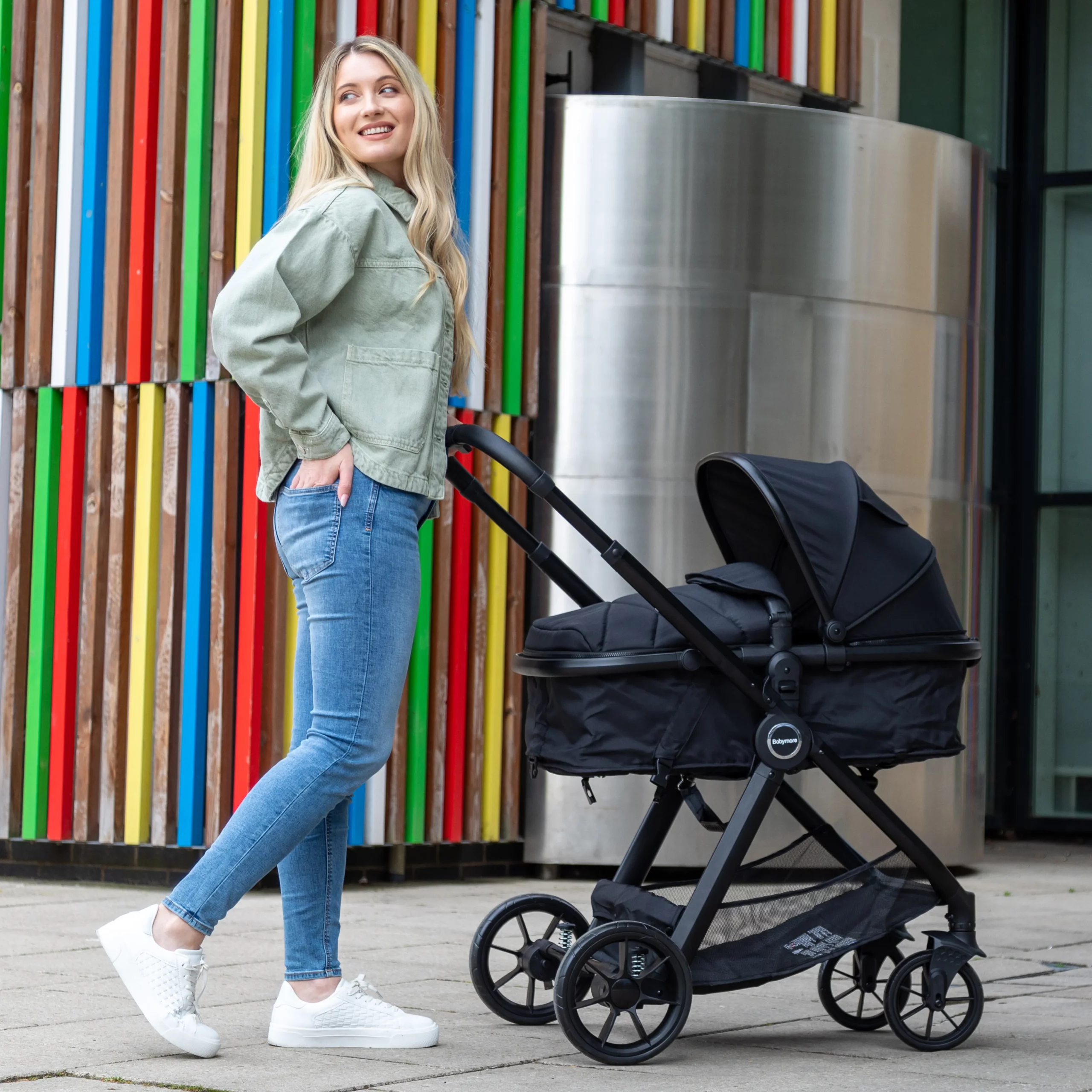
Choosing your baby’s first pushchair can feel like a bigger decision than expected. With so many newborn prams and pushchairs, travel systems, buggies and strollers available in the UK, it can be difficult to know what your baby actually needs from day one. Working through a newborn baby checklist before you shop can help you prioritise what really matters.
A pushchair for newborn babies needs to offer more than good looks and easy manoeuvrability. Newborns need appropriate support for their head, neck and developing body, so it’s important to choose a model that is specifically designed and approved for use from birth.
Whether you’re looking for a traditional pram, a newborn pushchair, or a travel system that can take your baby from birth through the toddler years, this guide covers the key features to consider.
If you’re still unsure about the terminology, Babymore’s guide to the difference between a pram, buggy, pushchair, stroller and travel system can help you understand what each option offers, and our pram vs pushchair comparison breaks it down further.
A pushchair suitable from birth is designed to safely accommodate a newborn baby. Unlike many traditional strollers that are intended for older babies who can sit independently, a newborn model needs to provide an appropriate position and support for a younger baby.
Depending on the design, this may be through:
Always check the manufacturer’s instructions for the specific model you are considering. Age, weight and usage recommendations can vary between products.
Babymore’s prams and pushchairs collection includes options designed to take babies from the newborn stage through to toddlerhood, depending on the model.
One of the first things to check when choosing a pushchair for newborn use is how your baby will be positioned.
Newborn babies don’t have the head, neck and core strength needed to sit upright independently. A suitable newborn pushchair should therefore provide an appropriate reclined or lie-flat position according to the manufacturer’s instructions.
A carrycot can be particularly useful during the early months because it provides a flat, enclosed space for your baby while you’re out and about, and it forms an important part of a good newborn sleep setup when you’re out with your baby.
Some modern prams and pushchairs from birth combine a carrycot with a separate pushchair seat, allowing the same chassis to be used as your baby grows.
If you don’t want to buy a new pushchair every few months, a convertible option can be worth considering.
Many pushchairs from birth to 4 years are designed to adapt as your child grows. They may start with a carrycot or newborn-friendly configuration before converting into a forward- or parent-facing pushchair. Knowing when to move your baby from pram to pushchair can help you plan ahead.
This can make a newborn baby pushchair a more practical long-term purchase.
Babymore’s Prams & Pushchairs collection includes models designed to transition between pram and pushchair stages.
When comparing products, check the manufacturer’s stated maximum weight rather than relying only on an age range. Our guide on things to consider when buying a pram covers this in more detail.
A newborn’s body needs plenty of support, so this should be high on your checklist.
When looking at a pushchair for infant use, check that the seat or carrycot provides appropriate support and that your baby isn’t left sitting in an unsuitable position.
Also look at the harness system. It should be secure, adjustable and suitable for your baby’s size, following the manufacturer’s instructions.
Other features worth checking include:
The exact features you need will depend on whether you’re choosing a carrycot, a lie-flat seat or a complete travel system.
If you regularly use your car, a travel system can be a convenient option. It’s worth understanding what a travel system actually includes before you compare models.
A typical baby travel system combines a pushchair chassis with a carrycot and compatible car seat. This means you can use different components as your baby grows and move between car and pushchair modes more easily, one of the key benefits of a travel system.
Babymore’s baby travel systems include combinations such as a chassis, carrycot, car seat adaptors and other accessories, depending on the model. You can also discover the benefits of Memore travel systems specifically.
Before buying, check exactly what is included in the package. Some systems include an infant car seat and ISOFIX base, while others may require these to be purchased separately, our guide on whether you need an ISOFIX base explains the options.
You can also read Babymore’s guide to buying baby travel systems for a closer look at the different types available.
Although a car seat can attach to some travel systems, it is not a replacement for a carrycot or suitable newborn sleeping space.
Always follow the manufacturer’s instructions regarding how and where each component can be used, particularly when it comes to sleeping and time spent in a car seat.
Some newborn prams and pushchairs allow the seat to face towards you, while others face out towards the world.
A parent-facing configuration can be useful during the early months because it allows you to keep an eye on your baby while you’re walking. This is worth thinking about alongside when a baby can sit in a front-facing stroller or pushchair.
As your baby becomes more interested in their surroundings, a world-facing position may become more appealing.
If you want this flexibility, look for a pushchair with a reversible seat or a travel system that offers different configurations.
The best newborn pushchair for one family may not be the right choice for another.
Think about where you’ll actually use it.
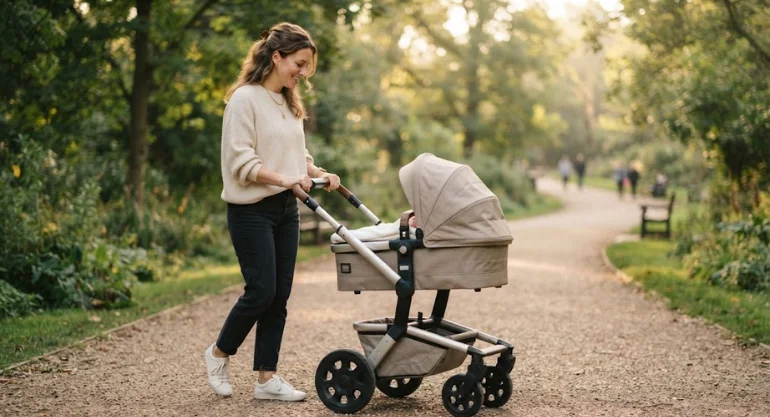
For example, if you live in a town or city, you may want a pushchair that is easy to steer through narrow pavements, shops and busy areas. If you’re regularly walking through parks or on uneven paths, larger wheels and good suspension may be more important.
Consider whether you’ll mainly use your pushchair for:
Babymore’s pushchair guide also highlights lifestyle and terrain as important considerations when choosing a pushchair.
The wheels can make a surprisingly big difference to your daily experience.
For smooth pavements and shopping centres, smaller wheels may be perfectly suitable. If you regularly walk on grass, gravel or uneven paths, you may prefer a model with larger wheels and better suspension.
If possible, try the pushchair before buying it.
Check whether:
A pushchair can look perfect online but feel very different when you’re actually pushing it.
A pushchair may be used several times a day, so an easy folding mechanism can make everyday life much simpler.
This is particularly important if you drive regularly or live somewhere with limited storage, and it’s worth thinking ahead about how to store a stroller compactly once it’s folded.
Check:
For example, some Babymore travel systems feature easy-fold chassis designs, making them more practical for everyday use.
A newborn buggy needs to be practical for the person who will be using it most.
If you regularly need to carry the pushchair upstairs, lift it into a car or use public transport, its weight becomes particularly important.
However, don’t automatically choose the lightest model. A slightly heavier pushchair may offer a sturdier frame, larger wheels or additional features that are useful for your lifestyle.
The key is finding a balance between portability, stability and functionality.
Once your baby arrives, you’ll quickly realise how much you need to take with you.
Nappies, wipes, spare clothes, bottles, muslins and snacks can all end up in your pushchair basket.
When comparing pushchairs from birth, check the size and accessibility of the basket.
You may also want to look for compatibility with:
Some travel systems come with several of these accessories included, so compare the complete package rather than looking only at the headline price. Take a look at our roundup of pram or pushchair accessories worth considering.
The terms pram, pushchair, buggy and stroller are often used interchangeably, but they can refer to different types of baby transport. Our dedicated pram vs pushchair guide covers this comparison in full.
A traditional pram generally features a carrycot where a newborn can lie flat. A pushchair typically has a seated unit, although many modern pushchairs can recline or be configured for newborn use.
A buggy or lightweight stroller is often designed with portability in mind and may be more suitable for older babies and toddlers.
If you’re unsure which one you need, Babymore’s guide to prams, buggies, pushchairs, strollers and travel systems explains the differences in more detail, and our guide on how to choose a pram can help if you decide a pram is the right starting point.
Not every stroller is suitable for a newborn.
If you’re searching for a stroller suitable from birth, don’t rely solely on the word “stroller”. Check the manufacturer’s stated age recommendation and whether the seat offers the appropriate position and support for a newborn.
A stroller that is designed for use from six months, for example, isn’t automatically suitable for a newborn simply because it has a reclining backrest. Once your baby is a little older, it’s worth reading about how to keep your baby cool in a stroller or pushchair for warmer months.
Always check the product specifications before making a purchase.
When you’re shopping for a pushchair for newborn use, don’t choose based on appearance alone.
Be cautious about any product where:
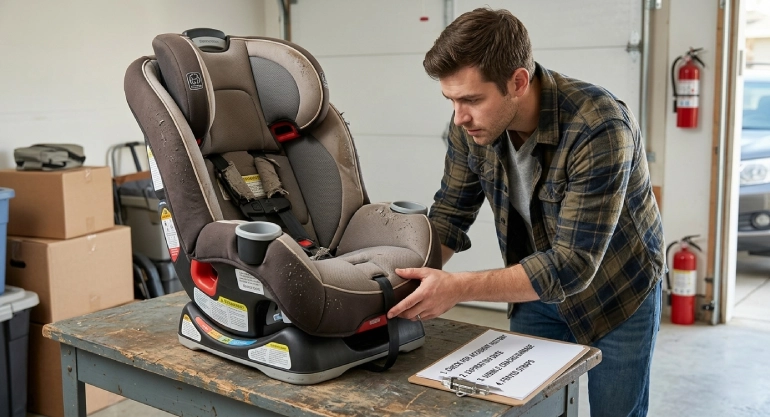
If you’re considering a second-hand pushchair, check its condition carefully and make sure you know the exact model so you can check its manufacturer’s instructions and safety information.
For families who regularly travel by car, a travel system can provide a convenient all-in-one solution.
Depending on the model, you may have a chassis, carrycot, pushchair seat and compatible car seat in one system. This means you can use the carrycot or newborn configuration from the early days and then move to the pushchair seat as your child grows — see our breakdown of travel system stages from newborn to nursery and the full travel system lifecycle.
Babymore’s all-in-one travel system range includes systems designed around this multi-stage approach.
However, think about how you’ll actually use the system before buying. If you rarely travel by car, for example, you may prefer to focus more heavily on pushchair weight, manoeuvrability and storage. If you do go for a travel system, our tips on how to set up a travel system and how to extend the lifespan of your travel system will help you get the most out of it.
Choosing a pushchair for newborn use doesn’t have to be overwhelming. Start with the essentials: newborn suitability, appropriate positioning, support, safety features and comfort. Then think about the practical details that will matter to you every day, from folding and storage to wheels, weight and manoeuvrability.
For parents looking for a longer-term option, prams and pushchairs from birth that convert as your baby grows can offer useful flexibility. A travel system can also be worth considering if you regularly travel by car and want several compatible components in one package.
Most importantly, always check the manufacturer’s instructions, age and weight recommendations before using any newborn pushchair.
If you’re ready to explore your options, browse Babymore’s prams and pushchairs or explore their baby travel systems, or see our full roundup of travel systems and car seats for babies to compare different options for your family’s needs.