Six weeks. That’s roughly how long the NHS considers the core recovery window after a C-section, and it’s also, inconveniently, exactly when you’ll be sitting down to feed your baby more times a day than you can easily count. A chair that would have been perfectly fine before surgery can become a genuine problem afterwards, too soft to push yourself out of, too low to get comfortable in, no armrests to take the strain off your core. At Babymore, we hear from a lot of parents planning their nursery around a scheduled or possible C-section, so it’s worth being specific about what actually matters in a nursing chair during this recovery period, not just generally “comfortable.”
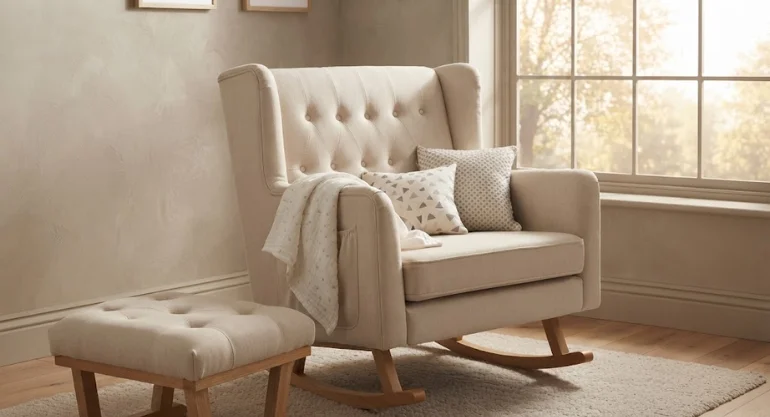
The best nursing chair after a C-section prioritises a few specific things: a firm, supportive seat rather than a soft, sinking one, since soft cushions encourage slumping and uneven pressure on the incision; armrests you can genuinely push up from to stand without engaging your core; a seat height that keeps your feet flat on the floor; and a matching footstool to elevate your legs, which takes pressure off the abdomen and can help with swelling. A gentle glide or rock motion helps settle your baby without extra physical effort on your part, and a nearby side table means you’re not twisting or reaching for essentials mid-feed. None of this replaces guidance from your midwife or GP, but it does make the practical, daily reality of recovery noticeably easier.
A C-section is major abdominal surgery, and the incision site remains sensitive for weeks afterwards. Pressure, twisting, or straining through your core during this period can genuinely slow healing and cause pain, which is why so much postpartum guidance focuses specifically on furniture and positioning, not just wound care itself. The NHS specifically highlights laid-back nursing and rugby (or football) as useful breastfeeding positions after a C-section, both of which help keep your baby’s weight off the incision area. In practical chair terms, that means arm support and back support matter more here than they typically would when choosing a nursing chair before surgery.
A deep, plush, sofa-style cushion might sound appealing, but it’s genuinely one of the more common mistakes in this specific situation. Soft, sinking cushions encourage you to slump rather than sit upright, which can place uneven pressure on the incision and make it harder to maintain the supported feeding positions the NHS recommends. A firmer seat that holds its shape keeps your posture more consistent through a feed, which matters more than plushness in the first several weeks.
This is one of the most practically important features and one of the easiest to overlook while browsing online. After a C-section, you’re advised to avoid relying on your abdominal muscles to sit up or stand, using your arms to push off instead. A chair with solid, well-positioned armrests lets you do exactly that, taking the load through your arms and shoulders rather than your core every time you need to get up for a nappy change or to settle a fussy baby.
A seat that’s too low forces you to push up from a deep crouch, which usually does involve your core whether you intend it to or not. Look for a seat height that lets your feet rest flat on the floor with your knees roughly level with your hips, making the transition from sitting to standing considerably more manageable without bracing through your abdomen.
Elevating your legs during feeds and rest periods is commonly recommended in postpartum recovery guidance, since it can help reduce swelling and takes pressure off the abdomen compared to sitting with your feet flat and legs at a right angle for extended periods. A chair that comes with a genuinely matching, properly proportioned footstool, rather than an ottoman bought separately and hoped to fit, makes this far easier to actually use consistently. Our Freya Nursing Chair with Footstool and Lux Nursing Chair with Footstool both include a matching footstool as standard, specifically because leg elevation is such a consistently recommended part of postpartum comfort.
A chair with a smooth gliding or rocking motion helps settle your baby with minimal physical effort on your part, useful during a period when you’re actively trying to reduce strain. Be cautious of heavy, manual recline mechanisms that require you to physically push back against resistance to recline, since this can inadvertently engage your core in exactly the way you’re trying to avoid in the early weeks.
Twisting to reach a side table or bending down to grab a dropped muslin both put your incision at risk of unnecessary strain. A chair with storage pockets built into the arms solves a genuine amount of this problem before you even add a side table, since a muslin, your phone, or a water bottle are already within reach without any twisting motion required.
The chair itself is the anchor, but a few things around it matter too. Keep a stable side table within easy reach, close enough to help you push yourself up if needed, rather than something you have to lean or twist toward. Keep frequently used items, muslins, water, your phone, at the same level as where you’re sitting rather than on a shelf above or a box on the floor, so you’re not reaching up or bending down repeatedly through the day. We’ve covered building out this kind of setup in more detail in our guide on making night feeds more comfortable, which is worth a read whether or not you’re recovering from surgery specifically.
This article offers general, practical guidance on choosing furniture and isn’t a substitute for advice from your midwife, GP, or surgical team. Recovery timelines and restrictions vary from person to person, and it’s always worth discussing your specific recovery plan, including safe movement and positioning, with your own healthcare provider rather than relying on general guidance alone.
Choosing a nursing chair after a C-section isn’t about finding the most luxurious option, it’s about finding one that genuinely reduces strain on your body during a period when every unnecessary twist, reach, or core-engaged push matters. Firm support, real armrests, the right seat height, and a proper footstool do more for your recovery than plush cushioning ever will.
If you’re setting up your nursery ahead of a scheduled C-section or simply want the room ready either way, Babymore’s nursing chair range is worth browsing with these specific features in mind, and our guide on nursing chair versus a regular chair is a useful next read if you’re still deciding whether a dedicated chair is worth the investment.