Free UK Mainland Shipping On Orders £50+

Keeping Baby Cool in the Car: Ventilation, Fabrics and Summer Car Seat Safety

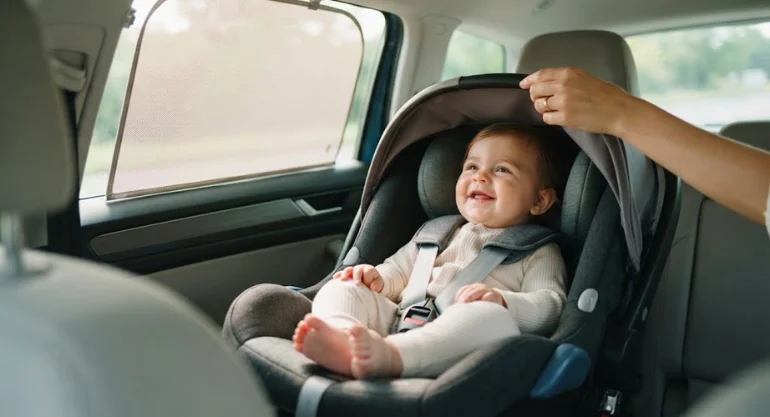
Baby safely secured in a rear-facing car seat with a sun shade on the car window to stay cool in summer

Summer days out, trips to see family and holiday drives are part of the fun of warmer weather. When you’re travelling with a baby, though, hot weather needs extra planning. Babies can’t regulate their body temperature as well as adults, and a car heats up far faster than most parents expect. Snug, padded car seats can also trap warmth around your little one.

This guide covers how to keep your baby cool in the car and how to ventilate the car properly. It also explains which fabrics to choose and the summer car seat safety rules every parent should know. If you’re heading out on foot too, read our guide on how to keep your baby cool in a stroller or pushchair.

Why Babies Overheat Quickly in Cars

Babies overheat more easily than adults. Their bodies are smaller, they sweat less efficiently and they can’t tell you when they’re too hot. In a car, several factors add to the risk:

  • Cars heat up fast. A parked car can become dangerously hot within minutes, even on a mild or cloudy day.
  • Sun through the windows. Direct sunlight on a rear seat can make one side of the car much warmer than the front.
  • Rear-facing seats get less airflow. Air conditioning is designed mainly for the front of the car, so a rear-facing baby may not feel the cool air that you do. Rear-facing is still the safest way for babies and young children to travel, as explained in our guide to extended rear-facing car seats. If you’re unsure whether your baby is even in the safest position for their car seat, it’s worth double-checking. The answer is better cooling, not turning the seat around.
  • Padded seats hold heat. The shell and padding that protect your baby can also trap warmth against their back and head.

Never Leave Your Baby Alone in the Car

This is the most important rule of summer car seat safety. Never leave your baby alone in a car, even for a minute and even with the windows open. The temperature inside a parked car rises quickly, and a baby can develop heatstroke in a short space of time.

To make sure you never forget your baby in the car, put your bag, phone or wallet in the back seat. You’ll then always check the rear seat before you lock up. Keeping baby cool in the car is as important as your existence hence it should be taken very seriously.

If you ever see a baby or child alone in a hot car and they seem distressed, call 999 straight away.

How to Ventilate the Car for Your Baby

Good ventilation is the key to keeping your baby cool in the car.

Pre-Cool the Car Before You Set Off

Open the doors for a few minutes to let hot air escape, then run the air conditioning before you put your baby in. A car that’s already cool is much safer than one that’s cooling down around your baby.

Use Air Conditioning Sensibly

Set the air con to a comfortable, moderate temperature rather than the coldest setting. Angle the vents so cool air circulates towards the back of the car, but don’t point them directly at your baby’s face. If your car has rear vents, open them.

Check the Back Seat Temperature

Sit in the back for a minute or put your hand near your baby’s seat. What feels comfortable in the driver’s seat can be much warmer in the rear.

Car Fans: Use With Care

A small clip-on fan can help move air in the back. Choose one with a fully enclosed blade guard, fix it securely so it can’t come loose in sudden braking, and keep it well out of your baby’s reach.

Open Windows Safely

Opening windows slightly can help air flow on slower journeys, although on fast roads it can be noisy and blustery for your baby. Always use the child locks on rear windows.

Shade Your Baby From the Sun

Direct sunlight through the side windows can quickly heat your baby and their car seat.

  • Use window sun shades on the rear side windows to block direct sun and reduce glare. Make sure they don’t obstruct your view when driving.
  • Park in the shade whenever you can, or face the car away from the sun.
  • Use your car seat’s own hood. Many infant car seats, such as the Babymore Coco i-Size Car Seat, have an adjustable hood that you can raise to shade your baby’s face.
  • Cover the car seat when parked. Place a light-coloured towel or sunshade over the empty seat to stop it heating up. Remove it before you put your baby in.
  • Never drape a blanket or muslin over your baby in their car seat. It blocks airflow and traps heat underneath.

Choosing the Right Fabrics for Summer Car Journeys

What Your Baby Should Wear

Dress your baby in a single light layer of breathable natural fabric, such as cotton or bamboo. Short-sleeved bodysuits in light colours are ideal. Avoid synthetic fabrics that trap sweat, and skip hats while travelling because babies lose heat through their heads.

Light clothing is also safer in the car seat. Harness straps sit correctly against your baby’s body when they aren’t wearing bulky layers. Loose or twisted straps are among the common car seat mistakes parents make without realising.

Car Seat Fabrics

When choosing a car seat, look for breathable covers and ventilation features, such as mesh panels or air channels. Seats with washable, removable covers are easier to keep fresh after sticky summer journeys — see our guide on how to clean your baby’s car seat at home. Browse our full range of baby and toddler car seats. If you’re upgrading, our guide to i-Size car seats explains what the latest safety standard means for your family.

Avoid Aftermarket Car Seat Products

Cooling pads, gel liners and extra seat cushions may look helpful. However, they haven’t been crash-tested with your car seat and can affect how the harness fits. Only use accessories supplied or approved by your car seat’s manufacturer. Our article on common car seat issues covers more problems to watch out for.

Summer Car Seat Safety Checklist

Before every summer journey, run through these checks:

  • Touch the buckles and seat surface. Metal buckles and dark fabrics can become hot enough to burn in direct sun.
  • Check the harness fit. It should be snug, with no bulky clothing or blankets underneath — our guide on how tight a baby car seat harness should be explains exactly what to look for.
  • Check the seat is fitted correctly. A secure installation matters on every journey. If you use a base, see our ISOFIX car seat bases, our guide to ISOFIX support leg compatibility, and our step-by-step advice on how to fit your ISOFIX car seat properly.
  • Take regular breaks. Babies shouldn’t stay in a car seat for more than two hours at a time. Our guide to understanding car seat time limits explains the 2-hour rule in detail. In hot weather, stop more often to take your baby out, cool them down and offer a feed.
  • Travel at cooler times. Early mornings and evenings are usually more comfortable for long drives.
  • Offer extra feeds. Babies may want more milk in hot weather. Follow NHS guidance on hydration for your baby’s age.
  • Pack a summer travel kit. Include spare light clothing, extra milk or water for older babies, window shades and a muslin for mopping up.

Travelling Abroad This Summer?

Hot-climate holidays bring extra challenges, from hire cars sitting in the sun to unfamiliar hire seats. Read our guide to taking your car seat abroad before you book.

Signs Your Baby Is Too Hot in the Car

Check on your baby regularly, using a rear-facing baby mirror if you’re driving alone. Feel the back of their neck or their tummy rather than their hands and feet, which often feel cool. Signs of overheating include:

  • Hot, flushed or red skin
  • Sweaty hair or neck
  • Rapid breathing
  • Unusual fussiness or irritability
  • Drowsiness or floppiness
  • Fewer wet nappies than usual

If your baby seems too hot, pull over when it’s safe. Take them out of the car seat, move them somewhere cool and remove a layer. Then offer a feed.

Seek urgent medical help (call 999) if your baby is floppy, hard to wake, has a very high temperature, isn’t responding normally or has a seizure. These can be signs of heatstroke.

Enjoy Cooler, Safer Summer Journeys

Keeping your baby cool in the car takes a little planning. Cool the car first, shade the windows and dress your baby in breathable fabrics. Most importantly, never leave your baby alone in a parked car. With the right preparation and a safe, comfortable car seat, summer journeys can be relaxed for everyone. Once the seasons turn, our car seat tips for bad weather guide will help you stay just as prepared.

Looking for a complete setup for days out? Explore our baby travel systems and prams and pushchairs. You’ll find more expert advice in our Guide & Advice hub.


Frequently Asked Questions

01-  How can I keep my baby cool in a car seat?

Pre-cool the car, direct the air conditioning towards the back seat and fit sun shades on the rear side windows. Dress your baby in a single breathable layer, such as a cotton bodysuit, and never cover the car seat with a blanket while your baby is in it.

02-  How hot is too hot for a baby in a car?

There’s no single safe temperature, because cars heat up quickly and babies are more sensitive to heat than adults. If the car feels warm to you, it’s likely too warm for your baby. Cool the car down before you set off.

03-  Is it safe to put a muslin or blanket over a car seat in summer?

No. Covering a car seat while your baby is in it blocks airflow and traps heat. Use window sun shades or the car seat’s own hood instead, and only cover the seat when it’s empty and the car is parked.

04-  How long can a baby stay in a car seat in hot weather?

The general guidance is no more than two hours at a time. In hot weather, take more frequent breaks to take your baby out, cool them down and offer a feed.

05-  Are car seat cooling pads and liners safe?

Aftermarket cooling pads and liners haven’t been crash-tested with your car seat and may affect how the harness fits. Only use accessories supplied or approved by your car seat manufacturer.

You may also like...

How To Set Up A Travel System? A Comprehensive Guide!

How Tight Should a Baby Car Seat Harness Be? Safety Guide

Suitable Age of A Cot Bed: A Comprehensive Guide!

magnifierchevron-down linkedin facebook pinterest youtube rss twitter instagram facebook-blank rss-blank linkedin-blank pinterest youtube twitter instagram