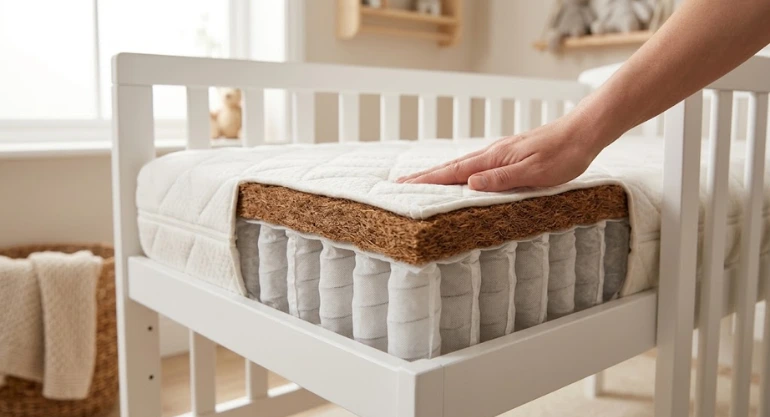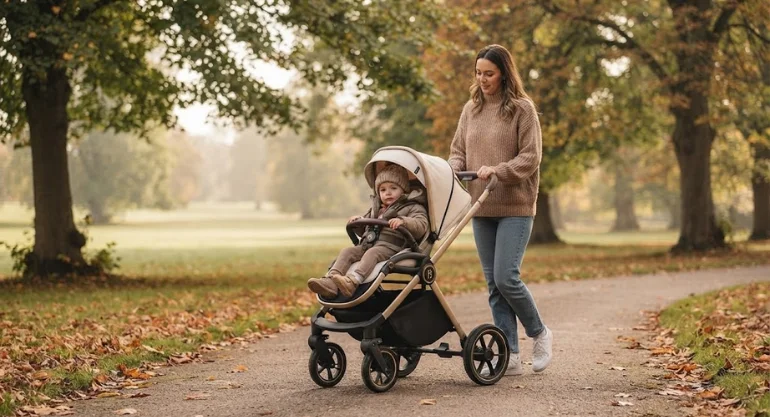
Choosing a travel system can feel like you are buying one product for a baby who will change almost overnight.
One day you are looking for somewhere safe and comfortable to bring your newborn home from the hospital. A few months later, that same baby is sitting up, grabbing the harness and wanting to see everything around them. Before you know it, you are pushing a toddler to nursery, carrying a changing bag, squeezing through a shop doorway and trying to fold the pushchair into the car boot with one hand.
That is why the best way to understand a travel system is not by looking at a long list of features. It is by looking at the stages of your child’s life and asking whether the system continues to make sense as your baby’s needs change.
This guide explains the travel system stages from newborn to toddler, including the move from carrycot to seat unit, what changes at around six months, how the car seat fits into the picture and what to look for if you want a system that can genuinely last for several years.
A travel system is a modular pushchair setup designed to work with different components as your baby grows. Depending on the model, this can include a chassis, carrycot, pushchair seat and compatible infant car seat.
The appeal is simple: instead of buying completely separate equipment for every stage, one chassis can potentially take you from the newborn period through the toddler years.
Some travel systems include all the components in one bundle, while others allow you to buy compatible parts separately. Which? recommends choosing the car seat carefully and checking compatibility between the car seat and pushchair, particularly where adapters are required.
A typical journey looks something like this:
Birth → carrycot/pram mode → around 6 months → seat unit → toddler years → nursery and everyday outings
The exact ages are not universal. Always follow the manufacturer’s instructions for the particular travel system and watch your child’s height, weight and developmental readiness rather than changing stages simply because they have reached a particular birthday. (If the terminology itself feels confusing, our guide on the difference between a pram, buggy, pushchair, stroller and travel system clears that up.)
The biggest mistake parents can make when choosing a travel system is concentrating only on what works on day one.
A newborn does not need the same setup as a 12-month-old. A toddler certainly does not have the same requirements as a tiny baby.
A good travel system should therefore change with your child.
| Stage | Typical setup | What matters most |
|---|---|---|
| Birth to around 6 months | Carrycot/pram mode | Flat, supportive position, protection from weather, easy everyday handling |
| Birth to around 15 months* | Infant car seat | Correct fit, secure installation and convenient car-to-chassis transfers |
| Around 6 months onward | Pushchair seat unit | Support, harness, recline, adjustability and room to grow |
| Toddler years | Pushchair seat | Weight capacity, comfort, storage, manoeuvrability and durability |
| Nursery age | Lightweight everyday pushchair setup | Quick folding, easy steering, boot space and practical storage |
*The usable period of an infant car seat depends on its individual height/weight limits. For example, Babymore’s Pecan i-Size car seat is specified for 40–87cm, approximately birth to 15 months.
The important point is that the travel system itself may last much longer than any individual component.
That is what makes a modular system useful.
The first stage is less about pushing a child around and more about providing the right environment for a very young baby.
Newborns have limited head and neck control and cannot sit independently. This means a conventional upright pushchair seat is not automatically suitable from birth.
The NHS advises that pushchairs are suitable for young babies when they have a fully reclining seat that allows the baby to lie flat.
For many travel systems, the newborn solution is therefore a carrycot.
Why the carrycot matters
A carrycot gives your newborn a spacious, flat place to travel while the chassis takes care of the movement.
For everyday walks, postnatal appointments, visits to family or a quick trip around the shops, this can be much more practical than using the infant car seat on the pushchair for every journey.
The distinction matters because an infant car seat is primarily designed for travelling in a vehicle. It should not become your baby’s everyday sleeping space.
A carrycot or appropriately designed flat-lie pram mode is a better option for longer periods of strolling. (See our full pram vs pushchair breakdown for more on this.)
What should you look for at this stage?
Look for:
This is where a system such as the Babymore Mimi starts to make sense. Its carrycot is designed for newborn use and converts into the pushchair configuration as your child grows. The system is specified from birth to 22kg, approximately four years, with the seat unit intended from six months to 22kg.
The Memore V2 follows a similar stage-based idea, with a carrycot suitable from birth to six months or 9kg and a seat unit suitable from six months to 22kg, approximately four years.
This is the first important longevity test:
Does the newborn component give your baby what they need now without making you buy another complete pushchair later?
For families who drive, the car seat is a major part of the travel-system decision.
The clever part of a travel system is that a compatible infant carrier can attach to the pushchair chassis, allowing you to move your baby from car to pushchair without transferring them between different seats.
That can be particularly useful when your baby has fallen asleep during a short journey.
However, convenience should never override car-seat safety.
In the UK, children must normally use an appropriate child car seat until they are 12 years old or 135cm tall, whichever comes first. Height-based R129/i-Size seats must be rear-facing until the child is over 15 months old.
The car seat also needs to be suitable for both your baby and your particular vehicle. Our guide to car seat stages in the UK covers this in more depth.
Travel system car seat vs carrycot: they are not interchangeable
This is an important distinction for new parents.
The carrycot is primarily your newborn pram component.
The infant car seat is your vehicle restraint and can, where specifically approved, attach to the pushchair chassis for short transfers and travel.
They have different purposes.
Babymore’s travel systems demonstrate this modular approach. For example, the Mimi Pecan package combines the Mimi pram/pushchair with a Pecan i-Size infant car seat and, in some bundles, an ISOFIX base and universal car-seat adapters.
The Memore V2 Pecan package similarly combines the chassis, seat, carrycot, adapters and Pecan i-Size car seat, with an ISOFIX-base bundle also available.
One thing parents often overlook
Do not assume that a car seat will fit a pushchair just because both products are made by the same brand.
Check the exact compatibility information and whether adapters are needed.
Also check the car seat’s own height and weight limits. A system marketed as “birth to four years” does not mean that the infant car seat itself lasts until four years.
The long lifespan usually refers to the pushchair chassis and seat unit, not the baby car seat. (More on this in how long a travel system actually lasts.)
If there is one age that repeatedly comes up when discussing what changes at 6 months, it is this one.
Around six months, many babies are becoming more physically capable. They may have better head and trunk control, begin sitting with support and become much more interested in the world around them.
This is typically when travel systems move from the carrycot to the pushchair seat.
But six months should be treated as a guide, not a universal switch date.
The manufacturer’s instructions and your baby’s developmental readiness come first.
For example, Babymore specifies the Mimi seat unit from six months to 22kg, approximately four years. The Memore V2 seat unit has the same six-month-to-22kg range.
What changes in the seat unit?
The experience is very different from the newborn stage.
Instead of lying flat inside a carrycot, your baby now needs:
A reversible seat can also be useful during this transition.
Some babies initially prefer looking towards their parent. Later, they may become much more interested in facing forwards and watching traffic, trees, dogs, other children and everything else happening around them.
Babymore’s Mimi and Memore V2 systems offer parent-facing and world-facing seat positions, giving parents flexibility as their child grows.
The second half of the first year is when the pushchair starts getting much more use.
Your baby is no longer simply being transported. They are looking around, reaching for things and becoming interested in every part of the journey.
This changes what you need from the pushchair.
A good seat unit needs to handle real-life movement.
Think: Park walks. Supermarket trips. Coffee stops. Family visits. Rainy pavements. Grass. Uneven paths. Shopping bags. Toys being thrown out of the pram.
This is where suspension and wheel design start to matter.
Babymore’s Mimi, for example, uses sprung suspension and puncture-resistant air-soft wheels, while the Memore V2 includes all-around sprung suspension and multi-terrain EVR puncture-proof air-soft wheels.
That kind of feature sounds technical on a product page, but its value becomes obvious when you move away from perfectly smooth pavements — especially if you’re planning summer outings or need a pushchair that holds up through winter weather.
By the time your baby reaches their first birthday, the travel system has entered a completely different phase.
The newborn carrycot is usually long gone.
The infant carrier may also be approaching its maximum height limit.
The seat unit becomes the main event.
This is where the question changes from “Can my newborn lie comfortably?” to “Can this pushchair survive our actual life?”
A toddler pushchair needs to be practical.
That means a sturdy frame, a generous seat, a reliable harness, good manoeuvrability and enough storage for the increasingly random collection of things parents end up carrying.
One day that basket contains nappies and wipes. The next day it contains a raincoat, snacks, a water bottle, a teddy bear and a shoe that mysteriously belongs to nobody.
Weight capacity becomes important
One of the simplest ways to judge longevity is to look at the manufacturer’s maximum seat weight.
A system that only accommodates a smaller toddler may require another pushchair sooner than one designed to support a child to 22kg.
Many current UK travel systems are designed around a 22kg upper limit, broadly corresponding to around four years, although actual developmental use can end earlier.
Babymore’s Mimi and Memore V2 systems both specify their seat units to 22kg, approximately four years.
That gives parents a much longer useful period from the chassis than the newborn components themselves, see our guide on how to extend the lifespan of your travel system.
There is another important transition that is easy to overlook.
Eventually, your child will not need to be in the pushchair for every part of every journey.
They may walk from the house to the park, climb out to explore or insist on walking through the supermarket themselves.
That does not immediately make the pushchair redundant.
A toddler can still benefit from a pushchair during:
The question is no longer whether the pushchair can carry a baby.
It is whether it can comfortably accommodate an increasingly independent toddler when they need a rest.
Babymore’s own guidance notes that there is no single age when every child should stop using a pushchair. Instead, parents should consider factors such as confident independent walking, the child’s interest in walking and their ability to follow simple instructions.
That makes the upper age or weight limit useful as a maximum capability, rather than a promise that every child will need a pushchair until that point.
Nursery is where you discover whether your travel system is genuinely practical.
At home, you have time. At nursery drop-off, you probably do not.
There may be a sleepy toddler, a changing bag, nursery belongings, a water bottle, a coat, your own bag and a queue of other parents trying to get through the door.
This is when a pushchair’s everyday design matters.
What does a travel system need for the nursery run?
1. Easy folding
A complicated fold becomes irritating when you are doing it every morning.
Look for a system that you can fold confidently and quickly after a little practice. Our guide on how to set up a travel system walks through this step by step.
The Babymore Mimi and Memore V2 both feature easy-fold chassis designs, with the Mimi able to fold with the seat unit fitted when forward-facing.
2. A manageable weight
A travel system can be beautifully engineered and still be frustrating if you struggle to lift it into the boot.
If you drive to nursery, consider the complete folded weight rather than just the frame weight.
3. A compact folded size
Measure your actual car boot. Not the boot you hope to have one day. The one you currently own.
Also check whether the system fits through your front door, hallway and storage space, and how well it stores compactly at home.
4. A useful basket
A nursery run creates more luggage than you expect.
A larger basket can make a noticeable difference. For example, the Babymore Mimi has a 45-litre basket with a stated capacity of up to 10kg. Pairing it with the right pram or pushchair accessories can make daily drop-offs even easier.
5. Adjustable handle height
This is particularly helpful if more than one adult uses the pushchair.
An adjustable handle can make everyday pushing more comfortable for parents and carers of different heights.
6. Weather protection
British weather does not care whether it is nursery day.
Rain can arrive sideways. Summer can suddenly become surprisingly bright. A proper rain cover and good canopy are therefore much more useful than they may sound when you are buying your first travel system.
Babymore has also published guidance on weatherproofing a pushchair, including practical advice for protecting the pushchair and keeping it in good condition across changing UK weather.
If longevity is important to you, look beyond the words “birth to four years.”
Check these areas instead.
1. The maximum weight
A 22kg seat capacity can give you substantially more room to grow than a pushchair with a lower limit.
2. The seat dimensions
A child can reach the maximum weight before they necessarily feel comfortable in a small seat.
Look at seat width, depth, backrest height and calf support.
3. The recline
A toddler may still fall asleep in the pushchair.
A useful recline can make those unexpected naps much more comfortable.
4. The harness
The harness needs to adjust as your child grows.
A five-point harness that is easy to adjust correctly is much more useful than one that becomes awkward when your child gets bigger.
5. The wheels and suspension
If you plan to use the pushchair for several years, it will encounter everything from pavements to park paths.
A chassis designed for everyday, multi-terrain use is more likely to remain useful.
6. Replacement and maintenance
Longevity is not only about the original specification.
It is also about looking after the pushchair.
Cleaning, checking wheels, inspecting the brakes and following the manufacturer’s maintenance instructions can all help keep a pushchair functioning properly.
Babymore’s pushchair maintenance guide recommends regular cleaning and following the manufacturer’s instructions for care and maintenance.
Rather than trying to memorise every feature, think about your travel system in four chapters.
Chapter 1: Newborn: Your baby needs flat, supportive travel and protection. Your system should provide a carrycot or suitable lie-flat newborn mode.
Chapter 2: Around 6 months: Your baby needs more support while sitting and more freedom to look around. Your system should provide a properly supported seat unit with harness, recline and room to grow.
Chapter 3: Toddler: Your child needs comfort for longer outings without feeling confined. Your system should provide a spacious seat, adjustable harness, useful recline, foot support and a high enough weight limit.
Chapter 4: Nursery and beyond: Your child needs a practical place to rest when tired. You need a pushchair that folds easily, manoeuvres well, fits your car and carries everything you need.
This is the real story behind a growing-with-baby travel system.
A convertible carrycot can make a travel system particularly appealing because the same component can serve more than one stage.
The Babymore Mimi is an example: its space-saving carrycot adapts into the pushchair seat, while the complete system is specified from birth to 22kg. It’s a great example of what we cover in our all-in-1 travel system guide.
That can reduce the amount of equipment you need to store.
It also means you are not necessarily putting away a bulky carrycot after a few months and replacing it with an entirely different pushchair.
However, always check exactly how the conversion works and the manufacturer’s stated age, weight and usage limits.
Although this guide is stage-based rather than feature-based, some features remain important throughout the journey.
Easy manoeuvrability: A pushchair that is pleasant to steer when your baby weighs 5kg should still feel manageable when your toddler weighs much more.
A good brake: The brake should be easy to engage and release while remaining secure when parked.
Adjustable handle: Useful for parents and carers of different heights.
Good storage: The amount of equipment you carry tends to increase rather than decrease.
Weather protection: A rain cover and canopy are particularly valuable in the UK.
Reversible seating: Useful during the transition from parent-facing interaction to world-facing exploration.
Compact folding: Important if your hallway, boot or storage cupboard is limited.
Safety and standards: Always check the product’s applicable safety standards and follow the manufacturer’s instructions for every component.
Babymore states that its prams and pushchairs meet the latest British and EU standards, while its Mimi documentation specifies the relevant use stages and safety instructions for the product.
Babymore’s travel-system range is particularly relevant to this way of thinking because its systems are designed around the transition from newborn pram to toddler pushchair.
The Mimi Travel System is specified from birth to 22kg, approximately four years. Its carrycot is suitable from birth to around six months, while the seat unit is designed from six months to 22kg. Depending on the package, it can also include a Pecan i-Size car seat and ISOFIX base.
The Memore V2 Travel System follows the same broad growth pattern, with a newborn carrycot followed by a seat unit from six months to 22kg. Its Pecan i-Size packages add an infant car seat, while some bundles include the ISOFIX base and a range of practical accessories. You can read more about its benefits in our Memore travel systems guide.
That makes these systems useful examples of the wider principle:
The newborn stage is only the beginning of a travel system’s job.
The real test is what happens after the carrycot has been folded away.
If you are researching your first travel system, it is worth looking beyond the product specifications.
Babymore’s Pushchair Guide covers how travel systems work and looks at the Mimi and Memore ranges, along with practical advice for choosing a stroller based on lifestyle and terrain.
For parents wondering what to buy alongside a pushchair, Babymore’s guide to pram and pushchair accessories covers useful additions such as cup holders and other everyday accessories.
And once your pushchair becomes part of everyday family life, the Pushchair Maintenance Tips guide is useful for keeping the chassis clean and functioning properly over time.
For Britain’s unpredictable weather, Babymore’s How to Weatherproof Your Pushchair guide is another useful companion, particularly for parents using their travel system throughout autumn and winter.
If your toddler is becoming more independent, Babymore’s guidance on when to stop using a pushchair is also worth reading, as it focuses on your child’s individual readiness rather than treating a particular birthday as a hard deadline.
Buying a travel system is really an exercise in planning for change.
At birth, you need a safe and comfortable way to carry a tiny newborn.
At around six months, you need a supportive seat for a baby who wants to sit up and see the world.
At one year, you need a pushchair that can handle increasingly active adventures.
By the toddler years, you need something spacious, durable and practical enough to survive real family life.
And by nursery drop-off, you will probably care less about how impressive the product specification sounded in the shop and much more about whether you can fold it quickly while holding a half-asleep toddler.
That is why the best way to judge a travel system is to follow the whole journey:
If the answer is yes at every stage, you are not simply buying a pram for a newborn. You are investing in a travel system that can grow alongside your family. Explore Babymore’s full range of travel systems and car seats to find the right fit.