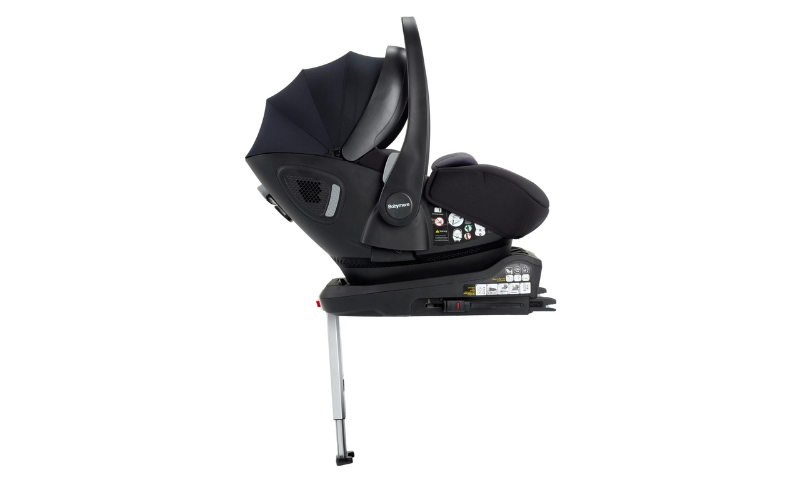
Car seat rules can feel like a maze: height-based or weight-based, i-Size or R44, rear-facing or forward-facing, and how long is too long for a baby to sit in the seat? This one guide by Babymore brings it all together. It explains the UK car seat law, the approval labels to look for, height and weight limits, when your child can turn forward-facing or move to a booster, the exceptions and fines, and the 2-hour rule for babies.
Quick Answer
In the UK, children must use a child car seat until they are 12 years old or 135 cm tall, whichever comes first. The seat must carry a legal approval label: UN R129 (i-Size) or UN ECE R44, shown as a capital “E” in a circle. i-Size seats are height-based and must be rear-facing until your child is over 15 months old; weight-based R44 seats are still legal. Always stay within your seat’s maximum height or weight, keep your child rear-facing for as long as the seat allows, and avoid leaving a baby in a car seat for more than 2 hours at a time. You risk a fine of up to £500 for an unsuitable or incorrectly fitted seat.
Why Car Seat Rules Exist
A correctly chosen and fitted car seat dramatically reduces the risk of serious injury in a crash, because adult seat belts are designed for adult bodies. The regulations make sure every seat sold in the UK meets the same crash-test standards, and that children stay in a seat that matches their size for as long as they need it.
The UK Car Seat Law at a Glance
- Until 12 or 135 cm: children normally need a child car seat until their 12th birthday or until they reach 135 cm, whichever comes first. After that, they must wear an adult seat belt.
- Approved seats only: the seat must meet UN ECE R44 (R44.03 or R44.04) or the newer UN R129 (i-Size) standard and show the “E” mark.
- Height or weight: you can choose a seat by your child’s height (i-Size) or weight (R44).
- Fitted correctly: installed using the manufacturer’s instructions, with ISOFIX or a seat belt that has a diagonal strap (unless the seat is designed for a lap belt).
- No rear-facing seat in front of an active airbag: switch the front passenger airbag off first, or fit the seat in the back. See which position in the car is safest for more.
- No child seats in side-facing seats.
GOV.UK updates its guidance from time to time, so check the latest wording on its child car seat rules page. If you’re new to all this, our guide to choosing a car seat walks through the stages, our car seat stages UK guide shows what comes next, and Babymore’s safety assurance page covers its approach to product safety.
i-Size (R129) vs R44: What’s the Difference?
| Feature |
i-Size (UN R129) |
Weight-based (UN ECE R44) |
| Based on |
Your child’s height |
Your child’s weight (in groups) |
| Rear-facing |
Required until over 15 months |
Depends on the group |
| Fitting |
Usually ISOFIX, so fewer fitting errors |
ISOFIX or seat belt |
| Side-impact testing |
Included |
Not part of the original standard |
| Label |
“E” in a circle plus R129 |
“E” in a circle plus ECE R44 |
| Status |
The current standard, replacing R44/04 |
Still legal to use |
You don’t have to replace a legal R44 seat just because i-Size exists, but i-Size seats are the newer standard and tend to be easier to fit correctly. For a deeper comparison, read our guide to R44 vs R129 car seat regulations, see why side-impact protection matters, or explore our i-Size car seats. Browse Babymore’s car seats, including the Pecan i-Size baby car seat with ISOFIX base and the Kola 360 i-Size car seat (0 to 4 years).
Height-Based Seats (i-Size R129)
i-Size seats are chosen by your child’s height and come in two broad stages:
- Birth to around 105 cm: rear-facing at first. Under i-Size, children must stay rear-facing until they’re over 15 months old.
- Around 100 to 135 cm: for older children, roughly 4 to 11 years, with some seats extending to 150 cm in specific vehicles.
Some “all-stage” seats cover the whole range in one. Babymore’s Shea 360 i-Size every stage car seat covers 40 to 150 cm, and our guide to multi-stage car seats from birth to 12 years explains how they work. Always check the height range on your own seat.
Weight-Based Seats (R44 Groups)
R44 seats are chosen by weight, and the ranges overlap:
| Group |
Weight |
Typical age |
| Group 0 |
Up to 10 kg |
Birth to about 6 to 9 months |
| Group 0+ |
Up to 13 kg |
Birth to about 12 to 15 months |
| Group 1 |
9 to 18 kg |
About 9 months to 4 years |
| Group 2 |
15 to 25 kg |
About 4 to 6 years |
| Group 3 |
22 to 36 kg |
About 6 to 11 years |
Ages are only a rough guide. Choose by your child’s weight and your seat’s instructions. If you’re expecting a baby, an infant carrier is usually the first seat you’ll need (see infant carrier vs convertible car seat); our nursery checklist shows where it fits among the other essentials.
Car Seat Size Limits: When Has My Child Outgrown Their Seat?
Every car seat is crash-tested for a specific range of child sizes. Once your child goes beyond the maximum height or weight on the label, the seat can’t protect them properly, even if they’re still within the age range on the box. Check your manual for the exact signs, but common reasons to move up are:
- They have reached the maximum weight or height printed on the seat.
- The top of their head has reached the top of the headrest or shell, or the seat’s limit marker.
- The harness can no longer be adjusted to sit at the right height on their shoulders. Our guide on how tight a baby car seat harness should be explains the correct fit.
Bent or crossed legs in a rear-facing seat are normal and not a reason to turn your child forward-facing. For a fuller explanation, see understanding car seat limits. When it is time to move up, browse Babymore’s car seats for the next stage, and make sure the new seat is fitted correctly using our baby car seat safety tips.
How Long Must My Baby Stay Rear-Facing?
- i-Size seats: rear-facing until your child is over 15 months old.
- Weight-based seats: follow the seat’s group limit. Some Group 0+ and 1 seats keep a child rear-facing up to 18 kg.
- Safety experts recommend keeping children rear-facing for as long as the seat allows, because it gives babies and toddlers the best protection. Read more about extended rear-facing car seats.
You will sometimes see “9 kg or 15 months, whichever comes first” quoted online. That isn’t the current legal rule for i-Size seats; the 15-month minimum applies, and your seat’s own limits matter too.
When Can an Infant Car Seat Face Forward?
- i-Size seats: not until your child is over 15 months old.
- Weight-based seats: follow the group limits on the label.
- Best practice: stay rear-facing for as long as your seat allows. Some i-Size seats, such as the Pecan i-Size baby car seat, use an ISOFIX base, which makes a correct rear-facing fit easier. Not sure about the base? See do you need an ISOFIX base.
Never put a rear-facing seat in the front passenger seat unless the airbag is switched off. For more on timing, read when can a baby face forward in a car seat in the UK.
Booster Seats and Booster Cushions
- High-back boosters suit children weighing roughly 15 to 36 kg and give head and side support. See our pick of the safest high-back booster seats.
- Backless booster cushions: since 2017, manufacturers can’t introduce new backless booster models for children under 125 cm or 22 kg. Existing booster cushions that meet earlier standards aren’t unsafe or illegal, and parents don’t need to replace them, but experts generally recommend a high-back booster for younger children.
- Check the label to make sure the booster suits your child’s height and weight.
- Longer-lasting seats: all-stage seats such as the Shea 360 i-Size grow with your child, so you may not need to buy a separate booster. Browse the full range of Babymore car seats.
How Long Can a Baby Be in a Car Seat? The 2-Hour Rule
Time in the seat matters as much as size. The “2-hour rule” is the guideline that a baby shouldn’t spend more than 2 hours at a time in a car seat. It’s recommended by healthcare professionals, safety experts and most car seat and car manufacturers, although an NHS trust factsheet notes there is no published evidence behind the exact limit. The reason is that a young baby sitting semi-upright for a long time can find it harder to breathe comfortably and may slump forward. Our full guide to the car seat 2-hour rule covers it in more detail.
- It’s per stretch, not per day. It means no more than two hours at a time, not two hours in total in 24 hours.
- Stop regularly. On long trips, take a break every 1 to 2 hours, take your baby out and let them stretch and feed.
- The seat is for travel. Don’t use a car seat as a cot or for routine naps at home. Move your baby to a flat, firm sleep surface when you arrive.
How Long Can a Newborn or 2-Month-Old Be in a Car Seat?
There’s no official minute-by-minute limit, but the 2-hour ceiling is a maximum, and shorter is better. Newborns and premature babies are more vulnerable, so:
- Keep journeys as short as you can and stop sooner. A travel system lets you click the carrier straight onto a pushchair frame, so you can walk with baby in the seat without unbuckling them, but still move them to a flat surface when you can.
- Have a second adult sit beside baby on longer trips if possible.
- Check regularly. If your baby’s head slumps forward, stop as soon as it’s safe, take them out and reposition them.
- Keep them comfortable. Remove bulky coats and hats once in the car (see can you put a coat on a baby in a car seat), and feel their tummy or the back of their neck. Clammy or sweaty skin means they’re too hot, so read how to keep baby cool in the car.
Tips for Long Journeys With a Baby
- Time the trip around naps and feeds.
- Plan your breaks before you leave, with somewhere to feed and change. Our guide to what to pack in a nappy bag helps.
- Dress them in thin layers, and put blankets over the harness, never under it.
- Share the driving so you can stop without stress.
When Can a Child Stop Using a Car Seat?
Children must use a car seat until they are 12 years old or 135 cm tall, whichever comes first. Many children reach 135 cm before 12, so measure rather than guessing. After that, they use an adult seat belt, with the diagonal strap across the middle of the shoulder and the lap belt low across the hips.
Exceptions to the Car Seat Law
There are limited exceptions, but a correct seat is always the safest option. According to the RAC:
- Taxis and minicabs: if the driver doesn’t provide a suitable seat, a child can travel without one, but must sit in the back, and children over three must wear an adult belt.
- Unexpected, short but necessary journeys: a child aged three or over can use an adult belt if no seat is available.
- Minibuses and coaches: children can travel in the rear seats with an adult belt if aged three or over and no suitable seat is fitted.
- No seat belts in the vehicle: children aged three or over can sit in the back without a seat.
- Medical exemptions: a doctor can issue a certificate if a child can’t use a restraint because of a condition.
- No room for a third seat in the back: the child may travel in the front with the correct seat.
These may not apply to every journey, so check the full details on GOV.UK. If you often use taxis or other people’s cars, it’s worth choosing a seat you can fit confidently from Babymore’s car seat range, and our guide to whether car seats are hard to install explains what to check each time you move one between vehicles.
Fines and Insurance
You could face a fine of up to £500 for using an unsuitable or incorrectly fitted car seat. If a child isn’t properly secured and is injured, your insurer may not cover you either. A correct fit matters, so go through our baby car seat safety tips before your first journey.
How Long Do Car Seats Last?
Car seats don’t last forever, because plastics and harness webbing degrade with age, heat and use. Check your manufacturer’s guidance, as many state a maximum lifespan from the manufacture date, and look for a date label on the seat. Replace any seat that has been in a crash (see when to replace your baby’s car seat after an accident), and be wary of second-hand ones. Read is it safe to buy a second-hand car seat?
How to Choose and Fit a Car Seat Correctly
- Pick a seat for your child’s height (i-Size) or weight (R44) and check it’s approved.
- Check it fits your car. Not every seat fits every vehicle, so check the manufacturer’s compatibility list.
- Fit it by the instructions, using ISOFIX or a correctly routed seat belt. Our guide on whether car seats are hard to install shows what to check, and how to fit your ISOFIX car seat properly covers ISOFIX step by step.
- Adjust the harness snugly and remove bulky coats before buckling in. You shouldn’t be able to pinch any slack at the collarbone.
- Register your seat with the manufacturer so you hear about any safety notices.
- Get a fitting check if you’re unsure, as many retailers offer them. Avoid the most common car seat mistakes too.
For more on fit and everyday safety, read our baby car seat safety tips, and for help picking the right stage, our guide to choosing a car seat. Many parents pair an infant carrier with a pushchair in a baby travel system; see also our prams and pushchairs.
Final Thoughts
UK car seat rules come down to a few essentials: use an approved seat that suits your child’s height or weight, keep babies rear-facing as long as possible (and at least until 15 months with i-Size), stay within the seat’s limits, fit it properly, and keep your child in a seat until 12 years or 135 cm. For babies, keep journeys short and take breaks at least every two hours.
Ready to choose? Browse Babymore’s car seats and baby travel systems.
Frequently Asked Questions
01- What is the car seat law in the UK?
Children must use a child car seat until they are 12 years old or 135 cm tall, whichever comes first. The seat must be approved to R129 (i-Size) or R44 and suit the child’s height or weight.
02- How long must a baby be rear-facing in the UK?
i-Size (R129) seats must keep children rear-facing until they’re over 15 months old. Experts recommend staying rear-facing for as long as the seat allows. See our guide to extended rear-facing car seats for more.
03- What is the difference between i-Size and R44?
i-Size seats are height-based, include side-impact testing and are the current standard. R44 seats are weight-based and still legal. Our R44 vs R129 comparison goes into more detail.
04- Are R44 car seats still legal in the UK?
Yes. R44 seats (R44.03 and R44.04) are legal to use if they carry the “E” mark and suit your child.
05- How long can a baby be in a car seat?
No longer than 2 hours at a time. Take regular breaks on long journeys and keep trips as short as possible for newborns.
06- What is the 2-hour rule for car seats?
It’s the recommendation that babies shouldn’t stay in a car seat for more than two hours at a stretch. It’s guidance from healthcare professionals and manufacturers, not a law. Read more about the car seat 2-hour rule.
07- How long can a newborn be in a car seat?
The same 2-hour maximum applies, but shorter is better, with frequent checks and breaks.
08- Can a baby sleep in a car seat?
Babies often fall asleep on journeys, which is fine while travelling and being watched. Move them to a flat, firm sleep surface as soon as you arrive.
09- How do I know when my child has outgrown their car seat?
When they reach the seat’s maximum height or weight, when their head reaches the seat’s limit marker, or when the harness no longer fits properly. Check your manual, and see our guide to understanding car seat limits.
10- Are backless booster seats illegal?
No. Since 2017 new backless booster models can’t be introduced for children under 125 cm or 22 kg, but existing ones aren’t unsafe or illegal. A high-back booster is generally recommended for younger children, and our list of the safest high-back booster seats is a good place to start.
11- When can my child stop using a car seat?
At 12 years old or 135 cm, whichever comes first.
12- Can my child sit in the front seat?
Yes, with the correct child seat, but never put a rear-facing seat in front of an active airbag. See which position in the car is safest for a baby car seat.
13- What is the fine for not using a car seat correctly?
Up to £500, and your insurance may be affected.
14- Do I need a car seat in a taxi?
Not always. If the driver doesn’t provide a suitable seat, a child can travel without one, but must sit in the back, and children over three must wear an adult belt. It’s safer to bring your own.
15- Do car seats expire?
Yes, they have a limited lifespan, which the manufacturer usually states on a label or in the manual. Replace any seat that has been in a crash.